

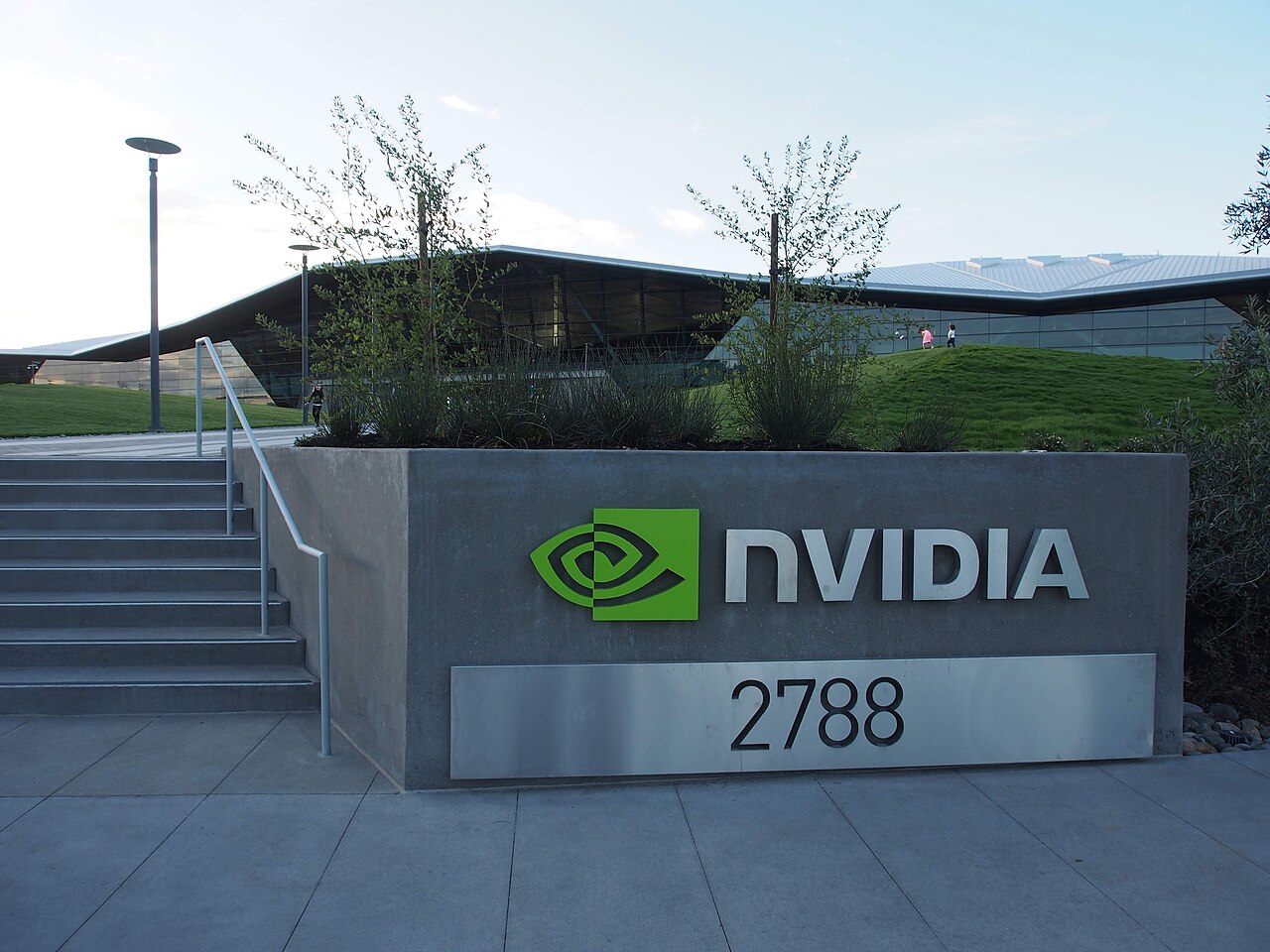
Artificial intelligence spending has helped drive much of the U.S. stock market’s advance, lifting the technology shares that sit inside millions of retirement accounts. Nvidia is now at the center of that trade, with an outsized weight in S&P 500 index funds and target-date funds commonly used in 401(k) plans. Recent warnings from AI executives and investors have raised a narrower question: what happens if the labs and cloud companies buying the chips start tapping the brakes.
Nvidia’s rise has made it one of the market’s heaviest weights
Nvidia has become the single largest constituent in the S&P 500, with an 8.1% weight as of September 10, 2026, according to S&P Dow Jones Indices. That matters for retirement savers because many 401(k) plans are built around S&P 500 index funds, total-market funds and target-date portfolios that hold those funds as core positions. Fidelity’s 500 Index Fund listed Nvidia among its top holdings in materials published for June 30, 2026, underscoring how broadly the stock now appears in mainstream retirement products.
The concern now is not a company-specific scandal or earnings miss. It is the possibility that the spending cycle supporting Nvidia’s sales could cool if top AI labs and the cloud companies financing them decide to slow the pace of model development or data-center expansion. Reuters reported on September 15, 2026, that some investors were positioning for slower growth in hyperscaler spending after industry warnings about AI safety and sustainability.
That Reuters analysis said the five largest AI infrastructure spenders — Microsoft, Alphabet, Amazon, Meta Platforms and Oracle — are expected to spend about $795 billion in capital expenditures this year and nearly $1.08 trillion in 2027, citing BofA Global Research. Even with those totals still rising, the pace of growth is under scrutiny because Nvidia’s valuation has been closely tied to the assumption that the biggest buyers of AI chips will keep expanding aggressively.
For workers in employer retirement plans, the impact is national rather than tied to one city or state. A saver in a broad-market 401(k) menu in Ohio, Texas or California may hold Nvidia indirectly through multiple layers of funds, including an S&P 500 index option and a target-date fund that owns the same large-cap stocks underneath. BlackRock’s iShares S&P 500 Index Fund showed Nvidia at just over 8% of assets as of August 31, 2026, illustrating how a single stock can influence diversified products.
What is confirmed is Nvidia’s large position in major index products and its growing influence on benchmark returns. What is not yet known is whether plan participants will see any portfolio changes from fund providers in response to AI-related volatility, because index funds generally track benchmarks rather than make active stock calls. Fund managers also have not released any broad, industrywide list of 401(k) plans with unusually high indirect Nvidia exposure.
The immediate practical meaning for savers is straightforward. If Nvidia continues to outperform, many passive retirement funds benefit automatically. If the stock stalls because large AI customers reduce orders or stretch out buildouts, the drag could also show up automatically in the same accounts, especially where savers are concentrated in large-cap U.S. equity funds.
The broader context is that Nvidia’s revenue boom has been funded by a historic buildout in data centers, servers and networking gear. Reuters reported in July that investors were starting to prepare for a slowdown in that near-trillion-dollar spending wave, even though the trade had long depended on the view that Microsoft, Amazon, Alphabet and Meta would keep accelerating investment. UBS estimated hyperscaler capital spending would rise 76% in 2026, then increase by 25% next year and 6% in 2028, according to that Reuters report.
That does not mean spending is expected to collapse. It means growth may normalize after an exceptional run, which is a different signal for suppliers whose shares had surged on assumptions of nonstop acceleration. A separate Reuters market report on September 14 said Nvidia shares fell 3.2% in one session after executives called for a slowdown in AI development, showing how quickly sentiment can shift when investors see risk to the spending cycle.
For retirement savers, that leaves a clear but limited takeaway. Nvidia remains deeply embedded in the indexes that anchor many 401(k) plans, and the company’s position has been reinforced by the broader AI buildout. Whether that support continues at the same intensity will depend in large part on the capital-spending decisions of the biggest AI labs and cloud companies over the next several quarters.