

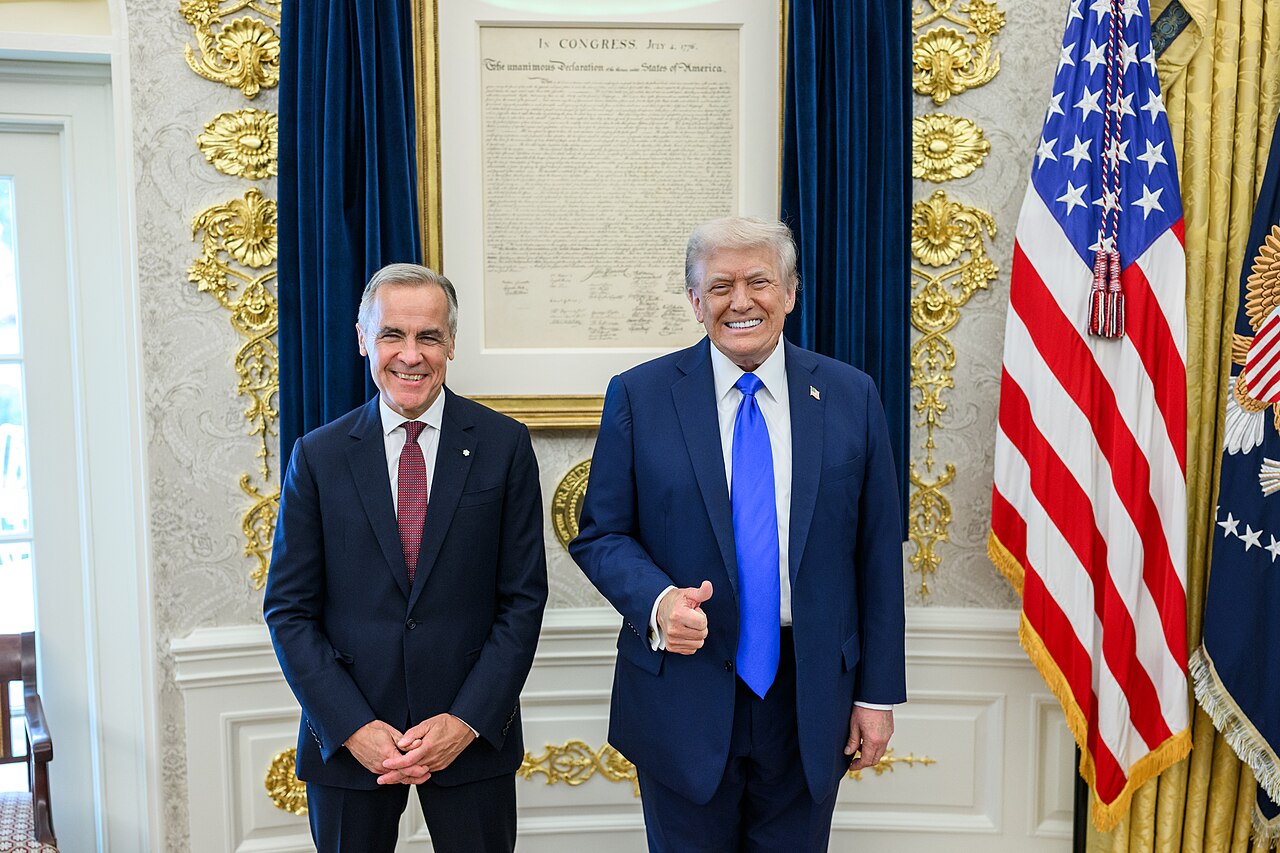
The U.S.-Canada trade relationship entered a new phase this week as the Trump administration paired a high-profile diplomatic appearance with a sharp policy escalation. On Sunday, July 19, President Donald Trump sat with Canadian Prime Minister Mark Carney at the FIFA World Cup final in East Rutherford, New Jersey. On Monday, July 20, the White House announced additional 50% tariffs on certain Canadian goods, turning a public show of proximity into a renewed trade confrontation.
Trump announced new tariffs a day after the World Cup final
The Trump administration said on July 20 that it would impose additional 50% tariffs on a significant number of Canadian goods under Section 338 of the Tariff Act of 1930. In a White House fact sheet and related proclamations, the administration said the action was meant to respond to what it described as Canada’s discriminatory treatment of U.S. motor vehicles, alcoholic beverages and dairy products. The U.S. Trade Representative also confirmed that Trump took three separate Section 338 actions tied to those sectors.
The timing drew attention because the announcement came the day after Trump appeared with Carney at the World Cup final. The Associated Press reported that Trump watched the match with Carney on Sunday, while Carney’s office separately issued a statement marking the close of the 2026 FIFA World Cup on July 19. The tariff action itself was dated July 20, giving the sequence a one-day turnaround from the sporting event to the trade move.
The White House said the new duties are scheduled to take effect at 12:01 a.m. Eastern on August 19, 2026, for covered goods entered for consumption or withdrawn from warehouse for consumption. The administration said some products already subject to other trade measures, including certain Section 232 duties, would not be covered by these particular proclamations. That means the headline 50% figure applies to specified Canadian goods, not every product Canada ships into the United States.
For border states and trade-dependent regions, the practical effect is clear in broad terms but incomplete in detail. Canada is one of the United States’ largest trading partners, and the sectors named by the administration — autos, alcohol and dairy — are deeply connected to cross-border supply chains, retail distribution and agricultural markets. The White House and USTR confirmed the sectors involved, but they have not released a simple consumer-facing list of every product category likely to be affected at stores, dealerships or distribution hubs in each state.
That uncertainty matters in places where Canadian goods move routinely through local economies. Businesses that import building materials, specialty foods, beverage products or vehicle-related goods may now be waiting for product-level guidance on whether their inventories fall under the new tariff schedules. The proclamations identify annexes and customs treatment rules, but the administration has not publicly provided a full state-by-state breakdown of which local industries will feel the change first.
Canadian officials also signaled that the dispute is not settled. In a July 20 statement, Carney said the U.S. administration had announced its intention to impose a new 50% tariff on a significant number of Canadian goods and called it the latest in a series of unilateral U.S. trade actions. Ontario Premier Doug Ford said publicly that if the tariffs proceed, Canada should respond in kind, though no final retaliatory package had been formally detailed as of the initial announcement.
The Trump administration tied the tariffs to three specific complaints. In the motor vehicle proclamation, the White House said Canada has maintained a 25% tariff since April 9, 2025, on certain U.S. vehicle imports that do not qualify for duty-free treatment under the U.S.-Mexico-Canada Agreement. In the alcohol proclamation, the administration said Canadian imports of U.S. alcoholic beverages fell about 81% in the period from March 2025 through February 2026 compared with the prior year, from roughly $718 million to about $137 million.
The administration also cited dairy barriers in a separate proclamation and framed all three actions as an effort to “level the playing field” for American exports. USTR said Trump exercised a rarely used authority under Section 338 to offset what the administration considers discriminatory treatment of U.S. commerce. That legal rationale, rather than the World Cup meeting itself, is the formal basis for the tariffs in the federal documents.
For residents and businesses, the next key date is August 19, when the new duties are set to begin unless policy changes intervene before then. What consumers ultimately notice — higher prices, sourcing changes or no visible difference at all — will depend on which goods importers continue to bring in and whether retailers pass along added costs. For now, the confirmed facts are the public sequence and the official action: a joint World Cup appearance on July 19, followed by a tariff announcement on July 20 and an implementation date one month later.