

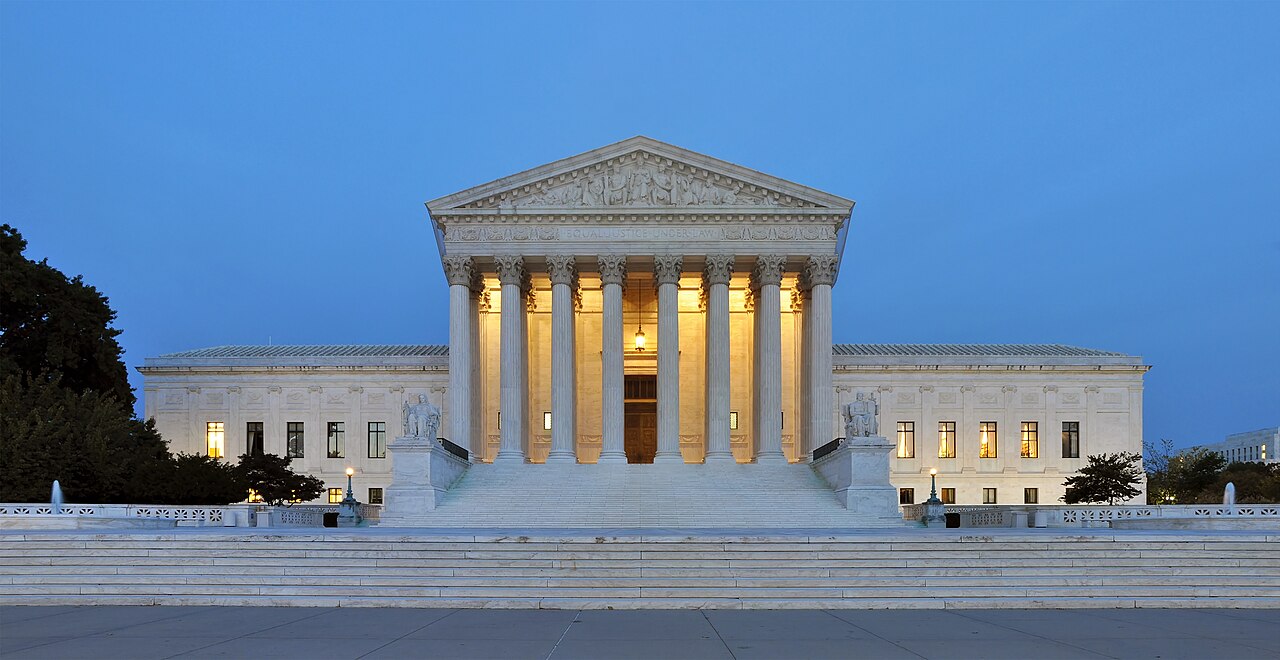
The Trump administration asked the U.S. Supreme Court on Monday, Sept. 29, 2026, to let it enforce restrictions on gender affirming care in federal prisons while a lawsuit continues. The policy at issue does more than halt surgeries. It also blocks what the Bureau of Prisons calls social accommodations, a category that includes wigs, makeup, breast padding, binders and undergarments, according to the agency’s own policy and The Associated Press.
The case puts a broader prison rule into public view at a time when the administration is pressing agencies to carry out President Donald Trump’s Jan. 20, 2025 executive order on sex based policy. Court orders have already limited how much of that prison policy can be enforced, but the government is now asking the high court to step in.
Supreme Court filing puts the full prison rule in focus
The emergency appeal landed at the Supreme Court on Monday after lower courts blocked prison officials from immediately carrying out the policy, according to AP. The administration argues the Bureau of Prisons properly adopted the rule and that U.S. District Judge Royce Lamberth overstepped when he ordered the government to keep providing some care to transgender inmates.
AP reported the policy halts surgeries, hormones and social accommodations, while allowing mental health therapy to continue. The Bureau said in 2025 that it was providing hormone therapy to more than 600 inmates, a number that shows the reach of the dispute inside the federal system.
The text of the Bureau’s Feb. 19, 2026 program statement spells out what those social accommodations are. It defines them as items, including cosmetics and clothing, used to alter a person’s appearance to align with that person’s gender identity. The listed examples are buttock padding, breast padding, binders, undergarments, makeup and wigs. The same policy says the Bureau “will not provide social accommodations” and that if an inmate already has them, the Bureau will no longer provide them and, when practicable, remove or confiscate them.
The federal policy applies across Bureau of Prisons facilities, but the available sources do not say how many inmates in any one state or federal prison are affected. They also do not identify which institutions, if any, have already removed or confiscated items covered by the rule.
What is clear is that the Bureau tied the policy to a systemwide directive. President Trump’s Jan. 20, 2025 executive order directed the attorney general to ensure the Bureau of Prisons revised medical care policies so federal funds are not spent on procedures, treatment or drugs “for the purpose of conforming an inmate’s appearance to that of the opposite sex.” The Bureau later issued a notice saying it was working to implement that order across its public facing materials and policies.
The Bureau’s own 2026 memo also confirms that the policy has not operated without limits. Assistant Director and General Counsel Elisa Mason wrote that the agency remained bound by a preliminary injunction issued June 3, 2025, in Kingdom v. Trump, requiring the Bureau to provide hormones and social accommodations under the policy that existed before Jan. 20, 2025.
The administration says the dispute is about whether prison officials can enforce a revised medical policy while the case is still being litigated. In its Supreme Court request, described by AP, the government said the Bureau had determined that sex trait modification surgeries, hormone interventions in general and social accommodations could no longer be justified as treatment for gender dysphoria.
The Bureau’s 2026 policy reflects that position. It defines sex trait modification surgeries broadly, listing procedures such as vaginoplasty, phalloplasty, orchiectomy, hysterectomy, mastectomy, breast augmentation, facial feminization surgery and voice modification. It also says Executive Order 14168 bars the Bureau from spending federal funds for medical procedures, treatment or drugs for that purpose, to the extent consistent with applicable law.
Opponents of the rule say the stakes are much higher for the people in custody. AP reported that ACLU lawyers representing inmates called the policy “a direct threat to the well-being of transgender people in federal custody and an open violation of their fundamental rights.” For now, the next concrete step is at the Supreme Court, where the administration is seeking temporary relief from the lower court order as the lawsuit moves forward.