

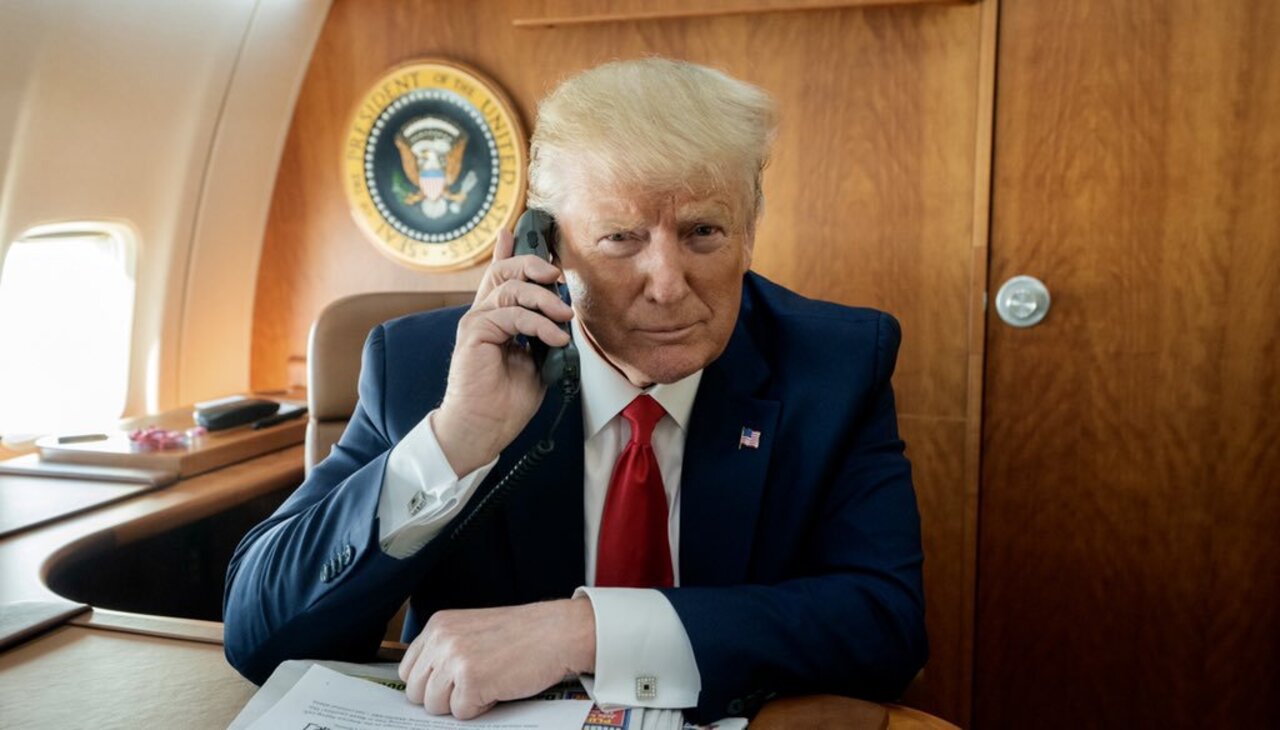
A birthday greeting became something larger. In the space of a single day, Donald Trump found himself speaking separately with both Vladimir Putin and Volodymyr Zelensky, creating the first moment in years in which all three men were drawn into the same immediate diplomatic storyline.
Why the calls mattered beyond the symbolism

The immediate headlines focused on the optics: Trump, marking his 80th birthday on June 14, spoke by phone with Zelensky and later with Putin. According to the Kremlin and reporting from the Associated Press, the Putin call lasted just under an hour, while Zelensky said his own conversation with Trump ran about 30 minutes. On paper, these were separate bilateral exchanges. In practice, they formed a rare triangular moment in a war that has increasingly hardened into military routine and political stalemate.
That matters because symbolism is never just symbolism in this conflict. Every sign of who speaks to whom, for how long, and on what terms becomes part of a broader contest over legitimacy, leverage and momentum. For Kyiv, maintaining direct contact with Washington remains essential as Ukraine tries to hold Western political attention. For Moscow, a call with the American president is a chance to project relevance and reinforce the idea that Russia still sits at the center of any serious negotiation.
The birthday setting also sharpened the contrast between pageantry and reality. While congratulations and personal niceties framed the calls, the underlying subject was war. AP reported that both conversations touched the fighting in Ukraine, and Russian presidential aide Yuri Ushakov said Trump again stressed the importance of ending hostilities. That did not amount to a breakthrough, but it did underline a familiar truth: even in an age of sanctions, drones and attritional battlefield combat, personal diplomacy still matters.
What Trump, Putin and Zelensky each needed from the moment

Each leader entered the day with different incentives. Trump wanted to show that he remains an active dealmaker on the biggest international crisis confronting his administration. His political brand has long rested on the claim that personal relationships and direct pressure can move disputes that conventional diplomacy cannot. Speaking to both Putin and Zelensky on the same day allowed him to signal that he is still trying to position himself as the indispensable broker.
Putin had his own reasons to engage. The Kremlin used the occasion not only to confirm the substance of the call but also to release a warm public birthday message describing Trump as a “bright, remarkable person and politician.” That language was not casual. It suggested that Moscow sees value in cultivating a direct channel with Trump, especially at a moment when Russia wants to shape the terms of any future negotiation rather than simply react to Western demands.
Zelensky’s motive was more urgent and more constrained. Ukraine’s president has been balancing battlefield pressures, domestic expectations and the constant need to preserve foreign backing. AP reported that Zelensky used the call to discuss the war, diplomacy and peace efforts, while also wishing Trump a happy birthday. In effect, he had to combine courtesy with advocacy. His challenge was to keep Ukraine’s position visible in a diplomatic environment where any renewed U.S.-Russia contact can quickly create anxiety in Kyiv.
The war kept intruding on the diplomacy
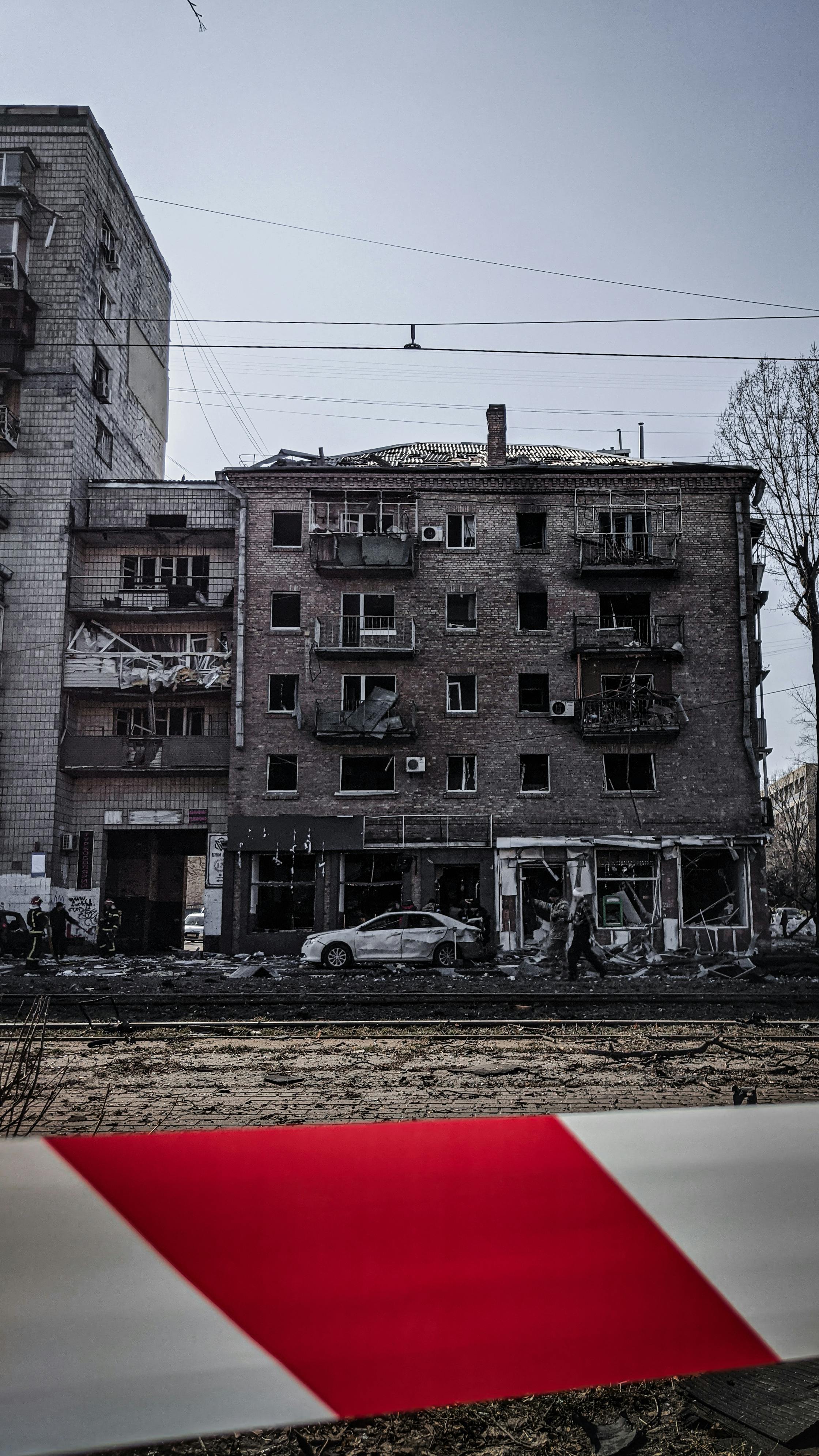
If the calls offered a momentary image of high-level engagement, events on the ground quickly pulled attention back to the violence itself. AP reported that drone strikes hit inside Russia, with fatalities and injuries in the Oryol region, while local officials in Yaroslavl said fuel storage facilities caught fire. Zelensky said Ukraine had struck an oil site important to Russia’s reserves, reinforcing Kyiv’s strategy of targeting infrastructure linked to Moscow’s war machine.
Those developments are crucial to understanding why phone diplomacy rarely translates quickly into de-escalation. Both sides continue to believe that military pressure strengthens their negotiating hand. Ukraine argues that striking oil and energy targets weakens the Russian state’s ability to finance and sustain the war. Russia, meanwhile, continues to absorb punishment while signaling that it will not negotiate from a visible weakness.
That dynamic creates a recurring pattern. Leaders talk, aides brief, hopeful language surfaces, and then the battlefield reasserts itself almost immediately. The result is not meaningless diplomacy, but constrained diplomacy. A phone call can open channels, test positions, and shape narratives. It cannot by itself overcome the fact that both Kyiv and Moscow still see military operations as central to altering the terms of any eventual settlement.
The bigger diplomatic backdrop around the Ukraine war

The conversations came at a particularly crowded geopolitical moment. According to the Kremlin account cited by AP, Trump and Putin also discussed Iran and the possibility of an agreement involving the United States. That is revealing because it shows how the Ukraine war is no longer handled in isolation. Great-power diplomacy increasingly works as a bundle of overlapping files, with leaders using one crisis to build trust, trade signals or establish patterns of contact relevant to another.
The upcoming G7 summit added another layer. Ushakov said Trump was prepared to work with European partners and Kyiv, an acknowledgment that any serious push on Ukraine still requires coordination with U.S. allies. That is especially important because European governments have spent years trying to balance military support for Ukraine with pressure for a credible diplomatic track. They do not want symbolic outreach that leaves Kyiv exposed, but they also know wars of this scale rarely end without direct high-level engagement.
There was also the matter of envoys. The Kremlin said Steve Witkoff and Jared Kushner would return to Russia soon, a sign that Moscow expects continued backchannel or semi-formal contact with Trump’s team. Whether those visits produce substance is another question. But the fact they were discussed at all suggests this birthday diplomacy may have been less a one-day curiosity than a marker of renewed diplomatic traffic.
Why was this the first such convergence in years
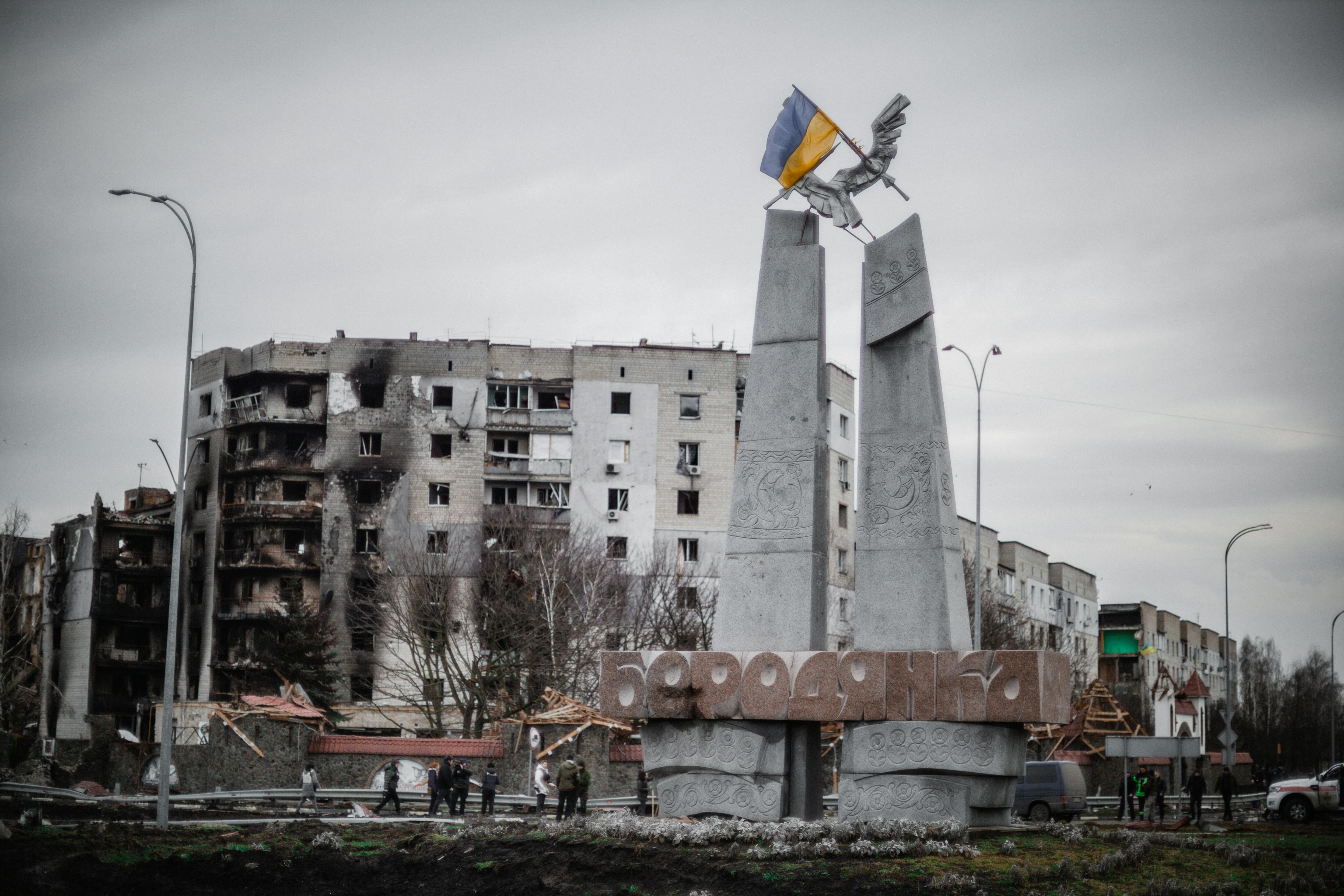
What made the day notable was not that Trump had spoken to foreign leaders. Presidents do that constantly. It was the phone calls that effectively placed Trump, Putin and Zelensky in the same diplomatic frame after years in which direct, overlapping engagement among the three had been sporadic, politically fraught or absent. AP’s recent reporting also noted Trump had publicly encouraged a Putin-Zelensky meeting, even as Putin later dismissed the idea, saying he saw “no point” in such a face-to-face encounter.
That gap is the story. Trump appears to believe personal intervention can create movement where formal negotiations have stalled. Zelensky wants direct talks only if they do not erode Ukraine’s sovereignty or bargaining position. Putin has shown little interest in a leader-level meeting unless conditions already favor Russia. So the three men are linked by the same conflict, but they are not aligned on what diplomacy is for.
In that sense, the birthday calls were less a reunion than a reminder of distance. They showed that all three remain central to any endgame, yet they also exposed how far apart the strategic goals still are. Being brought into one conversation cycle is not the same as being brought toward agreement.
What happens next after the birthday diplomacy fades

The most realistic reading of the moment is that it reopened political space without resolving anything. No ceasefire emerged. No framework for direct Russia-Ukraine negotiations was announced. No evidence suggested that battlefield operations would pause. Yet the calls still mattered because they refreshed channels that could become important if military or political conditions shift in the coming weeks.
For Trump, the next test is whether he can turn personal access into sustained diplomatic pressure. For Putin, the goal will be to use renewed contact with Washington without conceding core war aims too early. For Zelensky, the challenge remains making sure any U.S.-Russia engagement does not bypass Ukraine’s interests. That triangle has defined the war’s politics for years, and it remains unresolved.
So the birthday phone call should not be mistaken for peace breaking out. It was something more modest but still significant: a reminder that even after years of bloodshed, diplomacy can reappear suddenly, awkwardly and through unexpected rituals of personal politics. In wars like this, that may be the beginning of a process, or merely another episode in a long stalemate.