

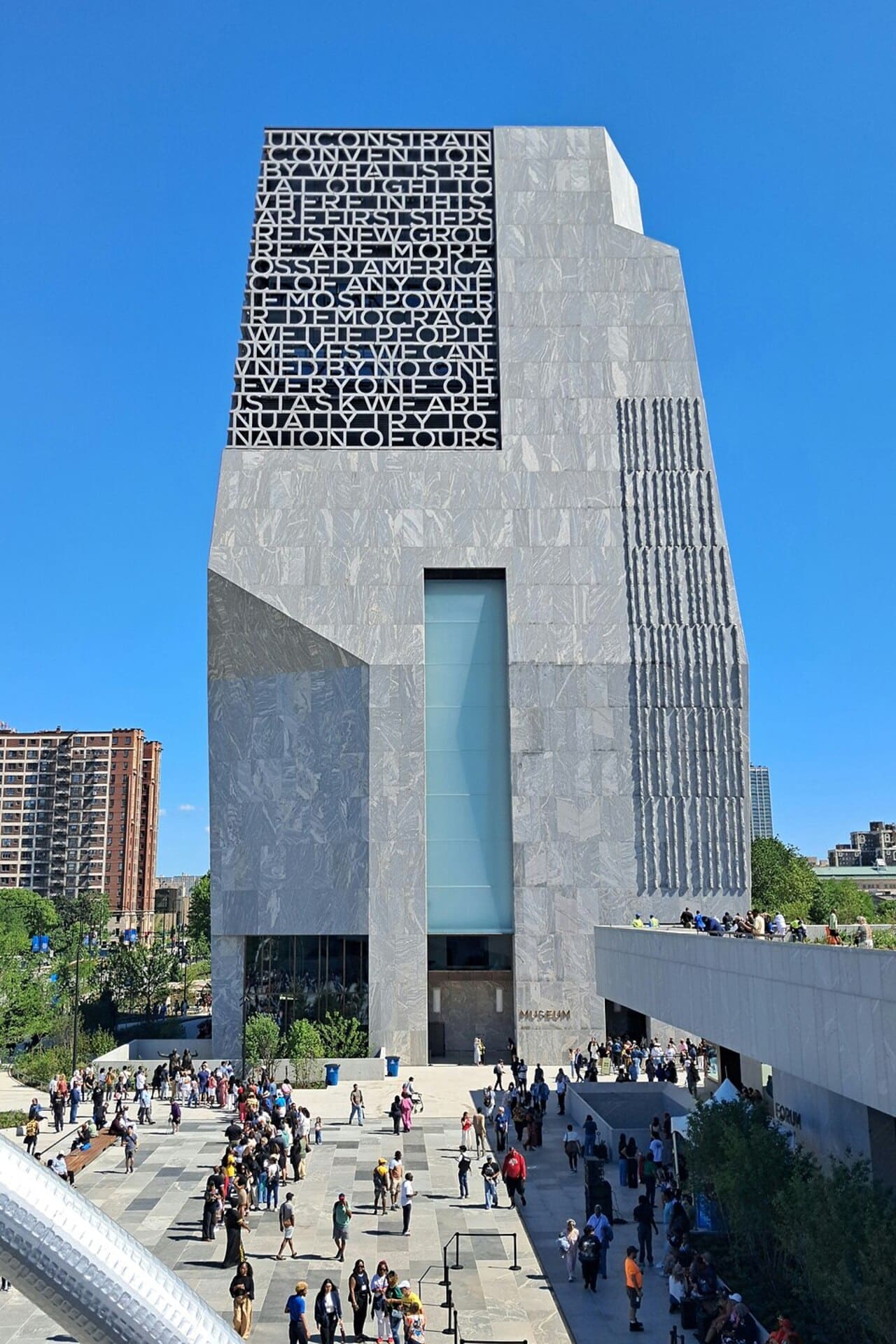
Presidential libraries and civic museums are increasingly being designed as public gathering spaces as much as archives, blending history, tourism and community programming. In Chicago, that national trend came into focus on June 19, 2026, when the Obama Presidential Center opened to visitors in Jackson Park on the South Side.
First visitors frame the opening as a cultural milestone

The Obama Presidential Center opened to the public on Friday, June 19, after a formal dedication the previous day, and the first wave of visitors immediately gave the campus meaning beyond its museum role. According to the Obama Foundation, the grounds opened the same day as Juneteenth, with the museum positioned as a place to explore democracy, civic participation and the legacy of Barack and Michelle Obama. AP reported that Barack and Michelle Obama personally greeted the first 100 visitors who entered the center that morning.
Several of those early visitors described the moment in terms of representation and historical significance. In AP’s opening-day coverage, one visitor said the center’s debut on the South Side of Chicago felt extraordinary because it honored the nation’s first Black president in a predominantly Black part of the city. Reuters reported ahead of the dedication that the campus was conceived not only as a presidential monument but also as a cultural and civic hub, with exhibits and public spaces tied to civil rights history and community life.
The scale of the project also underscored why the opening drew national attention. AP described the center as a roughly $850 million project, while Reuters called it a sprawling campus of granite, art and landscaped public space. The museum includes presidential memorabilia, interactive exhibits and a replica of the Oval Office, according to AP, giving visitors both a personal and political narrative of the Obama years.
Chicago’s South Side is the center of the local impact
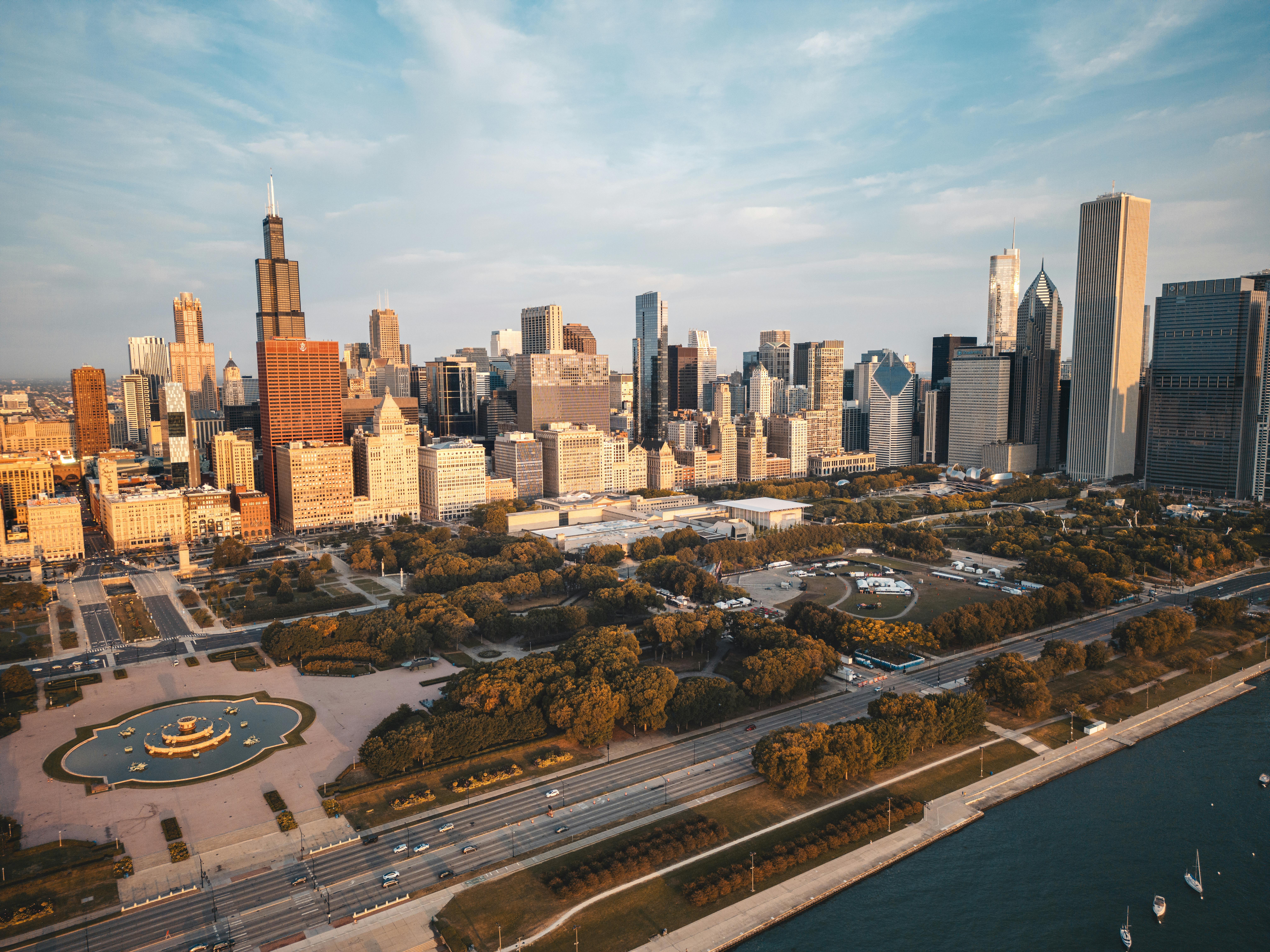
The local effect is centered on Hyde Park and Woodlawn, with the campus set inside Jackson Park near Lake Michigan. The Obama Foundation says the grounds are open daily, and local tourism officials at Choose Chicago have promoted the center as a major new destination tied to South Side cultural institutions, including the DuSable Black History Museum and the Museum of Science and Industry. Choose Chicago also said a new daily shuttle is intended to connect downtown visitors with the campus.
Opening events brought immediate logistical effects to nearby neighborhoods. Axios Chicago reported that security perimeters, street closures and restricted access were put in place ahead of the June 18 dedication because of the attendance of former presidents, public officials and celebrities. Those measures were temporary, but they signaled the size of the crowds and the level of national visibility attached to the launch.
What is not yet fully known is the long-term visitor volume or the full economic effect on nearby businesses and residents. Tourism boosters have said the center could reshape travel patterns on the South Side, but no comprehensive public accounting of sustained visitor totals had been released as of the opening weekend. The center’s public launch nonetheless gives Chicago a new institution with direct ties to Black political history and to the city’s role in Obama’s rise.
The opening arrives with broader debates about history and development

The timing of the opening added another layer of context. AP tied the public debut directly to Juneteenth celebrations across the country, while Reuters noted that the center opens during a period of renewed national argument over voting rights, civil liberties protections and diversity programs. In his remarks at the June 18 dedication, AP reported that Obama said he hoped the center would affirm the value of democracy and shared civic responsibility.
The project also arrives after years of planning, construction and public debate. Axios reported that Chicago had been waiting nearly a decade for the opening, and the Obama Foundation has long described the center as more than a library complex, emphasizing public programming, youth engagement and civic education. That helps explain why visitors and supporters are framing the site in broader cultural terms rather than simply as a museum.
For residents and visitors, the practical takeaway is that the center is now open as both a tourist attraction and public campus, with museum exhibits, outdoor grounds and scheduled programming already underway. The Obama Foundation says the site is designed for gathering, learning and community events, and Chicago tourism officials are treating it as a long-term anchor for South Side visitation. The opening ends the construction phase and begins the harder-to-measure phase: whether the institution can sustain the civic mission its founders and first visitors described.