

As Republicans sharpen their message ahead of the 2026 midterm elections, attacks tying Democrats to socialism and communism have returned to the center of national political rhetoric. That debate intensified this week after an Associated Press fact check examined President Donald Trump’s recent remarks and found experts say his comparisons between Democrats and communism are inaccurate.
AP fact check centers on Trump’s recent remarks and experts’ rebuttal
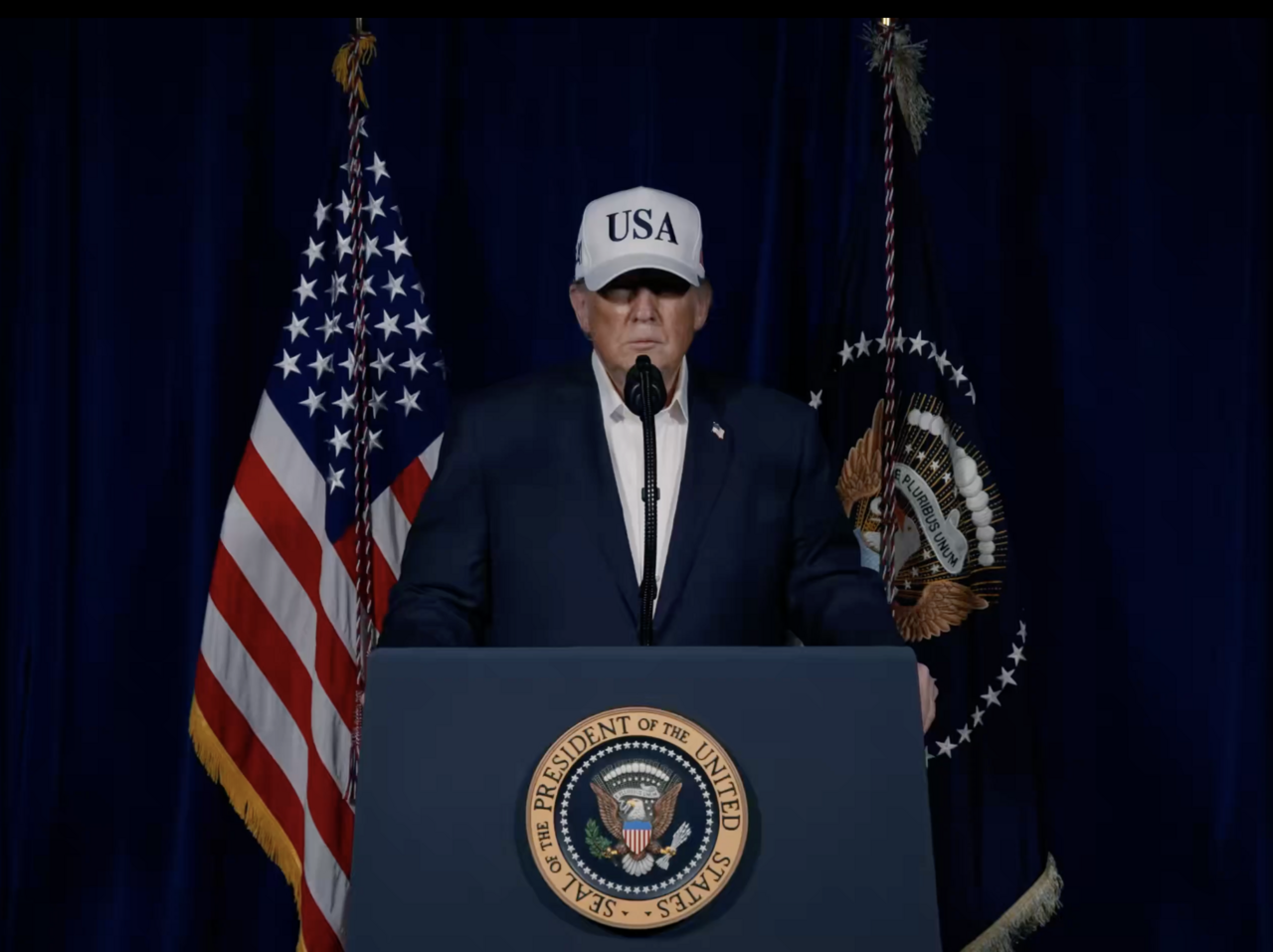
The Associated Press published its fact check on July 3 after Trump repeated the line in multiple public appearances, including the Faith & Freedom Coalition’s policy conference in Washington on June 26 and a July 1 visit to the Theodore Roosevelt Presidential Library in North Dakota. In those appearances, Trump described Democrats as “hard core, godless Communists” and said communism was becoming a defining threat if Democrats win in the midterms, according to the AP. The AP reported that experts on American communism and presidential history said those statements misstate both the Democratic Party’s politics and the current reach of the Communist Party USA.
Marc Selverstone, director of presidential studies at the University of Virginia’s Miller Center for Public Affairs, told the AP that major Democratic figures, including those on the party’s left flank, are not identifying as communists. Harvey Klehr, professor emeritus at Emory University and a scholar of American communism, similarly said it is unlikely Democrats attracted to some far-left ideas consider themselves members of the Communist Party. The AP also reported that no openly Communist Party candidate has ever been elected to state or federal office in the United States.
The fact check further distinguished democratic socialism from communism. According to the AP and Reuters, democratic socialists generally back a market-based system with a larger social safety net, policies such as universal health care, higher taxes on wealthy households and stronger corporate regulation. Experts cited by the AP said that position remains far from core communist principles such as abolishing private property or imposing central economic planning.
Because Trump’s comments were delivered in Washington and North Dakota but aimed at the national electorate, the immediate impact is political messaging rather than a confirmed policy change in any one state. The AP tied the renewed language to recent primary victories by democratic socialist candidates, including Darializa Avila Chevalier in New York City and Graham Platner in Maine. Both candidates have faced scrutiny over past comments or posts, but the AP reported that Avila Chevalier said she is a democratic socialist, not a communist, while Platner told CNN in 2025 that he is “not a communist” and “not a socialist.”
What is not yet known is whether Republican campaigns will use a single coordinated state-by-state playbook built around the same message. Neither the White House nor the Republican National Committee, based on the reporting cited here, has released a comprehensive public list of races or states where this framing will be the central line of attack. Reuters and AP reporting instead describe a broader effort to define Democratic candidates through the rise of democratic socialist voices in some primaries.
For voters, that means the practical effect may vary by state and district. In some races, the label may be attached to individual progressive candidates. In others, it may be used more broadly against Democrats as a party, even when the candidates involved have not identified with communist ideology.
The AP and Axios both placed the renewed attacks in the context of the 2026 midterm campaign, where Trump and other Republicans are looking for a sharper contrast message after left-wing primary wins drew national attention. Reuters reported that analysts see those primary outcomes as an opening for Republicans to argue Democrats are moving too far left, especially on ideological questions that can be distilled into campaign slogans. White House spokeswoman Olivia Wales told the AP that Democrats’ “embrace of socialism and communism” is an existential threat, underscoring that the administration intends to keep using the language.
Historians interviewed by the AP said the tactic also fits a longer American political tradition. Maurice Isserman, a Hamilton College professor and expert on American communism, told the AP that accusations of “godless communism” have long been part of the right’s political arsenal. The AP noted the historical echo of Sen. Joseph McCarthy’s anti-communist campaigns in the 1950s and Roy Cohn’s later role as a mentor to Trump.
For residents and voters, the likely near-term reality is more rhetoric of this kind as midterm campaigning accelerates. What has been established so far is narrower: experts cited by the AP say the broad claim that Democrats are communists is inaccurate, and no evidence in the AP’s reporting shows the Democratic Party as a whole has adopted communist doctrine. The next test will be whether the message remains a headline-grabbing line from Trump speeches or becomes a sustained campaign frame across competitive races.