

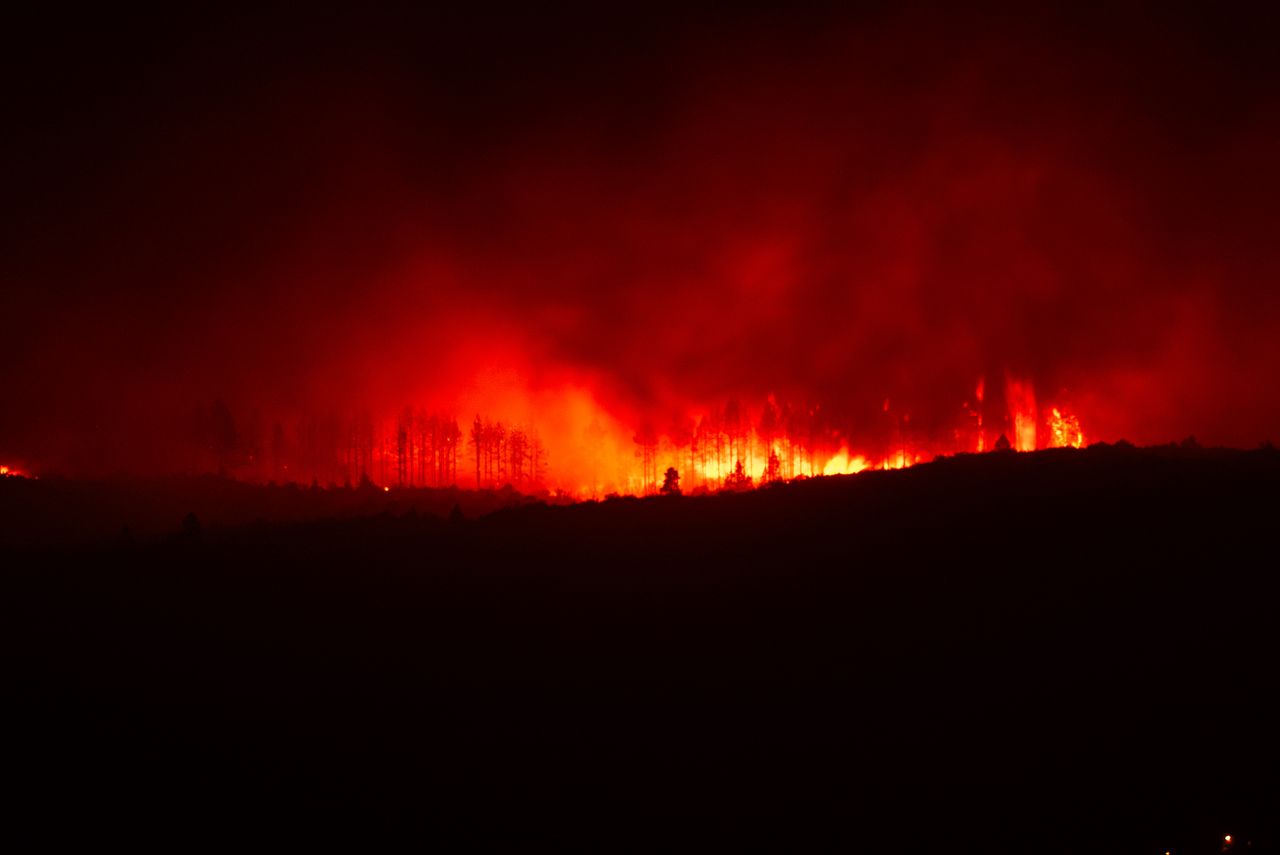
Wildfires across the West have intensified early in the 2026 fire season, forcing federal agencies to raise the national response posture as large fires burn through multiple states. The sharpest pressure is centered in the Great Basin, Rocky Mountain and Southwest regions, where incident commanders are reporting fast-moving fire behavior, road closures and active evacuations.
National response has escalated as major fires expand across the West
The National Multi-Agency Coordinating Group raised the National Preparedness Level to 4 on June 29, according to the National Interagency Fire Center, a sign that wildfire activity and resource demand have reached a high national stage. In its July 3 Incident Management Situation Report, the center said 41 uncontained large fires were burning nationwide, with 70 active incidents covering 605,152 acres and 9,333 personnel assigned.
The heaviest concentration of large fire activity is in the Great Basin and Rocky Mountain regions. Federal incident reports listed 17 active incidents in the Great Basin and eight in the Rocky Mountain area on July 3, with those two regions alone accounting for more than 477,000 acres. NIFC’s national fire report also said hot, dry and windy conditions continued to support rapid growth in parts of the Great Basin, Rocky Mountain and Southwest areas.
Several of the largest fires are burning in Utah and Colorado. The Cottonwood Fire near Beaver, Utah, was listed at 93,918 acres and 23% contained on July 3, while the Babylon Fire in Utah had reached 79,795 acres with no containment reported. In Colorado, the Aspen Acres Fire was listed at 49,291 acres and the Ferris Fire at 27,382 acres, with evacuations, road closures and threats to structures or infrastructure reported on multiple incidents.
The local picture varies widely by state, and official agencies are cautioning that conditions can change faster than statewide summaries. In Washington, the state Department of Natural Resources says its wildfire dashboard is the primary real-time source for active incidents, while local emergency offices issue evacuation orders. As of the July 3 federal situation report, Washington’s most prominent large fire was the Lambdin Fire near Wallula at 12,776 acres and 95% containment.
Oregon’s statewide wildfire response portal has centralized fire and evacuation information, but officials have not released a single narrative summary showing every affected community statewide. The July 3 federal report listed Oregon’s Butterfield Spring Fire at 2,750 acres and 100% containment, while the broader Northwest region remained at Preparedness Level 2, far below the pressure seen in the interior West. Oregon emergency officials separately urged Fourth of July travelers to check the fire dashboard and local evacuation notices before heading out.
California’s current statewide incident list showed relatively smaller active fires in CAL FIRE protection areas as of July 3, including the Point Fire in Merced County at 650 acres and 50% containment. CAL FIRE also notes that its public incident pages are not guaranteed to provide up-to-the-minute evacuation or fire behavior information, and it has not presented the current California situation as comparable in scale to Utah, Colorado or Arizona at this point in the season.
The broader cause of the surge is a combination of dry fuels, below-normal rainfall and repeated wind events, according to NIFC Predictive Services. In its July 1 national outlook, the agency said fire activity accelerated in the second half of June and that 3,168,102 acres had burned nationally by June 30, or 157% of the 10-year average. The same report said drought had intensified or developed in the Northwest, Great Basin and Colorado, with eastern Oregon singled out for notable degradation.
The agency also reported that parts of California, Nevada, western Arizona and southern Utah received no measurable rainfall in June. It said widespread southwest winds of 20 to 35 mph, with gusts of 40 to 70 mph, followed late-June lightning outbreaks and helped drive rapid growth on fires including Cottonwood and Babylon in Utah and Ferris, Snyder, Gold Mountain and Aspen Acres in Colorado.
For residents across the West, the practical effect is likely to be continued smoke, intermittent road or trail closures, and rapidly changing evacuation statuses tied to local sheriff or emergency management orders. Federal and state agencies are emphasizing that incident pages, dashboards and local alerts may change several times a day, and NIFC’s current outlook forecasts above-normal significant fire potential through July across much of the Great Basin, Northwest, northeast California and the Greater Four Corners.