

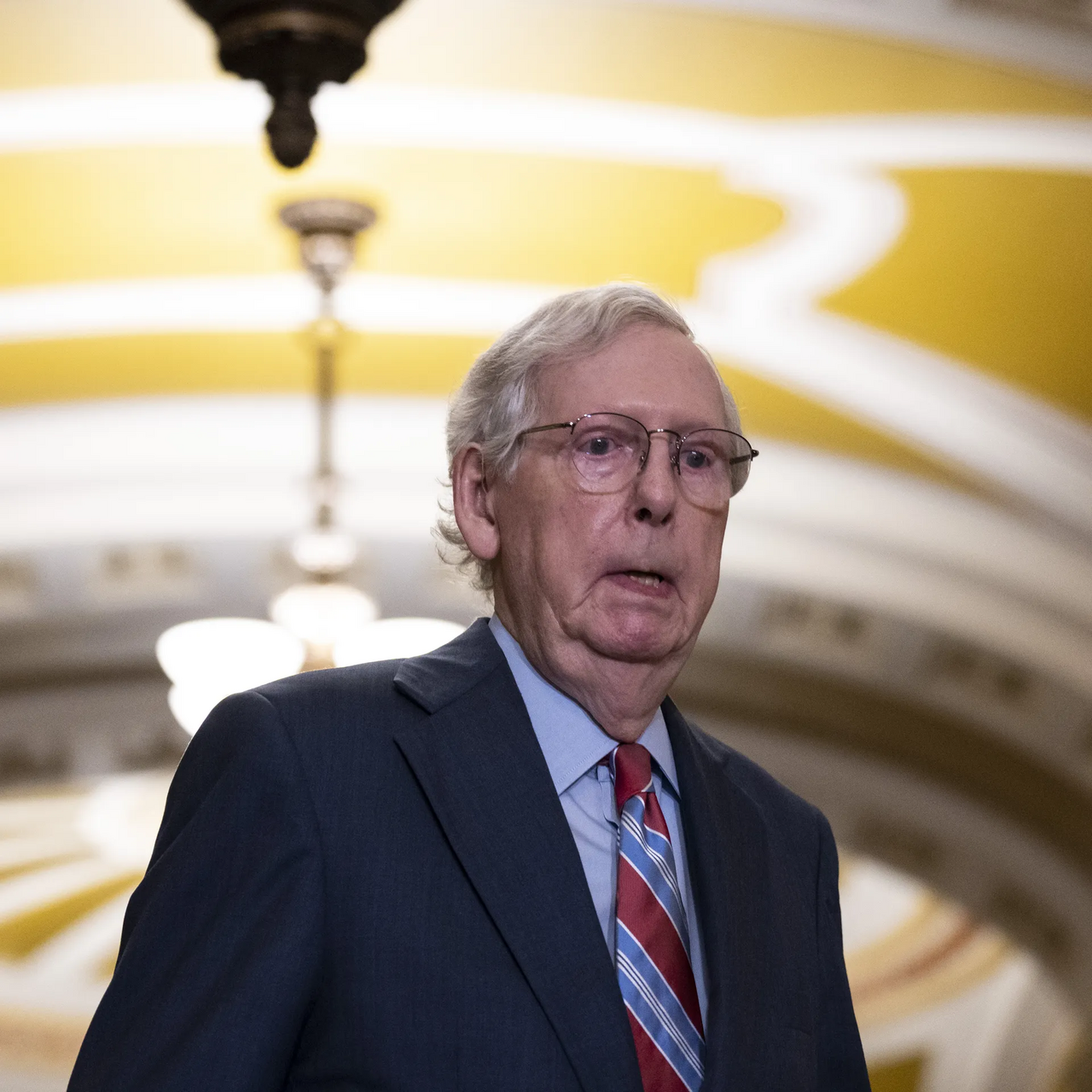
Mitch McConnell’s extended absence has become a national political story as questions about age, health and transparency continue to shape debate around senior elected officials in Washington. In Kentucky, that broader issue has narrowed to one unanswered question: why the 84-year-old senator was admitted to a Washington hospital on June 14 and why his office still is not saying more.
McConnell’s office confirmed the hospitalization but not the cause
McConnell’s office said on June 14 that the Kentucky Republican had been admitted to a hospital that morning and was “receiving excellent care,” according to statements reported by CBS News, Fox News and The Washington Post. The office did not identify the hospital, disclose a diagnosis or say how long he was expected to remain there.
More than three weeks later, that basic posture has not changed. A July 2 statement from McConnell’s office said he “continues his recovery in the hospital” and is “working closely with his staff on Kentucky and Senate matters,” according to reporting by CNN, the Associated Press and The Washington Post. The statement did not explain what happened on June 14 or provide a timetable for discharge.
The lack of detail has been unusual even by congressional standards because the hospitalization has stretched across a full Senate recess and into preparations for lawmakers’ return to Washington. Republican colleagues and allies have since said they spoke with McConnell by phone and described him as engaged on Senate business, according to The Washington Post and CNN, but those accounts have come secondhand rather than through a direct public appearance or medical briefing.
McConnell has dealt with visible health episodes in recent years, including a 2023 fall that caused a concussion and separate freezing incidents during public remarks later that year, according to previous reporting from major outlets. Those earlier episodes have added context to the current scrutiny, though his office has not connected them to the June 2026 hospitalization.
For Kentucky, the immediate impact is political as much as procedural. McConnell remains one of the state’s most influential federal figures, and his prolonged hospitalization has prompted calls from within Kentucky for more public clarity about his condition and his ability to continue serving.
Gov. Andy Beshear on July 8 urged McConnell to provide a public update, saying Kentuckians deserve more information after weeks of silence, according to the Associated Press and Axios. That appeal followed mounting speculation fueled by the lack of a diagnosis, the absence of public photos or video since the hospitalization, and repeated statements from aides that offered no new medical specifics.
What remains confirmed is limited: McConnell was hospitalized on June 14, he was still hospitalized as of the office’s July 2 statement, and aides have said he is improving and staying engaged with staff. What remains unconfirmed is central to the story. His office has not publicly explained the medical event that led to the hospitalization, has not released a physician’s statement, and has not said when he is expected to return to the Capitol.
That uncertainty matters in Kentucky because McConnell previously announced he would not seek reelection in 2026, making his remaining months in office especially consequential. Any extended absence can affect constituent services, committee work and the state’s representation in Senate negotiations, even as staff continue regular office operations.
The immediate cause of McConnell’s hospitalization has not been disclosed, so no verified report has established the medical reason for his admission. Some news organizations have reported on emergency dispatch audio and unconfirmed descriptions from first responders, but major outlets including CNN have said they have not independently confirmed those details, leaving the official public record narrow.
What is clearer is the larger context. McConnell is 84 and part of a generation of senior leaders whose health has become a recurring issue in Congress, where long tenures and demanding schedules often collide with questions about disclosure, succession and fitness for office. The Associated Press and The Washington Post have both framed the latest episode within that broader debate over how much elected officials owe the public when medical events affect their work.
For residents, the practical takeaway is straightforward: McConnell’s Senate office is still functioning, aides say he is in contact with staff, and no formal change in representation has been announced. The Senate is expected to resume work with questions still unresolved unless McConnell or his office provides a fuller update, and as of July 9, that has not happened.