

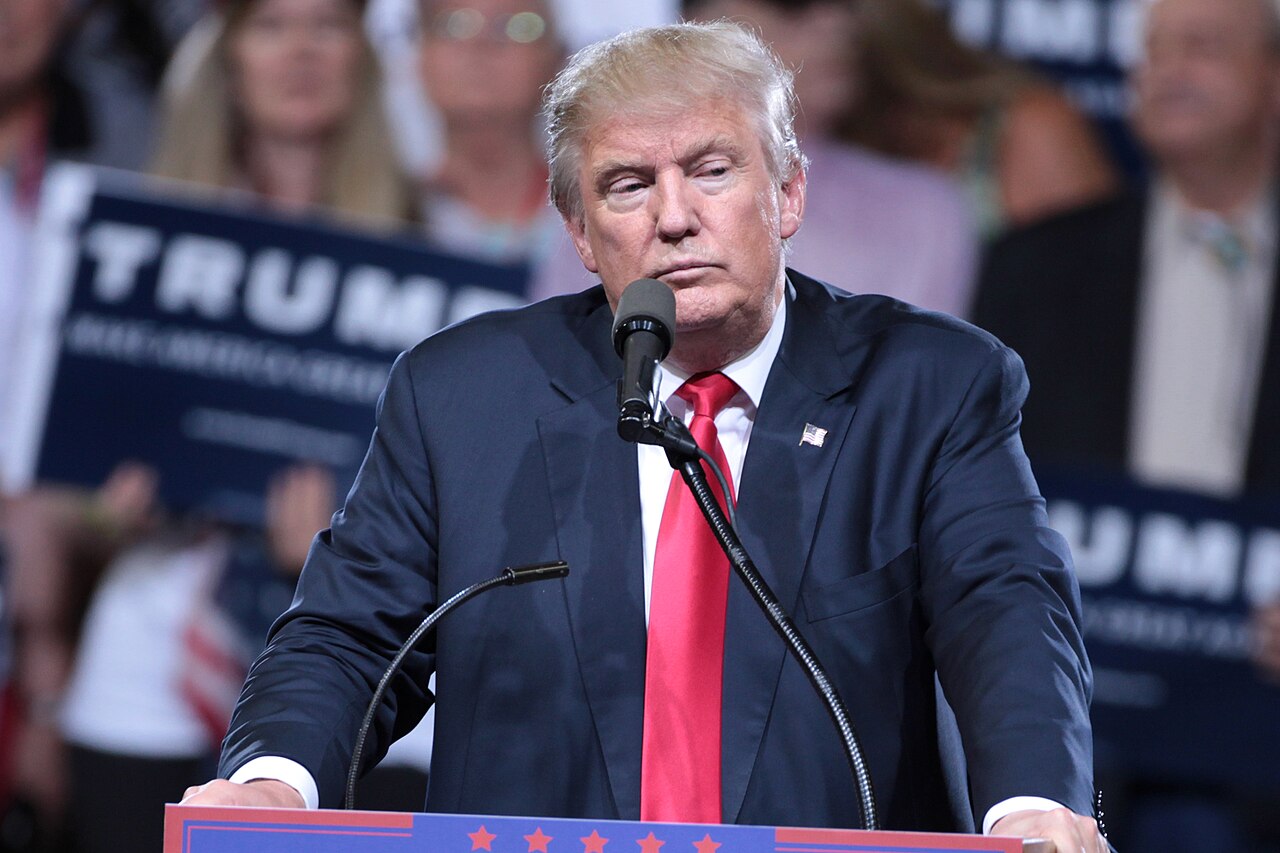
President Donald Trump has made direct cash payments a new part of his political message as the 2026 midterm campaign intensifies. In Dallas on September 9, Trump said a proposed $5,000 payment to adult U.S. citizens would be called the “Trump dividend” if Republicans retain control of the House and Senate. The proposal immediately drew attention because of its scale, its unclear legal path, and the more than trillion-dollar cost estimates attached to it.
Trump ties a $5,000 payment plan to the midterm election
Trump announced the proposal at a Republican convention in Dallas on September 9, saying he would issue a $5,000 payment to every adult U.S. citizen if Republicans hold both chambers of Congress, according to Reuters and the Associated Press. He also said, “It will be called the Trump dividend,” tying the payment directly to his campaign message and to the November 3, 2026 midterm election. Reuters reported that the plan was framed as a dividend made possible by what Trump described as strong economic performance.
The scale is enormous. Reuters reported the proposal could cost roughly $1.2 trillion to $1.3 trillion, depending on eligibility assumptions and the number of adults covered. Axios reported there are about 260 million adult U.S. citizens, while other outlets cited lower Census-based estimates closer to 240 million, but all of the public estimates place the price tag above $1 trillion.
Trump has not released a formal bill text or a full administrative framework for how the payments would be issued. House Speaker Mike Johnson said the proposal would require congressional approval, according to AP, even as Trump later suggested in an interview with CBS News Texas that he did not believe Congress would need to authorize the payments.
Because Trump described the proposal as a payment to adult U.S. citizens nationwide, there is no state-by-state rollout plan at this stage. No agency has released a list of who would qualify, how income limits would work, or whether residents of any one state would be treated differently from another. That means there is no confirmed local disbursement timeline, no application process, and no verified estimate yet for how many residents in any specific city or county would receive a check.
Reuters reported that Trump indicated high-income people might not be included, but the White House and campaign materials publicly summarized in news coverage have not provided a complete eligibility formula. It is also not yet known whether the payments would be structured through the IRS, the Treasury Department, or another federal mechanism.
For residents, the immediate effect is political rather than practical. There are no checks authorized, no enacted funding source, and no official federal guidance telling households to expect payment. What is confirmed is that the proposal has become part of Trump’s national election message and that Republican leaders are already being asked whether Congress would support it.
The central question is how the government would pay for it. Reuters, citing the Congressional Budget Office, reported that federal revenue gains cited by Trump fall far short of the amount needed for a program of this size. The same Reuters analysis said the government has taken in $167 billion so far in the fiscal year ending September 30, far below the amount needed to cover a payout exceeding $1 trillion.
Budget and policy concerns are also driving skepticism. AP reported the proposal would likely deepen the federal deficit, which is already running at roughly $1.8 trillion annually, and economists cited in multiple reports said a cash program of this size could add to inflation by boosting consumer demand. PolitiFact also reported that fiscal policy analysts warned the payments could worsen inflation and federal borrowing pressures.
There is also a legal and procedural issue. Speaker Johnson said congressional approval would be needed, and several reports noted that presidents cannot unilaterally spend more than $1 trillion without an appropriation from lawmakers. For now, the “Trump dividend” remains a campaign proposal, not enacted federal policy, and its next step depends on both the election outcome and whether Congress takes it up afterward.