

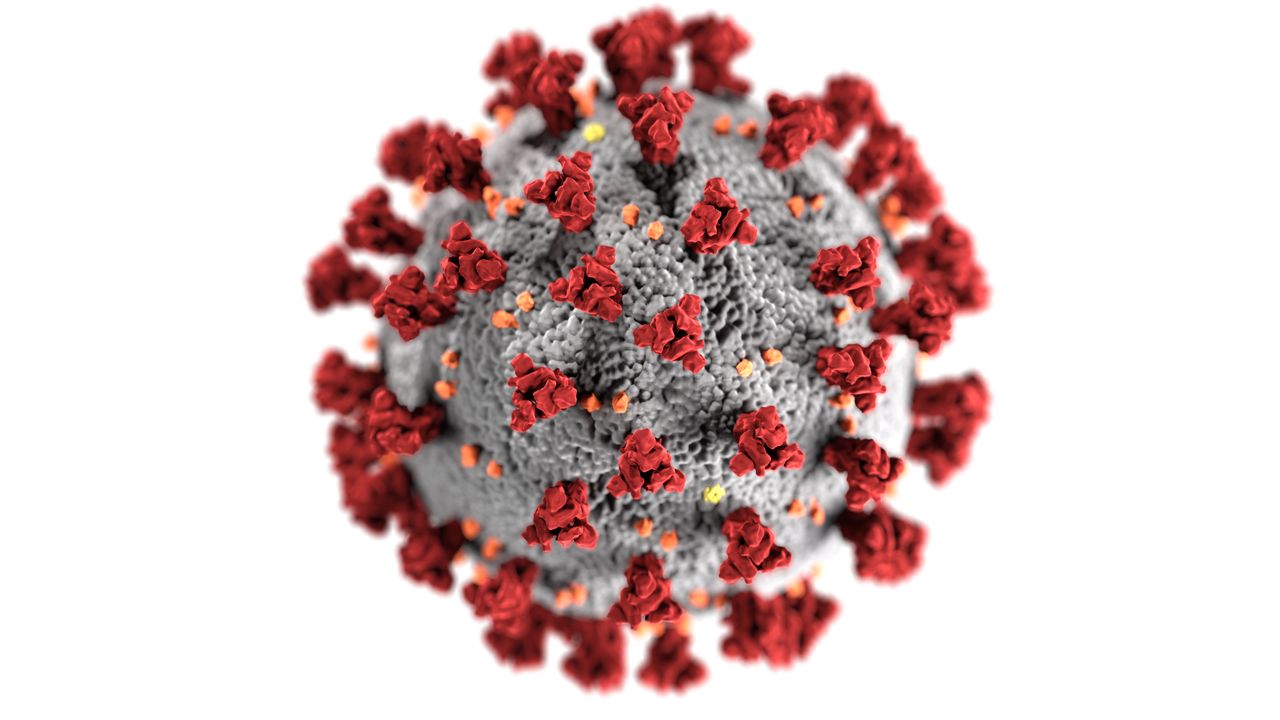
A heavily mutated COVID-19 variant is now part of U.S. surveillance reports as health agencies continue tracking new coronavirus lineages. The variant, formally known as BA.3.2 and informally called “Cicada,” has been identified in multiple states and is being watched by federal and global public health officials.
CDC documented detections in 25 states as of February 2026
The Centers for Disease Control and Prevention published a March 19, 2026 report in its Morbidity and Mortality Weekly Report detailing early detection of BA.3.2 worldwide. According to that CDC report, the variant had been found in 132 wastewater surveillance samples from 25 U.S. states by February 11, 2026, along with clinical samples from five patients, four traveler-based detections and three airplane wastewater samples.
The CDC said BA.3.2 was first identified through its traveler-based genomic surveillance program on June 27, 2025, in a participant arriving in the United States from the Netherlands. The agency’s report described BA.3.2 as a heavily mutated Omicron sublineage and noted that the variant carries a large number of spike-protein changes that can matter for immune recognition.
The World Health Organization also elevated monitoring of BA.3.2, classifying it as a Variant Under Monitoring on March 20, 2026. WHO’s risk evaluation said the lineage had spread internationally but remained at low prevalence compared with other circulating SARS-CoV-2 variants.
What is confirmed nationally is that BA.3.2 has been detected through wastewater, traveler screening and a limited number of patient samples. The CDC has not published a comprehensive public list in its March report naming every affected state in the 25-state count, which means residents in many places may hear about the variant before a full state-by-state breakdown is released.
Some states have separately confirmed local detections. In Michigan, for example, Michigan Public reported March 30 that the Michigan Department of Health and Human Services had identified the variant and that state officials said it represented less than 1% of the COVID then circulating in Michigan, according to Joe Coyle, director of the Bureau of Infectious Disease Prevention.
That leaves several open questions for local health watchers across the country. Public reporting has shown detections in some areas, but surveillance coverage is uneven, and wastewater findings do not translate directly into case counts. Federal and state officials have not said that BA.3.2 is driving a broad U.S. surge, and no national report has concluded that it causes more severe disease than other recent variants.
Health agencies are paying attention to BA.3.2 because of its mutation profile and laboratory signals tied to immune escape. The CDC said in its March report that recently emerged BA.3.2 strains showed efficient evasion of antibodies in laboratory studies, while WHO said available evidence suggested a growth advantage should continue to be monitored closely.
At the same time, both public health reporting and outside expert interviews have stressed that monitoring status is not the same as a determination that the variant is more dangerous. WHO said there had been no evidence at that point of increased severity linked to BA.3.2, and broader COVID indicators in many places remained relatively stable in early 2026.
For residents, the practical takeaway is that BA.3.2 is now part of routine surveillance rather than a stand-alone emergency declaration. Existing tests are still expected to detect the virus, and experts interviewed by PBS and CBS in late March and early April said current vaccination remains useful for reducing the risk of severe illness even if a variant is somewhat less well matched. Health agencies have indicated that continued genomic and wastewater surveillance will shape how closely BA.3.2 is watched through the coming months.