

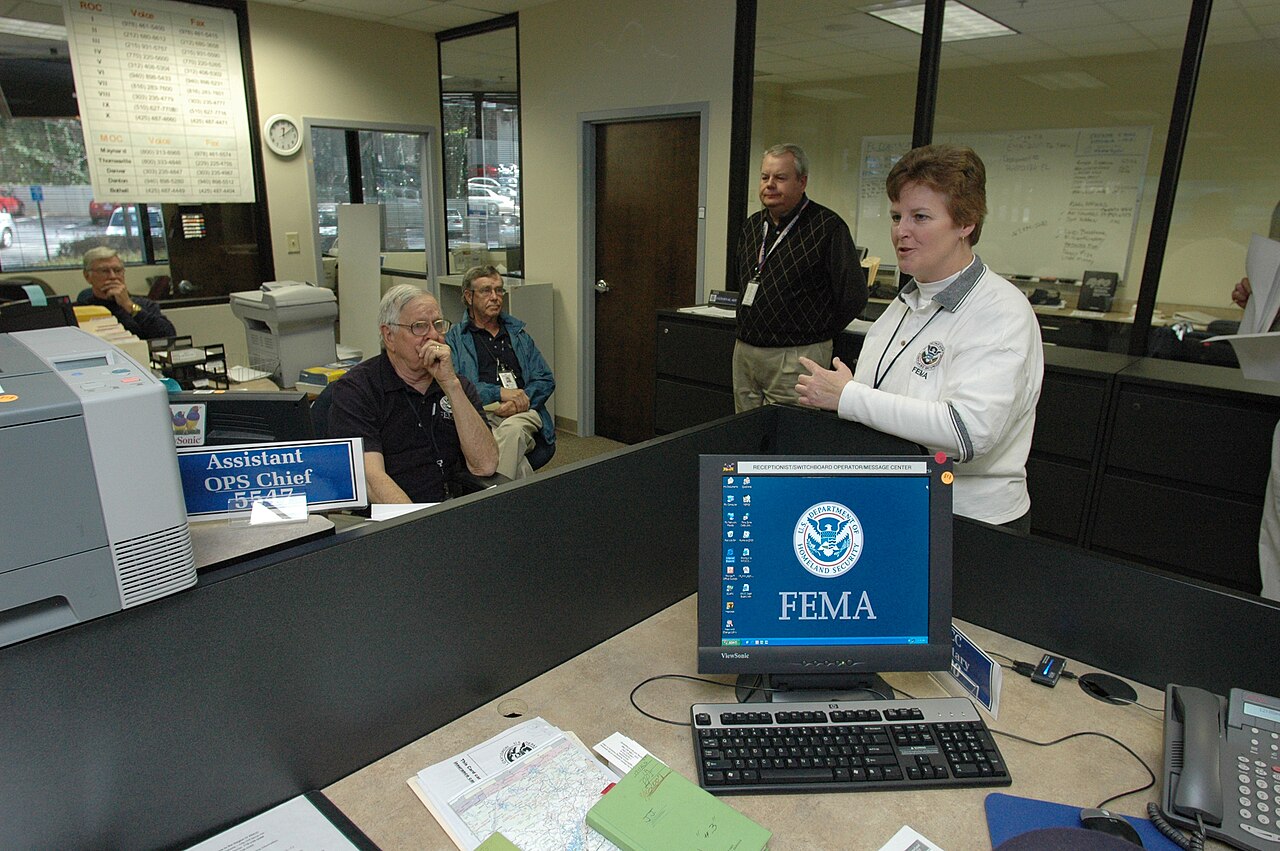
The 2026 Atlantic hurricane season began June 1 with federal disaster agencies under renewed scrutiny as states prepare for storms that can form through November 30. At the center of that concern is FEMA, where reported staffing losses, contract disruptions and leadership turnover have raised questions about readiness even as the agency says it is prepared.
FEMA enters hurricane season after reported workforce losses and contract turmoil
About 2,000 full-time staff have left FEMA since President Donald Trump took office in January, a reduction of roughly one-third of the agency’s full-time workforce, according to an Associated Press report published as the hurricane season opened on June 1. AP also reported that FEMA is being led by acting chief David Richardson, a former Marine Corps officer and Homeland Security official.
The AP reported that FEMA had canceled some emergency management trainings this spring, moved others online and restricted travel to major preparedness events before resuming some of that activity. Former Florida emergency management chief Bryan Koon told the AP that staffing reductions and training limits could diminish federal capability during disasters.
Earlier reporting from AP also found that FEMA resumed staff reductions affecting its Cadre of On-Call Response/Recovery, or CORE, employees after a winter storm pause. Those workers number more than 10,000 and make up nearly half of FEMA’s workforce, according to FEMA spokesperson Daniel Llargues and internal agency communications reviewed by AP.
In a separate spring report, AP said FEMA later moved to extend some contracts for CORE employees and renew eligible reservists, describing those workers as critical to readiness ahead of the 2026 hurricane season. FEMA said in an internal message cited by AP that every employee plays a critical role in helping the agency respond.
For residents in coastal and inland hurricane-prone states including Florida, Texas, Louisiana, the Carolinas and parts of the Southeast, what is confirmed is that FEMA remains the federal agency responsible for coordinating major disaster response when state resources are overwhelmed. FEMA associate administrator Geoff Harbaugh said in an email quoted by AP that the agency is “fully activated” for hurricane season.
What is not yet publicly clear is how staffing changes are distributed across FEMA offices, disaster cadres or individual regions. FEMA has not released a comprehensive public breakdown showing which state operations, if any, have been most affected by departures, nonrenewals or short-term extensions among CORE employees and reservists.
NOAA’s official 2026 Atlantic outlook, released May 21, forecast 8 to 14 named storms, including 3 to 6 hurricanes and 1 to 3 major hurricanes, while emphasizing that even a below-normal season can produce severe landfall impacts. That means the practical issue for states is not seasonal storm totals alone, but whether experienced federal personnel are in place when a storm strikes a specific community.
For residents, the immediate expectation is continuity in federal disaster operations, not a confirmed change in eligibility or emergency procedures. But AP’s reporting shows the uncertainty inside FEMA has centered on staffing depth, management experience and surge capacity rather than on any announced change to public-facing disaster programs.
AP has tied the upheaval to a broader Trump administration effort to reduce the federal workforce, cut resilience programs and shift more emergency management responsibility to states. In February, AP reported that FEMA managers were told staffing cuts would resume, and that concern had grown internally that deeper reductions could follow.
That report also cited Government Accountability Office data showing FEMA lost nearly 10% of its workforce between January and June 2025. AP further reported that a draft FEMA Review Council recommendation had included cutting the agency’s workforce in half, though the council’s final report due in late 2025 had still not been published at the time of AP’s later coverage.
Disaster scholars cited by AP said the concern is not only the number of departures but also the loss of veteran employees in management and operational roles. Samantha Montano, who teaches emergency management at the Massachusetts Maritime Academy, told AP there had been a “brain drain” inside the agency as experienced staff left.
For the public, FEMA’s formal message remains that the agency is prepared while the Atlantic season continues through November 30. NOAA has stressed that its seasonal outlook is not a landfall forecast, meaning even a quieter overall year can still bring a damaging storm that tests how well federal, state and local systems work together.