

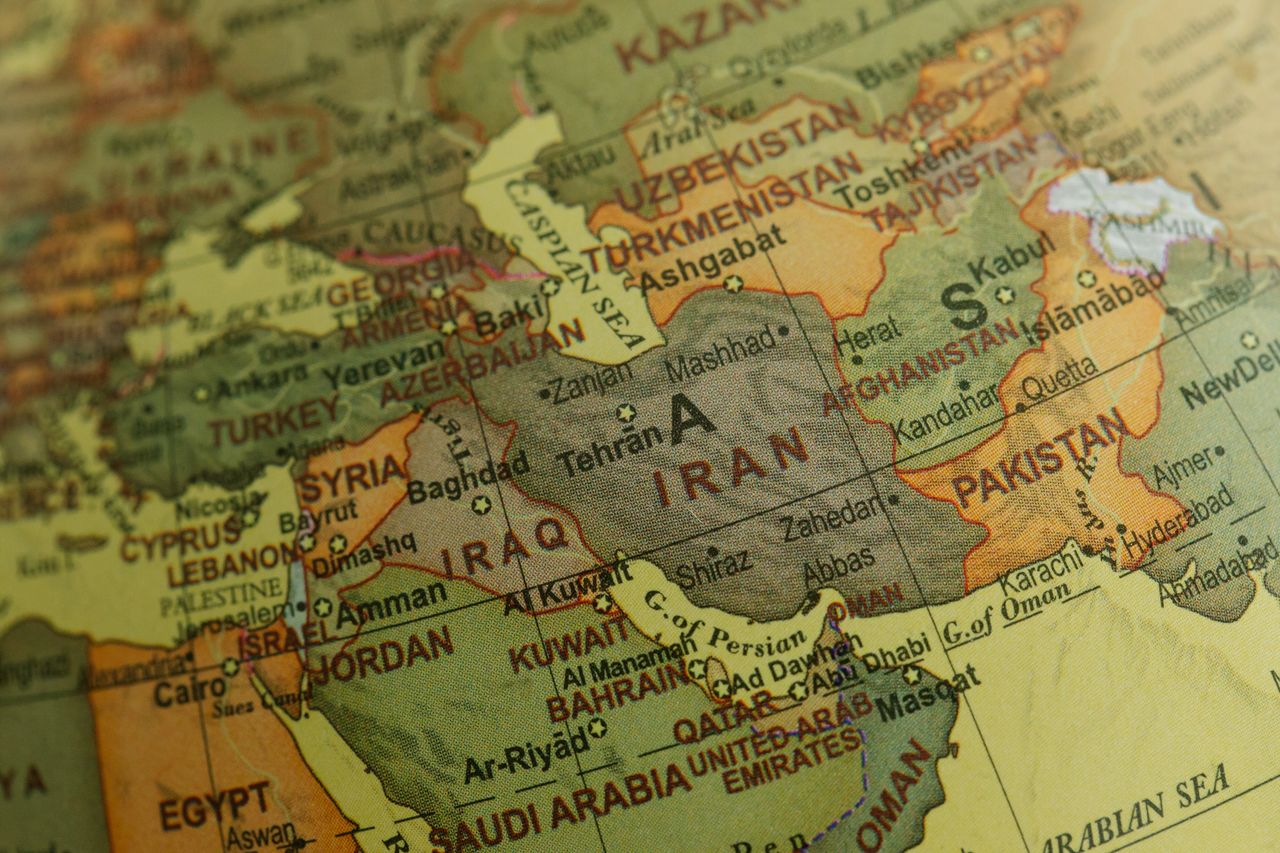
As the June 2025 Israel-Iran conflict widened into a broader regional crisis, Arab governments that first warned against attacks on Iranian territory began changing their public tone after Tehran’s retaliation crossed into Gulf airspace. That shift became clearer after Iran’s June 23, 2025 missile attack on Al Udeid Air Base in Qatar and as reporting from inside Iran showed that some of the country’s poorer provinces were absorbing part of the damage alongside better-known targets near Tehran and Isfahan. The result was a dual political and humanitarian story: growing Arab condemnation of Iran’s actions abroad, and mounting scrutiny over where civilians inside Iran were bearing the cost.
Arab capitals moved from condemning strikes on Iran to condemning Tehran’s retaliation
In the first phase of the conflict, Arab and Muslim governments publicly denounced Israel’s June 13, 2025 strikes on Iran and called for de-escalation. A joint statement carried by Qatar’s foreign ministry said 21 Arab and Muslim countries rejected the attacks and urged a return to negotiations, reflecting a regional consensus against a wider war.
That posture shifted after Iran struck Qatar on June 23. Qatar’s foreign ministry said the attack on Al Udeid Air Base was a violation of its sovereignty and airspace, and the Gulf Cooperation Council issued its own condemnation the same day. Saudi Arabia’s state news agency said the kingdom “strongly condemns” the Iranian attack on Qatar, while the United Arab Emirates foreign ministry said it considered the strike a clear violation of international law.
The change did not amount to Arab support for the earlier strikes on Iran. Official statements from Qatar, Saudi Arabia and the UAE continued to pair condemnation of Iranian retaliation with appeals for diplomacy and restraint. But the public record showed a sharper break with Tehran after the conflict directly touched Gulf territory, especially in states that had spent recent years rebuilding relations with Iran.
While the most internationally visible targets were Iran’s nuclear facilities and sites around Tehran, casualty reporting from Iranian state-linked outlets indicated the impact was broader. Iranian reporting summarized by GlobalSecurity, citing IRNA on June 25, said provinces including Khuzestan and Lorestan ranked among the hardest-hit areas after Tehran, with other affected provinces including East Azerbaijan, Hamedan, Zanjan and Gilan.
Khuzestan is one of Iran’s most strategically important provinces because of its oil infrastructure, but it also contains communities that have long faced unemployment, pollution and uneven development. Separate conflict reporting from Al Jazeera on June 21 cited attacks in Ahvaz and Mahshahr in Khuzestan, showing that strikes were not limited to the capital or nuclear centers. In southeastern Sistan-Baluchestan, Reuters later noted in separate reporting that the province is home to a marginalized Sunni Baluch minority that has long complained of economic exclusion and political neglect.
What remains unclear is the full province-by-province civilian toll. Iranian authorities released aggregate casualty figures during and after the conflict, but they did not publish a comprehensive public breakdown showing exactly how many civilians were killed or injured in each province. That has made it difficult to measure precisely how much poorer regions, compared with wealthier urban centers, were disproportionately affected.
The pattern of damage reflects both military geography and longstanding inequality. Some poorer provinces sit near ports, border corridors, fuel infrastructure or military routes, making them vulnerable when strikes expand beyond core nuclear targets. Khuzestan’s energy assets and transport links help explain why it appeared repeatedly in conflict reporting, even as Tehran remained the political center of the war.
The diplomatic shift among Arab states reflects a different but related reality. Reuters-based reporting and official Gulf statements showed that Arab governments were willing to denounce attacks on Iran’s sovereignty, but they drew a harder line once Iranian missiles targeted a neighboring Arab state. Qatar’s June 24 statement after summoning Iran’s ambassador said the Al Udeid strike violated both sovereignty and the principles of good neighborliness, language that underscored how sharply the crisis had altered the regional mood.
For residents across the Gulf and for civilians inside Iran, the practical meaning is that the conflict’s burden did not stay confined to military compounds or diplomatic talking points. Official statements still emphasized negotiation, but by late June the record showed two confirmed developments: Arab capitals were more openly condemning Iran’s conduct, and the human impact inside Iran had spread well beyond its richest or most politically central regions.