

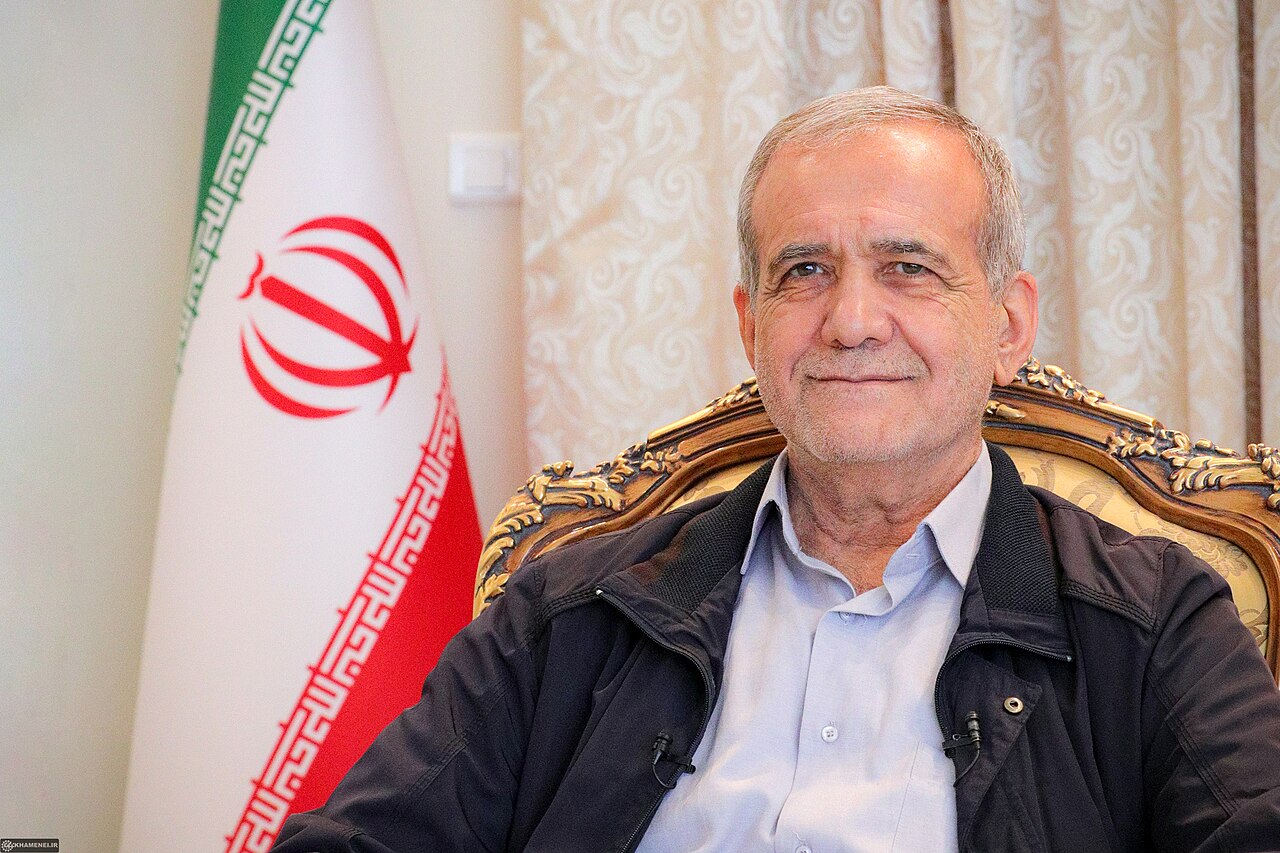
A new report on Iran’s internal negotiations comes as Washington and Tehran remain locked in a broader confrontation over sanctions, maritime access and the terms of any future nuclear arrangement. The report centers on President Masoud Pezeshkian, who, according to accounts published in July, warned Iran’s leadership he would resign if a proposed agreement with the United States was rejected. The reported threat points to how sharply the U.S. blockade and related restrictions were affecting Iran’s economy at the time.
Report details the resignation threat and proposed agreement
The specific account involves Iranian President Masoud Pezeshkian and a proposed understanding with the United States tied to the easing of a U.S. naval blockade, according to a report cited by Reuters and other outlets in July 2026. The report said Pezeshkian told Supreme Leader Mojtaba Khamenei that the blockade had severely disrupted Iran’s economy and jeopardized essential imports, including food and medicine. He also said he would resign if the agreement with Washington was turned down.
Reuters reported on July 18, 2026, that Khamenei later said repeated U.S. breaches had made President Donald Trump’s signature “worthless,” highlighting how quickly the diplomatic opening had narrowed. Other reporting described the agreement as an interim memorandum of understanding reached after months of war-related escalation and economic pressure. Publicly available accounts did not detail the full text of the understanding.
What is verified is narrower than some of the surrounding commentary. Multiple reports describe the resignation threat as part of internal Iranian deliberations over whether to accept terms linked to the blockade and broader restrictions. Iranian officials did not publicly release a verbatim transcript of Pezeshkian’s warning, and the full sequence of private meetings has not been independently published in official Iranian records.
While the reported threat emerged inside Iran’s leadership, the immediate geographic impact extended to the Gulf and shipping lanes tied to the Strait of Hormuz. Coverage by the Associated Press in August said the United States had sought an acceptable deal on the strait before ending its blockade, while Iran insisted Washington first change its conduct. That dispute kept attention fixed on one of the world’s most important energy transit corridors.
For Iran, the confirmed pressure point was supply. Reports describing Pezeshkian’s warning said the blockade was hurting the country’s ability to sustain essential imports, a significant measure of economic stress even without a complete public accounting of shortages. Iranian authorities have not released a comprehensive public list of all affected commodities, ports or provinces.
Outside Iran, the practical concern has been maritime commerce and energy markets. Reporting from the Washington Post and other outlets this spring described tentative discussions in which easing the blockade was linked to limits on Iranian nuclear activity and freer movement through the strait. Even where details remain incomplete, the episode shows how negotiations over Iran were no longer confined to sanctions policy alone but also touched shipping security and import capacity.
The reported resignation threat appears rooted in the collision of war pressure and economic deterioration. Reuters and other outlets described an environment in which Iran faced the effects of a U.S. blockade while indirect talks with Washington struggled to produce a durable settlement. In that setting, Pezeshkian’s reported argument was that rejecting a deal carried immediate costs for the country’s ability to function.
Other reporting gives added context for why the issue became so urgent. Axios reported in April that Trump intended to keep the blockade in place until Iran accepted terms addressing U.S. concerns over its nuclear program. The Washington Post later reported that framework discussions included lifting the blockade in exchange for a pause in enrichment and reduced Iranian restrictions on passage through the strait.
For residents and markets watching the dispute, the clearest takeaway is that any diplomatic opening remains fragile and heavily conditioned by enforcement and trust. Khamenei’s July statement, as reported by Reuters, suggested deep skepticism inside Iran about whether any U.S. commitment would hold. That leaves the practical outlook tied less to rhetoric than to whether future negotiations produce terms both governments formally confirm and actually carry out.