

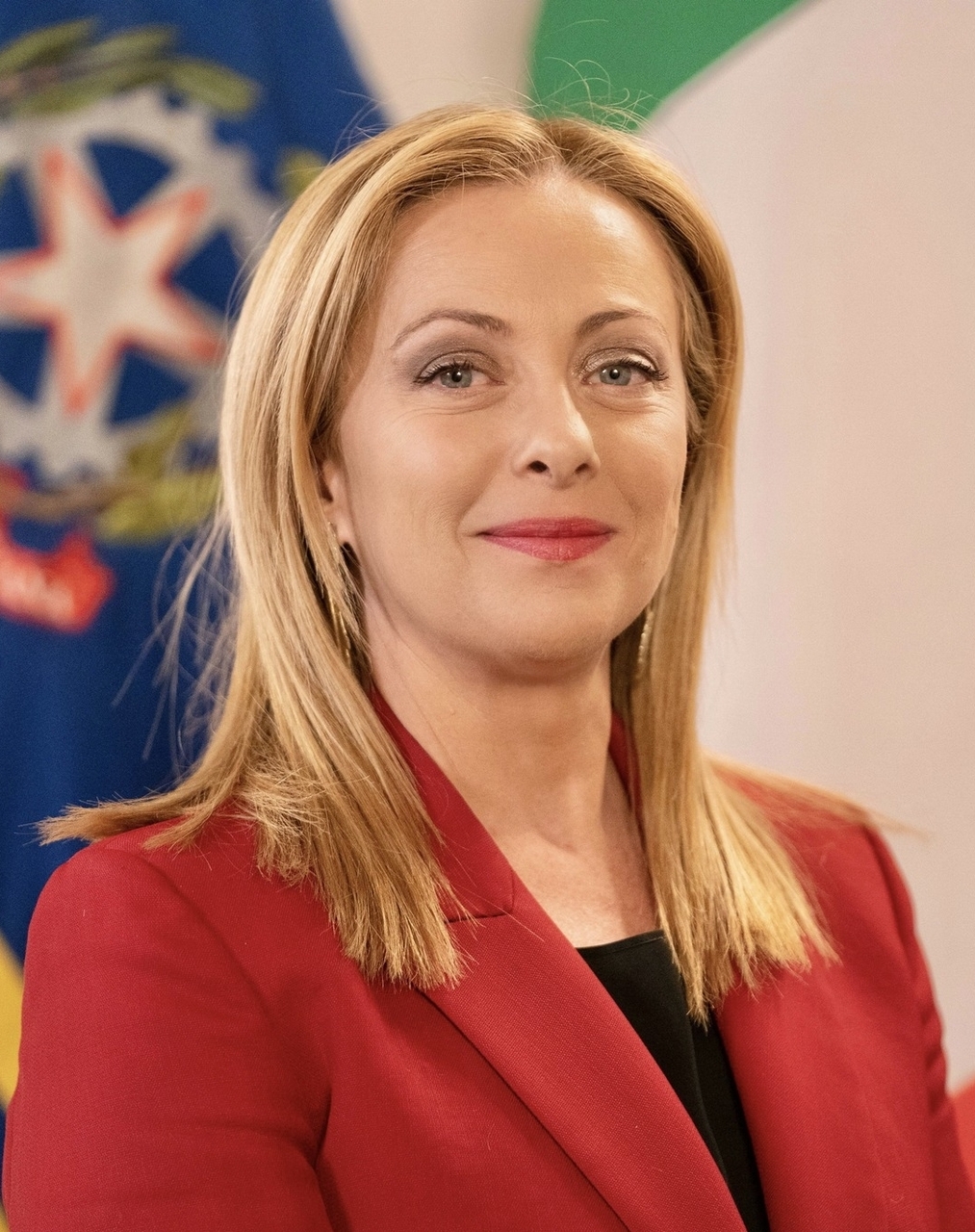
It was more than a fact check. Giorgia Meloni turned a disputed photo claim into a pointed statement about power, diplomacy, and the limits of patience with Donald Trump.
Meloni’s response was sharper than a simple denial
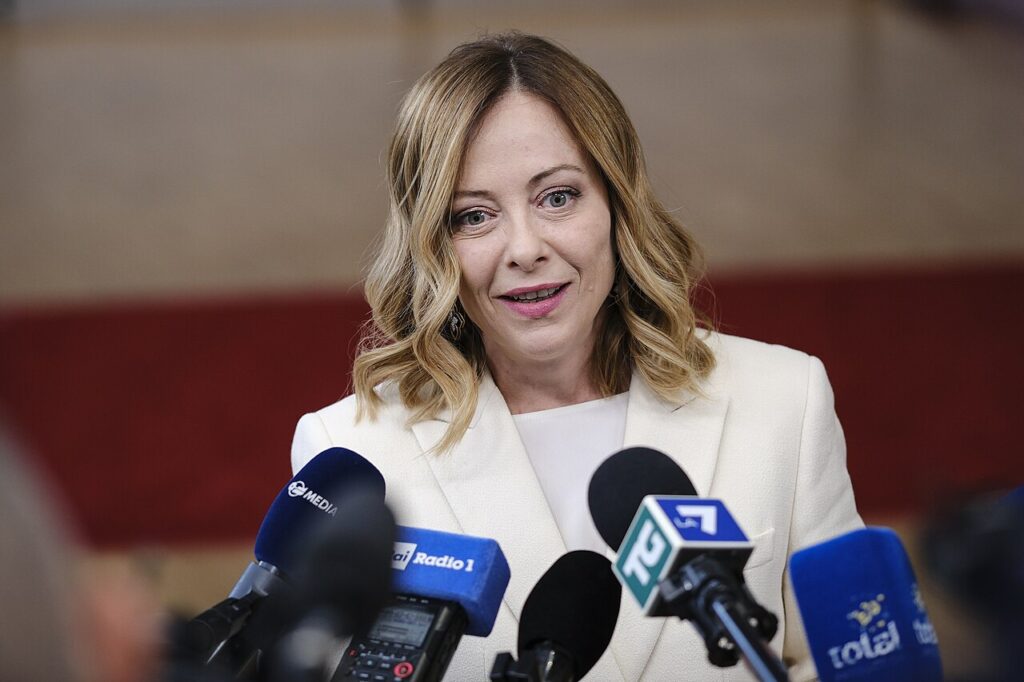
Italian Prime Minister Giorgia Meloni could have brushed aside Trump’s claim that she had begged for a photo with him. Instead, she chose a far more confrontational approach, signaling that the remark touched a deeper nerve than a typical political jab.
According to CNN’s reporting, Meloni posted a video statement rejecting the claim and then widened the criticism beyond the incident itself. She said it was a shame Trump did not show the same firmness toward “the enemies of the West” and “the enemies of the United States” as he appeared to show toward allies. That framing transformed a minor personal boast into a question of geopolitical seriousness.
The significance of the moment lies partly in who delivered the rebuke. Meloni is not a conventional Trump critic from Europe’s center-left establishment. She is a right-wing nationalist leader who has often been viewed as ideologically closer to Trump than many of her European counterparts.
That is why her response landed with unusual force. When a leader sometimes described as politically adjacent to Trump publicly pushes back, it suggests not merely irritation but a calculation that silence now carries greater costs than confrontation.
Why this moment matters beyond a single disputed comment
Trump has long used personal bravado as a political instrument, often reducing diplomatic interactions to stories of dominance, loyalty, and spectacle. Claims about who sought meetings, who praised him, or who deferred to him have been a familiar part of his political style for years.
But Meloni’s rebuttal matters because it pushes back against the narrative architecture behind such claims. In international politics, symbolic hierarchy matters. A suggestion that a foreign leader was eager for a photo can imply status imbalance, political dependence, or public submission.
For a sitting prime minister, especially one leading a major European country and a G7 member, allowing that account to stand unchallenged could invite further diminishing rhetoric. Meloni appears to have understood that dynamic clearly. Her response was not only about personal dignity but about preserving the standing of Italy and, more broadly, the credibility of allied leaders in dealing with Washington.
The incident also shows how quickly symbolic slights can acquire strategic meaning. In an already tense transatlantic environment, even seemingly trivial comments can become tests of whether allies will absorb public humiliation or insist on reciprocal respect.
A wider pattern of foreign leaders speaking out

Meloni’s criticism did not emerge in isolation. CNN described it as part of a broader trend in which foreign leaders have become increasingly willing to answer Trump publicly rather than absorb his provocations in silence.
French President Emmanuel Macron offers one notable example. After Trump made personal remarks about Brigitte Macron, saying Macron’s wife treated him badly and joking about a “right to the jaw,” the French president responded that the comments were neither elegant nor worthy of the office. Macron also criticized Trump’s shifting rhetoric around the Iran war, warning that war was “not a show.”
Other leaders have been similarly direct. German Chancellor Friedrich Merz suggested that Iran had humiliated the United States by stringing it along during failed diplomacy. Spanish Prime Minister Pedro Sánchez went further, calling the conflict “reckless and illegal” and saying Spain would not be complicit in something harmful to the world simply out of fear of reprisals.
These are not casual complaints. They represent a change in posture. Leaders who once calculated that accommodating Trump was the safest course increasingly seem to believe that public pushback is now the more responsible and politically sustainable option.
The deeper sources of allied frustration with Trump
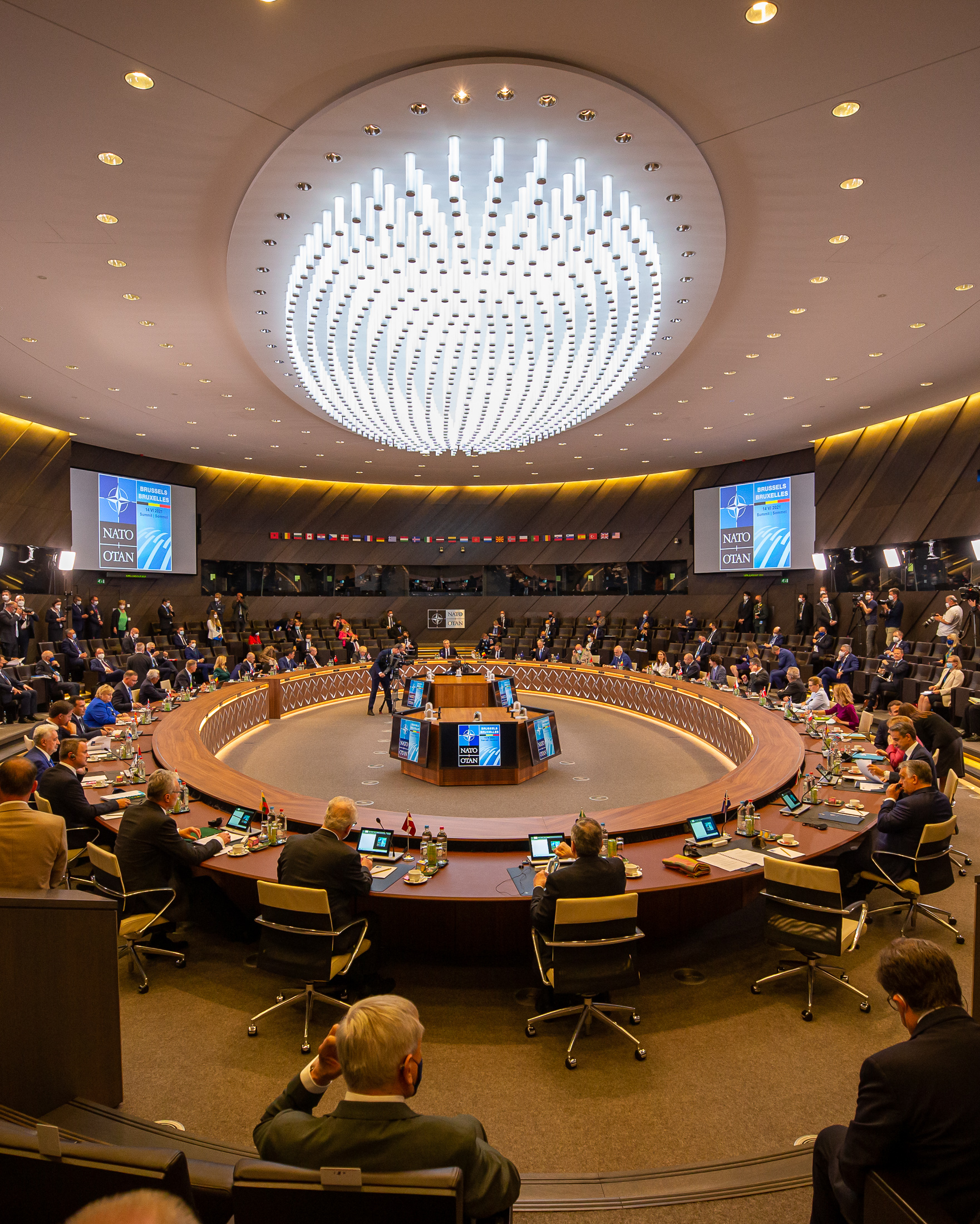
The frustration building among US allies extends beyond rhetoric and personality. Several of the sharpest rebukes this year have come in response to substantive security and sovereignty concerns, especially Trump’s comments on Greenland, NATO, and the Iran conflict.
Earlier in the year, alarm spread across Europe after Trump flirted with the idea of taking over Greenland, a semi-autonomous territory belonging to NATO ally Denmark. Such rhetoric was viewed not as idle provocation but as a challenge to the basic norms governing allied relations. For European governments, sovereignty is not a negotiating prop.
Trade and security tensions have compounded the strain. Canadian Prime Minister Mark Carney, speaking in Davos, warned against using economic integration as a weapon and described tariffs and supply chains as tools of coercion. British Prime Minister Keir Starmer criticized Trump’s remarks about NATO troops in Afghanistan as insulting, especially given the more than 1,000 NATO personnel killed in that war.
The Iran war sharpened these tensions further because it affected not just regional stability but the global economy. Energy prices, market uncertainty, and military escalation all raised the political cost for allied governments already facing domestic pressure.
What Meloni’s rebuke says about the new diplomatic mood

Meloni’s intervention may prove memorable less for the photo dispute itself than for what it revealed about the current diplomatic climate. Allies who once tried to avoid direct confrontation with Trump now appear more prepared to challenge him, even publicly and personally.
That shift reflects a hardening judgment: indulging provocative behavior may no longer preserve stability, but instead encourage more of it. Leaders across Europe and North America seem increasingly concerned that remaining quiet invites further tests, whether on military commitments, trade leverage, or rhetorical humiliation.
Meloni’s case is especially instructive because she is not breaking with Trump from an obvious ideological distance. Her criticism suggests that even leaders on the right, and even those once seen as natural partners, may see a point where strategic alignment no longer requires personal deference. That is a meaningful development in transatlantic politics.
In that sense, her rebuttal was not just a defense of her own reputation. It was a warning that allied patience has limits, and that Trump now faces a world less willing to play along with his version of events.