

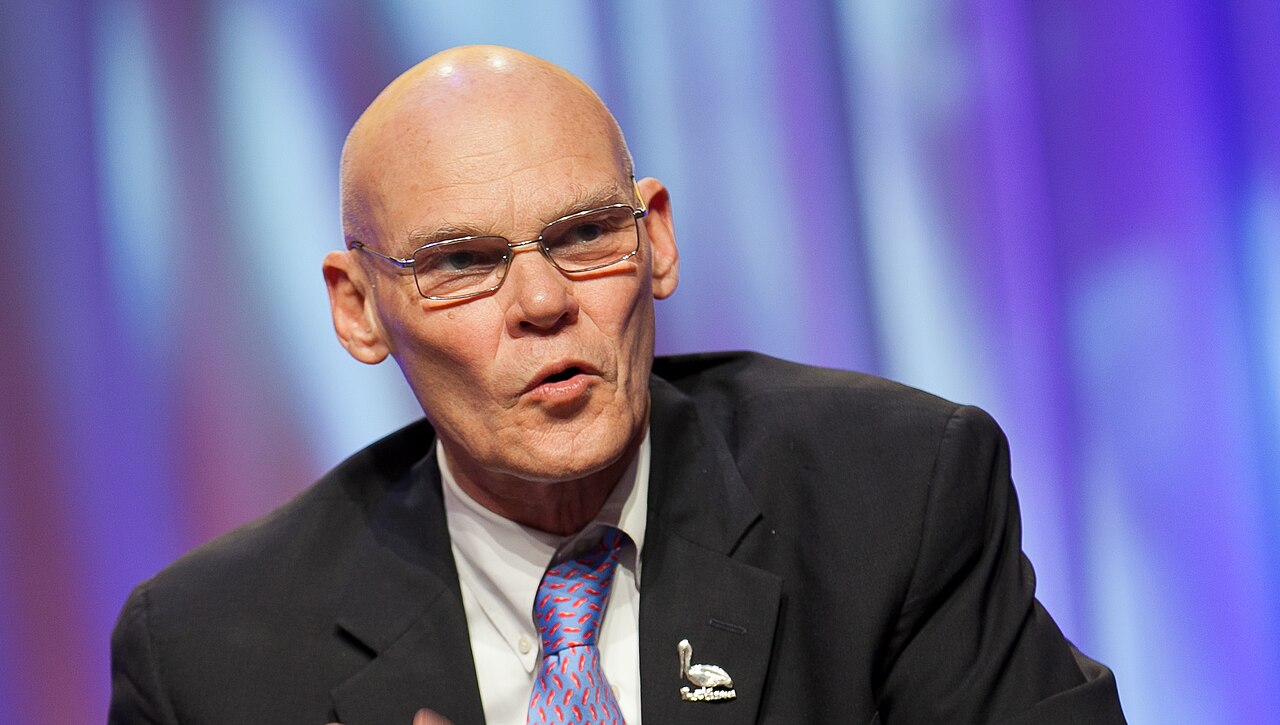
National Democrats have continued to debate who belongs inside the party coalition as ideological and generational divisions shape candidate recruitment and primary politics. That debate sharpened again when longtime strategist James Carville said he would not support Avila Chevalier in a caucus because, he said, “She’s not a Democrat.”
Carville’s comments put caucus support at issue
Carville, a veteran Democratic operative best known for his role in Bill Clinton’s 1992 campaign, made the comment while discussing Democratic Party identity and candidate alignment. In his remarks, Carville said he would not back Avila Chevalier in a caucus, framing his position as a judgment about whether she fits within the party rather than as a personal dispute.
The comment quickly drew attention because Carville remains an influential voice in Democratic strategy circles, especially in media interviews and public discussions about electability. His criticism was direct and left little ambiguity about his position, with the key line centered on his assertion that Chevalier is “not a Democrat.”
What is publicly confirmed is Carville’s stated refusal to support Chevalier in a caucus setting and his characterization of her political identity. What is not yet clear from the available public record is whether Carville was referring to a specific local, state, or congressional caucus, or whether the remark was intended more broadly as a commentary on intra-party alignment.
Chevalier’s immediate response, if any, was not publicly confirmed at the time of reporting. There also was no verified indication that party officials had taken any formal action tied to Carville’s comments, leaving the dispute at this stage as a political flashpoint rather than an official party matter.
The significance of Carville’s remarks extends beyond one candidate because Democratic factions have spent years arguing over litmus tests, coalition-building and ideological branding. Moderates and establishment-aligned figures have often emphasized party discipline and broad electability, while progressives and insurgent candidates have pushed for looser boundaries around who can run under the Democratic banner.
Carville has repeatedly positioned himself in public as a critic of what he views as ineffective messaging or ideological excess within the party. His latest comment fits that established pattern, using support in a caucus as a practical measure of party loyalty and identity rather than treating the disagreement as merely rhetorical.
Without a fuller public record, it is not yet known whether Carville’s comments were tied to policy disagreements, endorsement politics, ballot access questions or prior statements by Chevalier. No comprehensive statement from Democratic leadership was publicly available that either endorsed Carville’s framing or rejected it.
That uncertainty matters because caucus politics can influence endorsements, volunteer support and donor perceptions even when no formal vote is at issue. In that sense, Carville’s words may carry weight inside political circles regardless of whether they produce any immediate organizational consequence.
For Democratic voters and activists, the immediate takeaway is that internal arguments over party identity remain unresolved and highly personal. Carville’s statement does not itself determine ballot status, nomination rules or official recognition, but it does signal that questions about ideological fit can still shape who receives support from influential party figures.
If Chevalier is seeking support among Democratic activists, caucus-goers or allied organizations, Carville’s remarks could become part of how donors, endorsers and local operatives evaluate her candidacy. At the same time, there is no public indication that his view represents a formal consensus, and individual caucus members or local party bodies may reach different conclusions.
What residents and politically engaged readers should expect next is more scrutiny of Chevalier’s platform, affiliations and relationship to Democratic institutions. They should also expect continued debate over whether party labels are best defined by formal registration, policy positions or support from established leaders.
For now, the confirmed development is limited but politically notable: Carville said he would not support Avila Chevalier in a caucus because he does not view her as a Democrat. Unless party officials or Chevalier issue further statements, the matter remains a pointed example of the Democratic Party’s broader internal tensions.