

A powerful earthquake jolted the Philippines. Within days, the United States was again underscoring that one of Asia’s oldest defense relationships remains central to its Indo-Pacific strategy.
That timing matters. It shows how a military alliance forged in the early Cold War now operates in a far broader environment shaped by maritime tensions, disaster vulnerability, and the need for rapid crisis coordination.
A treaty relationship shaped by history and sharpened by the present

The U.S.-Philippines alliance rests on deep historical foundations, but its legal core is the 1951 Mutual Defense Treaty, which has now reached its 75th year in political relevance even if the anniversary language often reflects the broader post-independence partnership that began in 1946. The United States formally recognized the independent Republic of the Philippines on July 4, 1946, according to the U.S. Office of the Historian. Five years later, the two countries signed the defense treaty that still anchors their security relationship.
That framework has been expanded rather than replaced. The 1998 Visiting Forces Agreement created rules for U.S. troops rotating through the Philippines, while the 2014 Enhanced Defense Cooperation Agreement opened the way for deeper military access, prepositioning, and infrastructure development at agreed sites. In practical terms, those agreements turned a formal treaty into an operating alliance.
Recent official statements have made clear that Washington wants no ambiguity about that commitment. In the 2024 U.S.-Philippines 2+2 ministerial dialogue, both sides reaffirmed that the Mutual Defense Treaty applies to armed attacks on either country’s armed forces, aircraft, and public vessels, including coast guard vessels in the South China Sea. That language matters because it ties the alliance directly to one of the region’s most combustible flashpoints.
The alliance has also widened into industrial and capability-building cooperation. A March 2025 joint vision statement from the Pentagon and the Philippine Department of National Defense described the partnership as strong and enduring, with both sides seeking greater defense industrial resilience. What once centered on treaty obligations now includes logistics, interoperability, infrastructure, and long-term force modernization.
Why the latest reaffirmation carries extra weight

A renewed U.S. endorsement of the alliance is never just ceremonial, but in 2026 it carries unusual force. The Philippines sits at the intersection of strategic competition, especially as confrontations with China in the South China Sea have pushed Manila to seek more visible backing from treaty partners. For Washington, reaffirming the alliance is also a signal to the wider region that treaty commitments still matter.
That signal is especially important because the Philippines has moved from being a peripheral partner to a front-line ally in U.S. Indo-Pacific planning. Access arrangements under EDCA, larger and more complex joint exercises, and stepped-up maritime cooperation have all made the alliance more operational. The result is a relationship that now touches air defense, coastal security, intelligence sharing, humanitarian response, and supply-chain resilience.
The United States has also supported Philippine modernization with concrete proposals. In April 2025, the Defense Security Cooperation Agency announced approval of a possible sale of F-16 aircraft to the Philippines valued at $5.58 billion. Whether or not every proposed system is ultimately delivered, the scale of the package showed that the alliance is being translated into hard capability rather than symbolic diplomacy.
In that context, reaffirmation becomes a message with multiple audiences. It reassures Manila, warns potential adversaries against miscalculation, and reminds domestic observers in both countries that the treaty is not a relic. It is an active instrument of policy, one increasingly tied to daily realities in the western Pacific.
The earthquake changed the emotional and political context
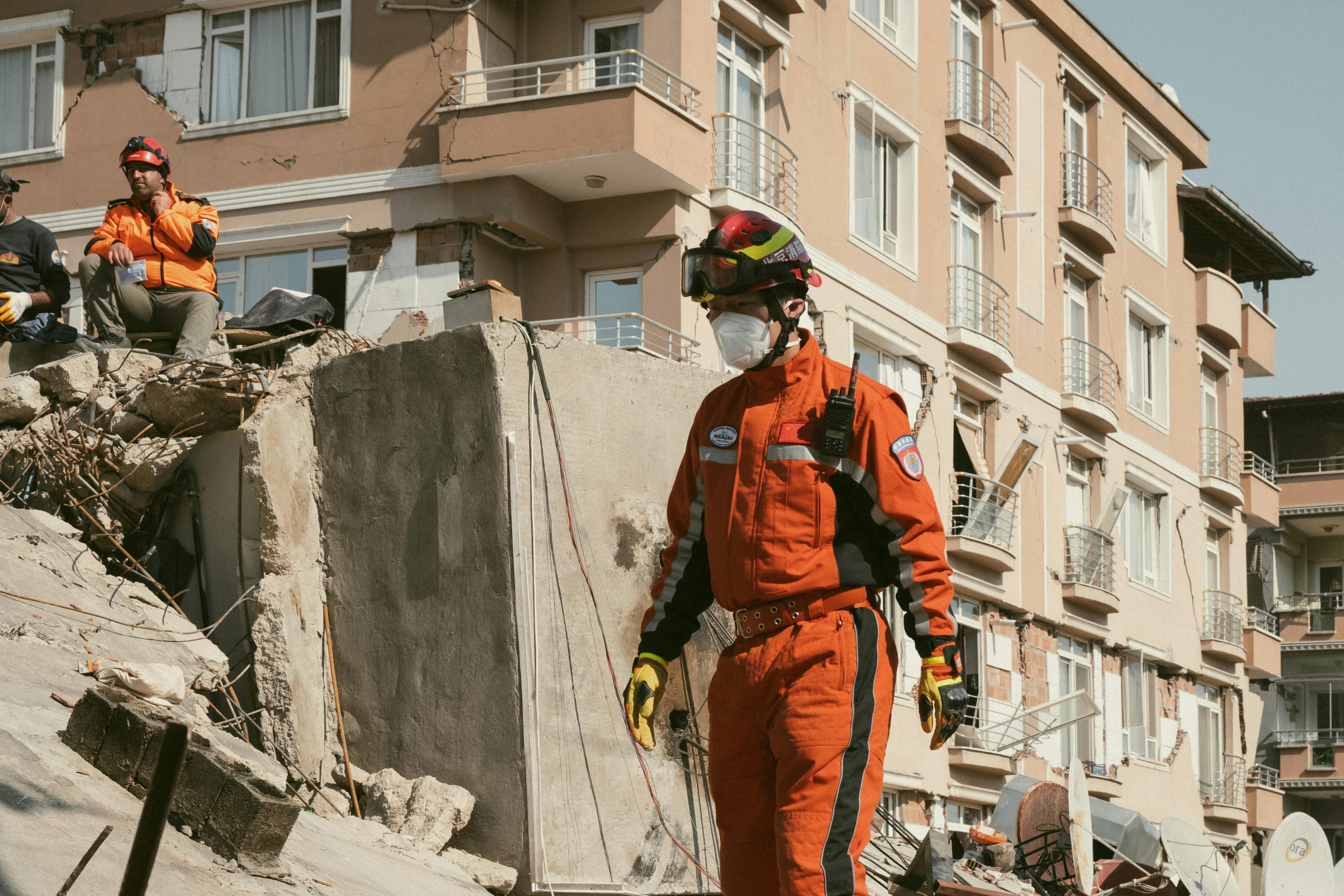
The strategic message landed just after a major natural disaster. According to the U.S. Geological Survey, a magnitude 7.8 earthquake struck near Kablalan in the southern Philippines on June 7, 2026, with severe shaking and an orange pager alert. Another strong quake measuring 6.5 followed hours later near Balangonan, underscoring the scale of the seismic episode.
For Filipinos, that kind of disaster does more than damage buildings. It tests transport networks, local governance, medical readiness, and public trust all at once. In an archipelagic country where geography already complicates emergency response, large earthquakes can quickly expose the limits of local capacity and the importance of outside support, especially in airlift, communications, and logistics.
This is where defense ties and disaster response begin to overlap. Military alliances are often discussed in terms of deterrence and warfighting, but in the Philippines they also have a strong humanitarian dimension. U.S. forces have repeatedly played roles in relief operations after typhoons, earthquakes, and other major emergencies, using the same mobility and coordination tools that underpin security cooperation.
The timing therefore reshaped the meaning of the alliance reaffirmation. Coming days after a destructive quake, the message was not only about deterrence in contested waters. It was also about resilience: the ability of allies to support one another when a crisis arrives from nature rather than from an adversary.
A modern alliance now spans security, logistics, and disaster readiness

One reason the U.S.-Philippines partnership has endured is that it has adapted. A classic mutual defense pact might once have focused narrowly on external attack, but modern alliance management requires a broader toolkit. In the Philippine case, that means combining maritime deterrence with air mobility, infrastructure access, command coordination, and emergency response planning.
The Philippines’ vulnerability to natural hazards makes that adaptation especially important. Earthquakes, volcanic eruptions, and typhoons repeatedly test the same bases, roads, ports, and communities that are relevant to national defense. Investments made under alliance frameworks can therefore serve dual purposes: improving military readiness while also strengthening the country’s ability to move aid, restore communications, and reach isolated populations after disasters.
This dual-use logic helps explain why EDCA sites and interoperability initiatives matter beyond pure geopolitics. Runways, fuel storage, warehouses, and prepositioned equipment can support exercises and contingency operations, but they can also accelerate humanitarian assistance. In a crisis, the line between military utility and civilian relief can become very thin.
That does not mean the alliance is free of controversy. Questions remain in the Philippines about sovereignty, escalation risks, and dependence on U.S. power. Yet even critics often acknowledge that in a disaster-prone and strategically exposed country, access to rapid-response capabilities carries undeniable practical value.
What comes next for Manila and Washington
The next phase of the alliance will likely be judged less by rhetoric than by delivery. Can the United States help the Philippines modernize its forces faster, improve maritime domain awareness, and make infrastructure projects visibly useful to ordinary citizens? Can Manila convert high-level diplomatic support into better coastal defense, stronger civil preparedness, and more credible deterrence?
The earthquake adds urgency to those questions. Recovery and reconstruction will remind policymakers that resilience is not abstract. It depends on engineering standards, emergency communications, transport corridors, hospital capacity, and the ability to move people and supplies quickly across islands. Those are national needs, but they are also alliance-relevant capabilities.
For Washington, the lesson is equally clear. A credible ally is not built only through communiques and ministerial meetings. It is built through presence, planning, investment, and responsiveness when the partner is under strain. In moments like this, reassurance becomes believable only if it is matched by practical support.
The broader significance is hard to miss. The United States did not simply reaffirm a 75-year defense connection with the Philippines in a vacuum. It did so as the country reeled from a major earthquake, turning a familiar strategic message into something more immediate: an alliance is strongest when it can help a nation face both geopolitical pressure and sudden human catastrophe.