

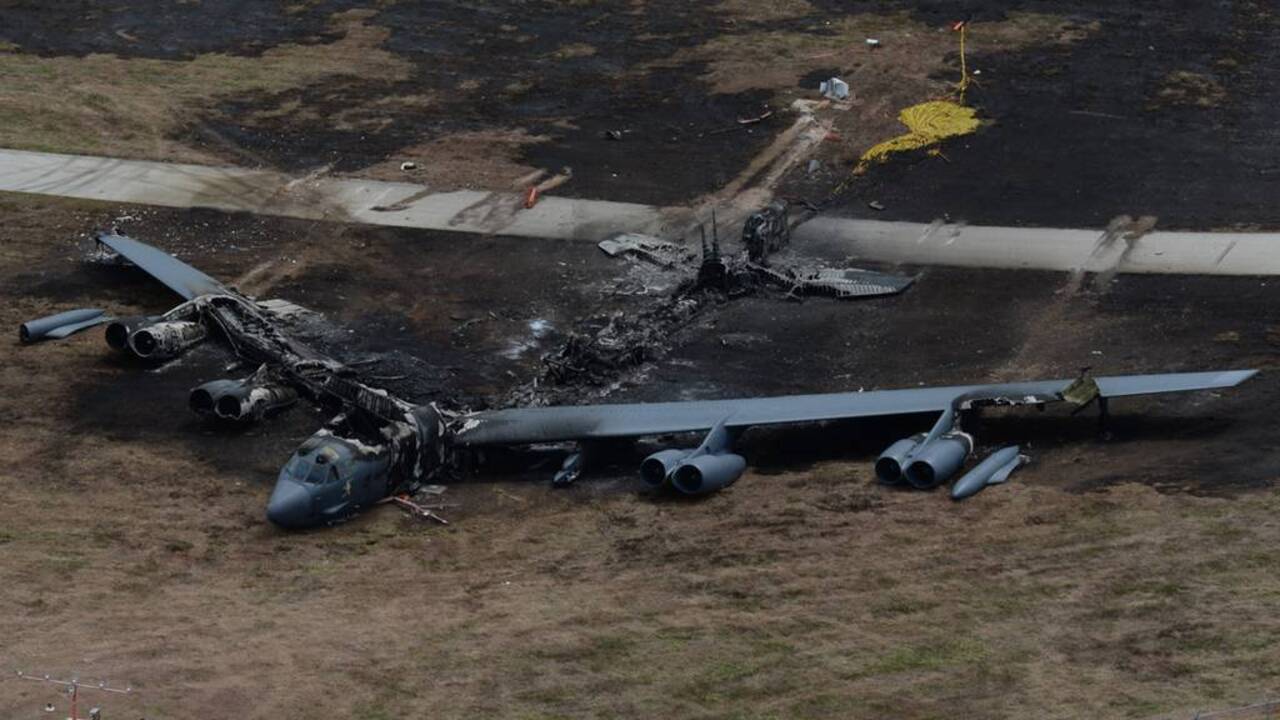
The loss was sudden, violent, and devastating. What happened in the California desert now stands as one of the most serious U.S. military aviation tragedies of 2026.
A catastrophic crash at Edwards Air Force Base

A B-52 Stratofortress crashed shortly after takeoff Monday at Edwards Air Force Base in Southern California, killing all eight people on board, according to military officials cited by the Associated Press. The aircraft went down around 11:20 a.m. during what officials described as a routine test mission. Aerial footage from the scene showed a broad burn area in the desert near the runway, with black smoke rising as emergency crews rushed in.
The dead included both uniformed military personnel and civilian contractors, underscoring how modern defense flight testing often blends government and industry expertise. Boeing confirmed that two of its employees were among those on board. By Monday evening, officials said the wreckage pattern and available video evidence left no realistic chance of survival.
Col. James Hayes, deputy commander of the 412th Test Wing, said families were being notified and described the victims as “great Americans.” The airfield was closed for much of the day as fire crews worked the site and inbound aircraft were diverted. By late afternoon, some access to the base had resumed, but the focus had shifted fully to rescue recovery and the start of a formal investigation.
Why this mission mattered
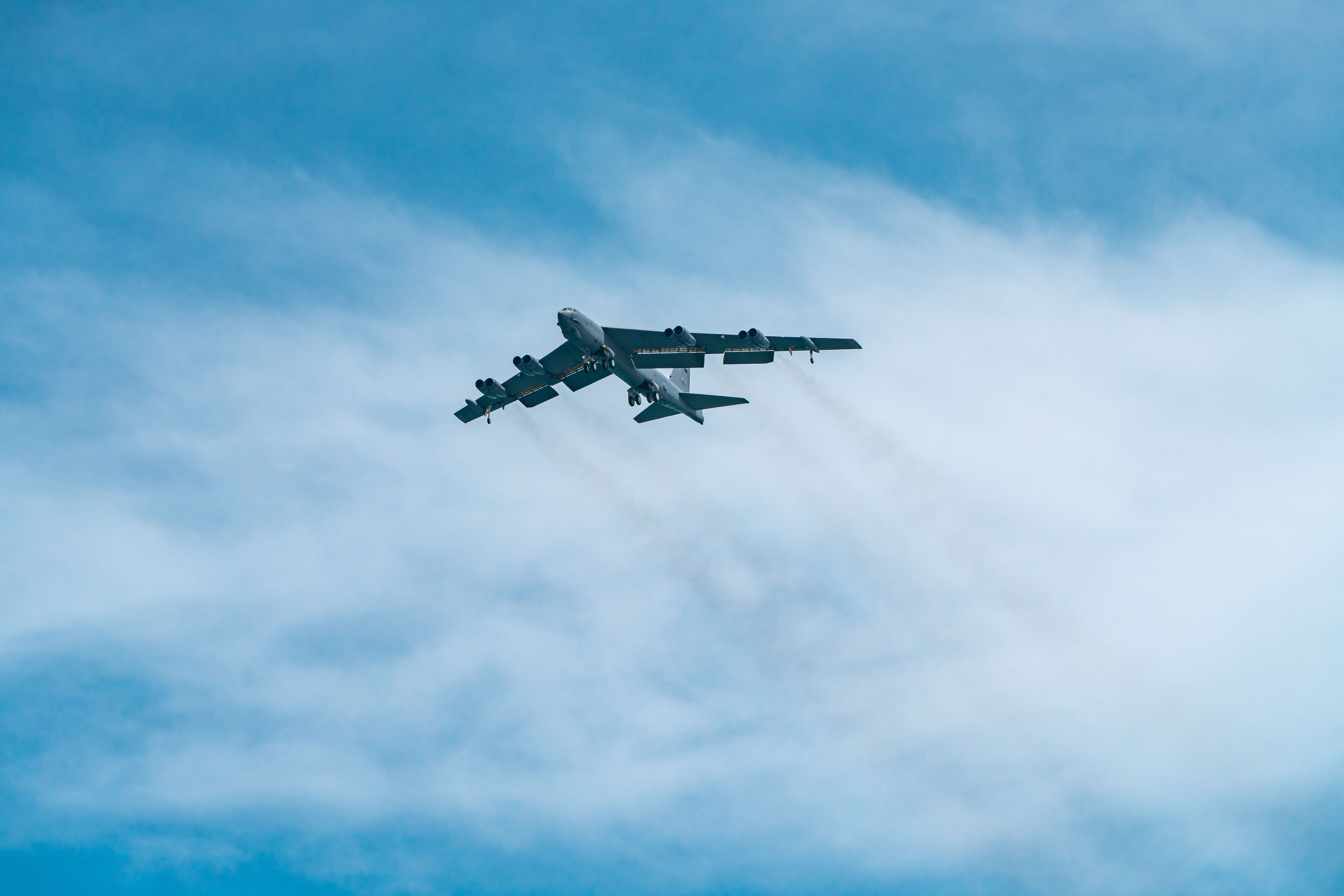
The aircraft was reportedly supporting the Air Force’s radar modernization program, an effort tied to keeping the B-52 viable deep into the future. The B-52 first entered service in 1955, a remarkable fact on its own, and remains central to the U.S. long-range strike mission. Over decades, it has been used in conflicts from Vietnam through more recent operations involving the Middle East.
According to the Associated Press report, Boeing had sent a B-52 to Edwards in 2025 fitted with a modern Active Electronically Scanned Array radar system. The planned test work through 2026 was meant to generate data for a production decision. That makes the crash more than an isolated accident; it touches a larger modernization effort tied to one of the Air Force’s most enduring combat platforms.
Edwards is not an ordinary base. It is the nerve center of Air Force developmental flight testing, where aircraft, sensors, software, and weapons systems are evaluated before broader service use. The symbolism is powerful: a plane designed in the early Cold War was flying with 21st-century upgrades at the very installation most associated with American aerospace progress.
The first questions investigators will ask
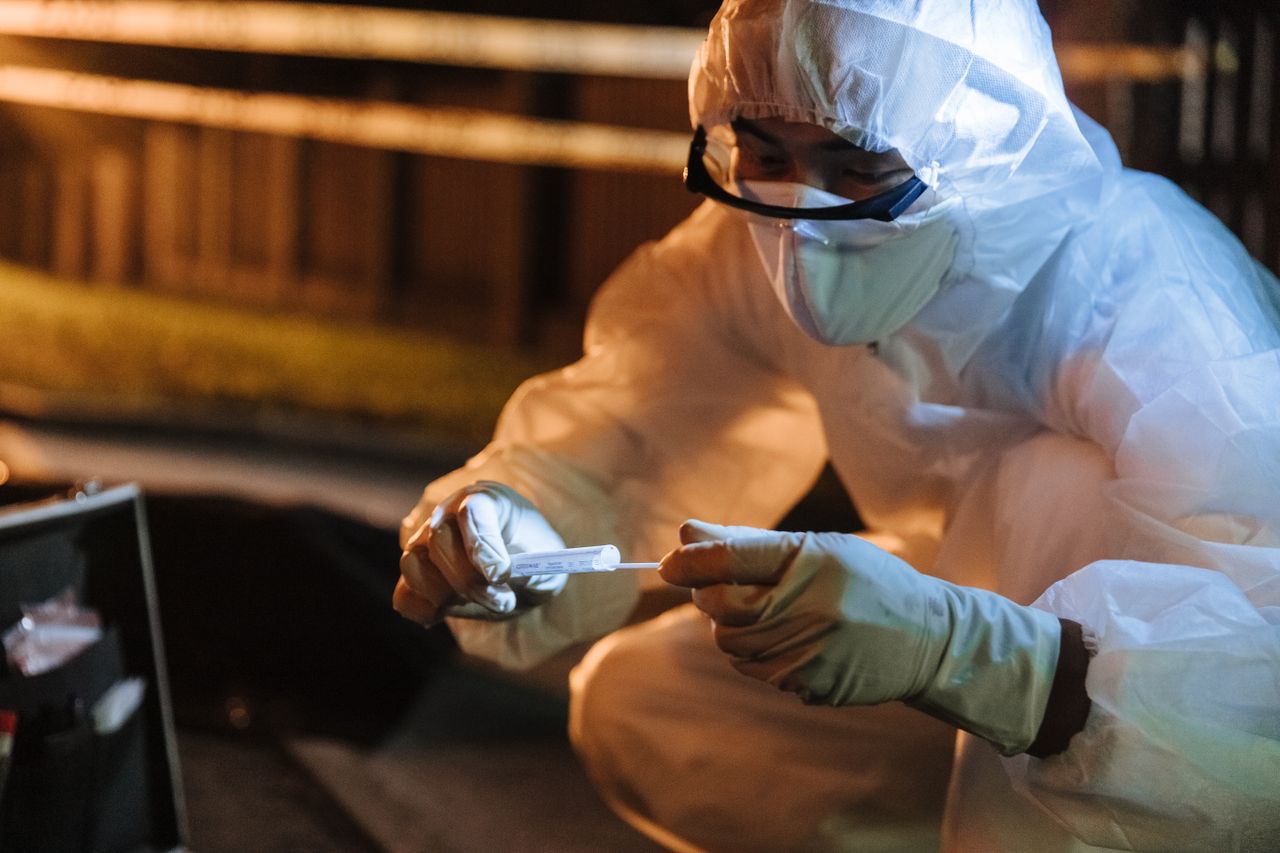
Military crash investigations move carefully, and officials have already warned that a full inquiry could take up to six months. In the earliest stage, investigators typically focus on the sequence of events, maintenance history, flight data, aircrew communications, weather, and the aircraft’s mechanical condition. In this case, the fact that the bomber crashed soon after takeoff sharply narrows the initial field of likely concerns.
Jeff Guzzetti, an aviation safety expert quoted by the Associated Press, said the aircraft’s rapid descent without gaining much altitude may suggest some form of flight control malfunction. That does not establish a cause, but it provides an early analytical frame. If a heavy bomber fails at a low altitude immediately after departure, the crew has almost no time to diagnose, recover, or escape.
Another critical question is whether the accident was linked to the radar modernization work or was unrelated to the test configuration. Investigators will need to separate speculation from evidence. They will also examine whether the aircraft involved was the same B-52 publicly identified in 2025 as part of the radar upgrade campaign, a detail that could prove highly significant.
The B-52’s long record and lingering risks

The B-52 is one of the most recognizable bombers ever built, but longevity does not mean invulnerability. Aging aircraft can remain effective for decades if they are maintained, upgraded, and flown within understood limits. Still, every modernization effort introduces new integration risks, especially when legacy airframes are paired with advanced electronics and updated mission systems.
This is not the first fatal B-52 accident in modern history. Past crashes, including the 1994 Fairchild Air Force Base disaster and the 2008 crash near Guam, remain part of the aircraft’s safety legacy. Each accident unfolded differently, but together they remind the public that even proven military platforms operate in unforgiving conditions where small failures can have catastrophic consequences.
That context matters because the B-52 is expected to stay in U.S. service for years to come. The Air Force has invested heavily in extending its relevance through new engines, radar, and avionics. When a crash occurs in the middle of that transition, it inevitably raises broader questions about how the military balances readiness, innovation, and risk on airframes older than many of the people who fly and maintain them.
What the crash means for the Air Force and Boeing
For the Air Force, the immediate task is accountability without haste. Leaders must identify the dead, support their families, secure the crash site, and preserve confidence in the investigation process. Air Force Secretary Troy Meink said he was deeply saddened by the loss and honored the service of the airmen, civilians, and contractors involved, reflecting the institutional gravity of the moment.
For Boeing, the tragedy carries both human and strategic weight. The company’s confirmation that two employees were aboard places it directly inside the story, not just as a manufacturer but as an active participant in modernization testing. Any findings connected to hardware integration, systems engineering, or test planning would inevitably attract intense scrutiny from defense officials and lawmakers.
The crash may also affect scheduling for the radar modernization effort and possibly related bomber programs. Test pauses are common after fatal accidents, especially when the aircraft involved was performing developmental work. Even if investigators ultimately isolate the cause to a narrow issue, the broader enterprise of upgrading a Cold War bomber for future missions has now been thrown into a more sobering light.
A tragedy that will resonate beyond the desert

The setting of the crash gives the event unusual national resonance. Edwards Air Force Base is not merely a military installation; it is a landmark of American flight test history, the place where Chuck Yeager broke the sound barrier in 1947. A fatal bomber crash there carries symbolic force because it interrupts a narrative of engineering mastery with a reminder of aviation’s permanent dangers.
The eight people who died were part of a specialized community that often works far from public view. Test crews, program engineers, contractors, and military operators perform missions that can shape the future of national defense, yet their work usually becomes visible only when something goes terribly wrong. That makes public understanding especially important in the days ahead.
In practical terms, answers will take time. In human terms, the loss is already clear. Eight people boarded a flight connected to a major defense mission and never came back, and the consequences will extend from grieving families to the highest levels of the Air Force and the aerospace industry.