

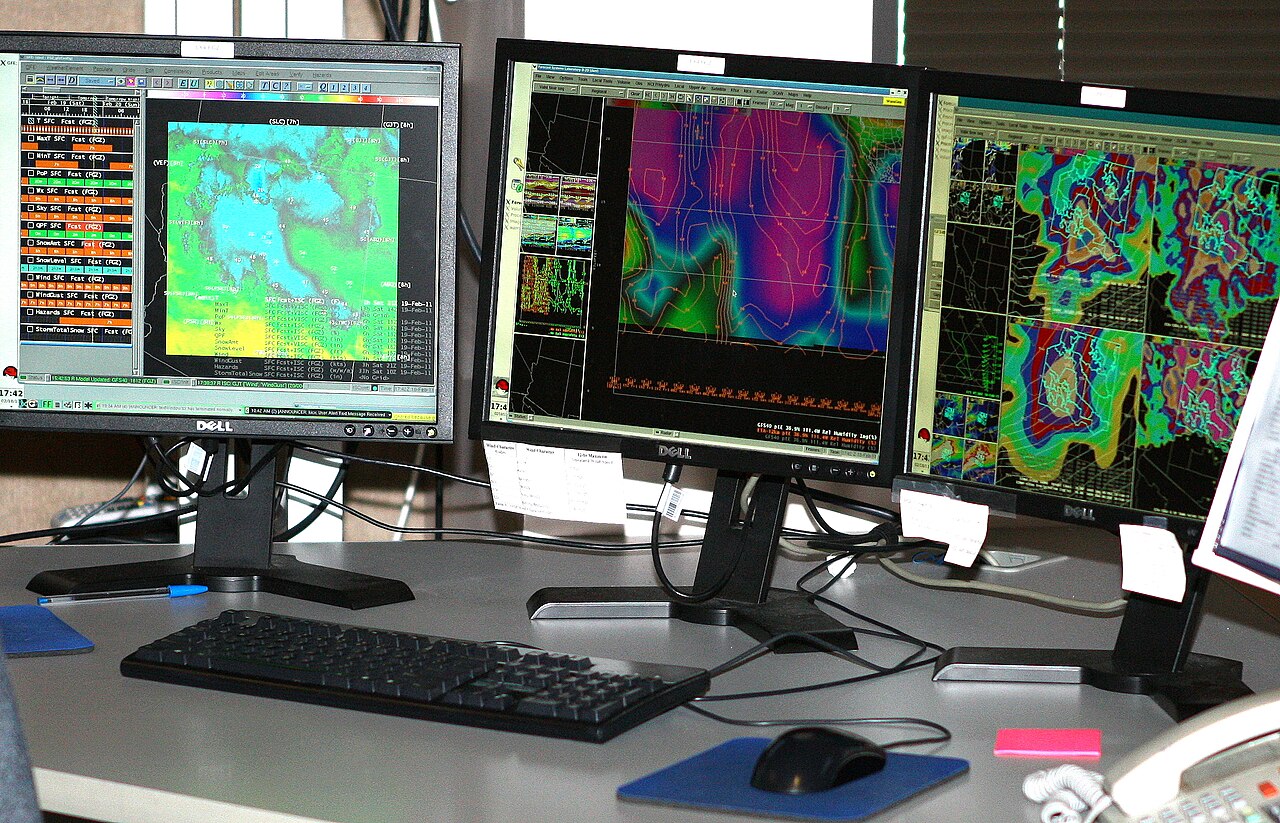
The calendar still says early June, but the atmosphere is behaving more like midsummer. That is why NOAA’s latest warning deserves far more attention than a routine hot-weather forecast.
Why NOAA’s warning stands out this time

NOAA’s Climate Prediction Center is already highlighting a developing heat threat for a wide swath of the nation that includes the Northern and Central Plains, the Upper and Middle Mississippi Valley, the Ohio Valley, and the Great Lakes. In its latest probabilistic hazards outlook, the agency flagged a slight risk of extreme heat from Tuesday, June 9, through Thursday, June 11, 2026, and specifically noted the potential for extreme heat conditions over portions of the Midwest near the core of a strengthening ridge of high pressure. That matters because the setup is not isolated or local. It is being driven by a broad, large-scale pattern that favors widespread above-normal temperatures across much of the continental United States.
The larger forecast backdrop makes the signal even more significant. NOAA’s 6-to-10-day outlook, updated June 1, 2026, favors above-normal temperatures over most of the lower 48, with the highest probabilities centered over parts of the Upper Mississippi Valley. In the agency’s official discussion, forecasters said probabilities for above-normal temperatures were running as high as 80% to 90% in some of that region. Forecast confidence for that period was rated above average, a sign that models are not merely hinting at warmth but converging around it.
That combination of a strong ridge, broad southerly flow, and relatively high forecast confidence is exactly the sort of pattern that can turn an ordinary warm spell into something more dangerous. NOAA’s glossary defines extreme heat as a period of abnormally hot and dangerous temperatures, with or without high humidity, capable of causing harmful impacts to people, animals, and infrastructure. An Extreme Heat Warning, meanwhile, is reserved for times when very dangerous heat is expected or already occurring, though exact thresholds vary by location.
The timing is a major part of the concern. This is arriving in early June, not deep in July or August when the Midwest is more accustomed to prolonged heat. NOAA’s hazard outlook explicitly describes the pattern as unseasonable late-spring warmth. In practical terms, that means homes, schools, outdoor workers, farmers, utilities, and local governments may be dealing with summer-level stress before seasonal routines and heat-preparedness measures are fully in place.
Why early-season heat can be more dangerous than peak-summer heat

An early heat event can be more disruptive than a similar event later in the summer because people are not yet acclimated. Human bodies adapt gradually to hotter conditions, but that process takes time. When intense warmth arrives suddenly after a relatively mild stretch, the stress on the cardiovascular system rises quickly, especially for older adults, children, outdoor workers, and people with chronic illnesses. The CDC warns that extreme heat events have long threatened public health in the United States, and the National Weather Service notes that a heat wave is generally a period of abnormally hot weather lasting more than two days.
This is also one reason forecasters and health officials pay close attention not just to daytime highs, but to overnight conditions. If nights remain warm, the body loses one of its best recovery windows. Apartments without central air, urban neighborhoods with dense pavement, and homes with poor insulation can trap heat long after sunset. The Environmental Protection Agency says urban heat islands can make developed areas noticeably warmer than surrounding rural areas because built surfaces absorb and re-radiate the sun’s energy. That means city residents can experience a longer and more punishing heat exposure than a simple afternoon temperature reading might suggest.
The public-health stakes are well established. NOAA’s National Weather Service says extreme heat has killed more people over the last decade than any other weather hazard on average. EPA likewise describes heat as the leading weather-related cause of death in the United States. CDC materials also emphasize that heat-related illness and death are preventable, but only if people recognize the risk early and act before symptoms escalate.
Early-season heat is especially deceptive because it can feel psychologically unfamiliar. Many people still associate June with manageable warmth, outdoor events, youth sports, gardening, and construction work that seem routine. But a dangerous heat event in early June can produce the same dehydration, heat exhaustion, and heat stroke seen later in summer. In that sense, the season on the calendar can lull communities into underestimating what the atmosphere is delivering.
What this pattern could mean across the Midwest

The current setup points to a classic warm-ridge scenario, with a dome of higher pressure aloft helping compress and heat the air beneath it. NOAA’s hazard discussion says an amplifying 500-hPa ridge centered to the south of Hudson Bay is expected to spread positive height anomalies across much of the country. Near the ridge axis, especially in parts of the Midwest and Great Lakes, that can translate into several consecutive days of well-above-normal temperatures, suppressed cloud cover, and limited relief. Even where official warning criteria are not met, the persistence of the heat can still create dangerous cumulative stress.
For agriculture, the concern extends beyond discomfort. NOAA’s hazard outlook also points to possible rapid onset drought across parts of the Upper and Middle Mississippi Valley, Ohio Valley, and Great Lakes region. That is a critical detail. When high temperatures arrive alongside inadequate rainfall, topsoil moisture can vanish quickly, pastures can deteriorate, and crop stress can intensify in a matter of days. In early June, that kind of drying can shape the rest of the growing season by forcing farmers to manage emerging stress far earlier than they normally would.
Utilities and infrastructure may also feel the strain. When extreme heat arrives early, electrical demand can jump as air conditioners switch on across a broad region. Roads can soften, rail systems can face operational challenges, and older housing stock can become hazardous for residents without efficient cooling. This is not hypothetical; heat routinely exposes the weak points in local infrastructure, particularly where systems were not designed for long stretches of high temperatures occurring this early in the warm season.
The Midwest has experienced notable early-season heat before, but recent years have shown how quickly a heat dome can intensify conditions. The Associated Press reported during a 2025 eastern U.S. heat event that hot air from the Southwest had already made an uncomfortable stop in the Midwest before expanding eastward. That kind of progression is important because it shows how a regional heat event can be part of a broader continental pattern. When NOAA begins highlighting the Midwest in advance, it is often because the atmospheric ingredients are lining up on a scale too large to ignore.
Who faces the greatest risk and what warning signs matter most

Extreme heat does not affect everyone equally. Older adults, infants, young children, pregnant people, outdoor workers, athletes, and anyone with heart disease, high blood pressure, respiratory illness, or limited mobility face elevated danger. The CDC also notes that some medications can impair the body’s ability to regulate temperature or retain proper hydration. That means a heat event is never just a weather story; it is also a public-health and equity story, with the heaviest burden often falling on people who have the least access to cooling, transportation, or medical care.
Outdoor workers are among the most exposed groups because their risk compounds hour by hour. Agriculture, construction, delivery work, road crews, warehouse operations, and public-safety jobs all involve direct or indirect heat exposure that can become dangerous quickly. The National Weather Service emphasizes that children are particularly vulnerable, and that people who work or exercise outside face higher risk. In the Midwest, where summer fieldwork and outdoor labor ramp up rapidly in June, an early heat event can catch workplaces before schedules and safety plans have been fully adjusted.
The most serious medical emergency is heat stroke, which can cause death or permanent disability if not treated immediately. CDC guidance warns that symptoms of dangerous heat illness can include confusion, dizziness, nausea, headache, rapid pulse, and a body that can no longer cool itself effectively. Heat exhaustion often comes first, marked by weakness, heavy sweating, and clammy skin, but that can escalate. The key point is speed: once someone is showing signs of severe heat illness, waiting it out is not a safe strategy.
Animals are vulnerable too. Livestock can suffer reduced productivity and increased stress, pets can overheat rapidly in enclosed spaces or on hot pavement, and wildlife can be pushed toward scarce water sources. NOAA’s definition of extreme heat explicitly includes impacts on animals and infrastructure along with impacts on people. That broader framing is useful because it reminds the public that a major heat event ripples through every part of regional life, from hospitals to farms to neighborhood streets.
How Midwestern communities should prepare right now
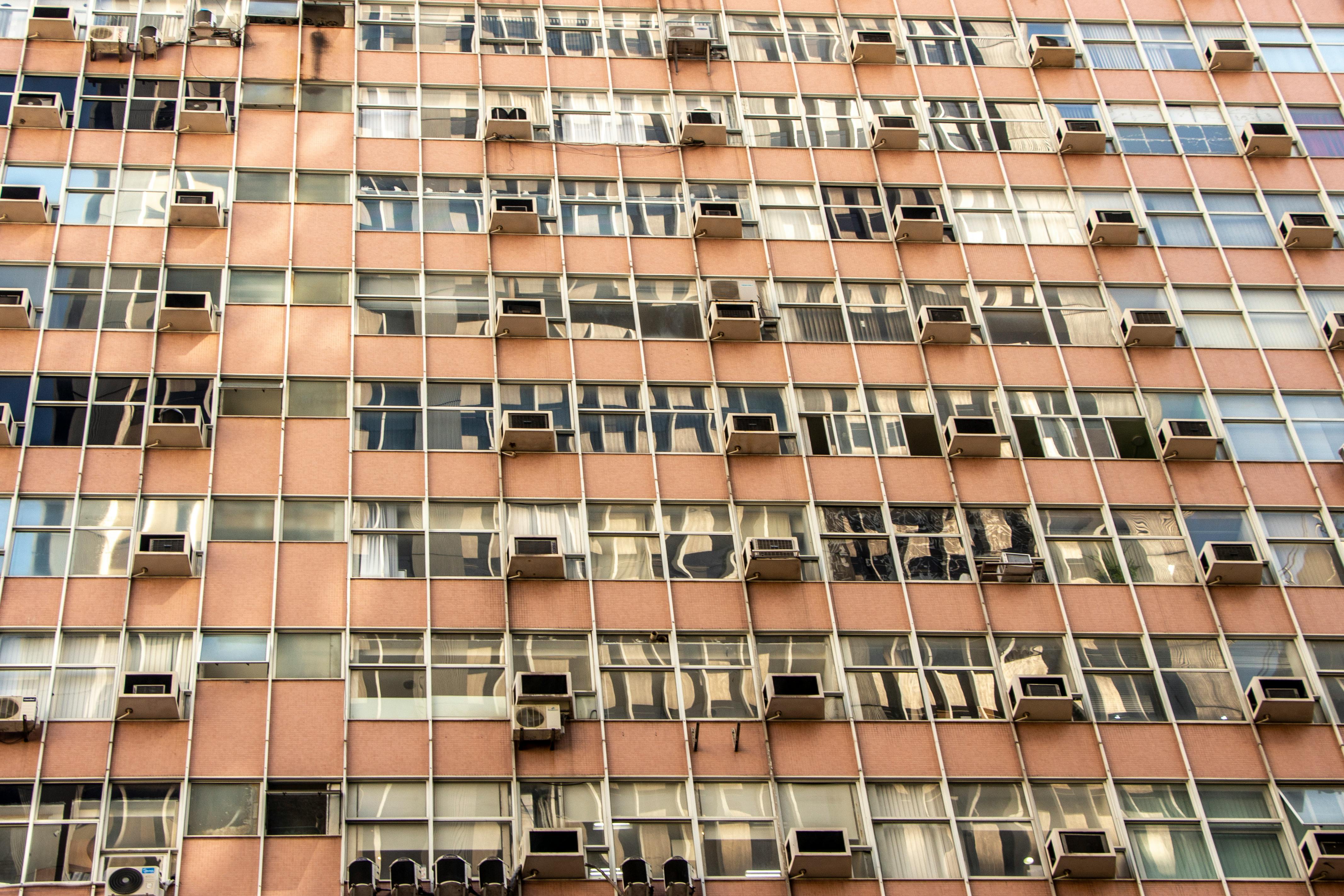
The most important response is to act before the hottest days arrive. NOAA and the National Weather Service urge people to monitor forecasts, heat index projections, and local advisories closely, because local thresholds for warnings can differ. NOAA also points the public to tools such as HeatRisk, wet bulb globe temperature forecasts, hourly local forecasts, and heat index outlooks. These products matter because the danger is shaped by duration, humidity, overnight temperatures, and local vulnerability, not by one headline number alone.
Households should begin with simple but high-impact steps: test air conditioners, replace filters, close blinds during the hottest part of the day, and identify the coolest room in the home. People who do not have reliable cooling should locate public libraries, community centers, malls, or designated cooling centers before the heat peaks. Hydration is essential, but so is timing. The National Weather Service advises drinking water regularly, even before thirst becomes intense, and reducing strenuous activity during the hottest hours.
Communities and employers need a more structured response. That means checking on elderly neighbors, adjusting youth sports schedules, protecting utility crews, rescheduling heavy outdoor labor where possible, and making shade and rest breaks nonnegotiable. Schools, camps, and event organizers should review emergency plans now rather than improvising later. In many early-season heat events, the damage comes not from a total absence of warning but from delayed decisions that assume there is still time to prepare.
The bigger lesson in NOAA’s warning is that the Midwest may be entering a summer in which extremes arrive sooner and hit harder than expected. This early-June event does not guarantee what July or August will bring, but it does show how quickly the region can move from late-spring routines into dangerous heat conditions. When NOAA highlights a risk like this days in advance, the message is not to panic. It is to take the timing seriously, because unusual heat becomes most dangerous when people treat it like ordinary weather.