

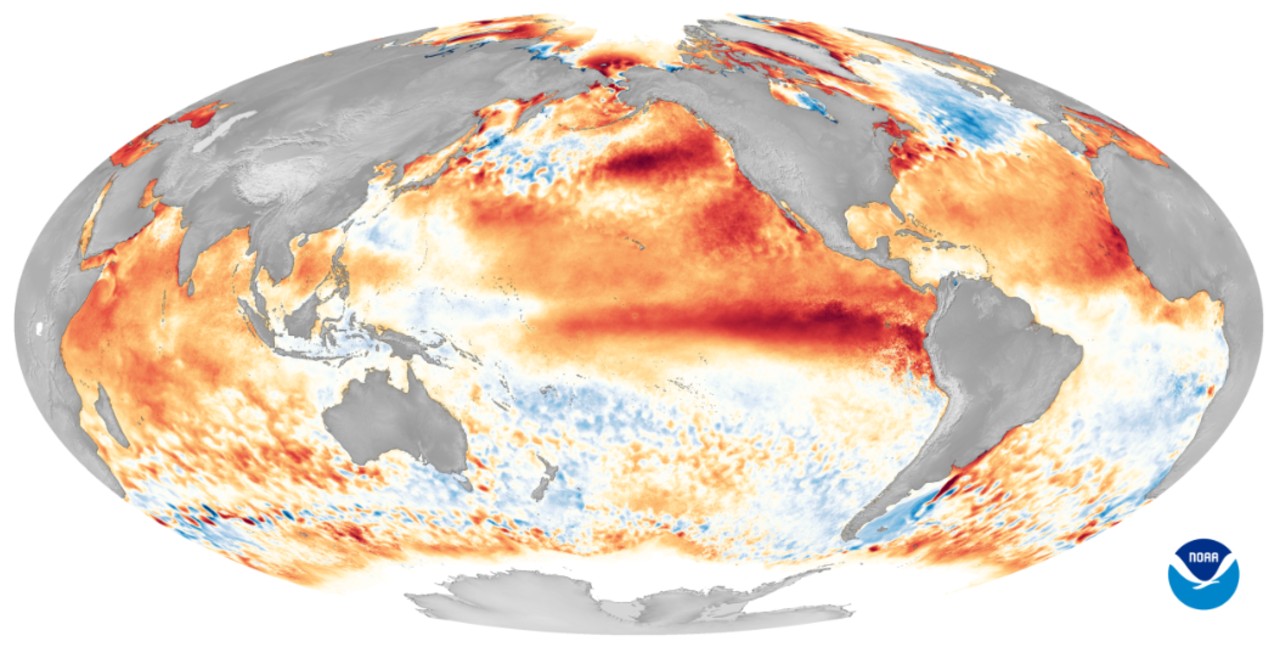
El Niño is back, and this time the warning signs are unusually stark. What might once have been treated as a cyclical weather pattern is now unfolding in a much hotter world.
Why El Niño’s Arrival Matters More Than Usual

The World Meteorological Organization formally declared the onset of El Niño conditions in July 2023, confirming that the tropical Pacific had shifted into the warm phase of the El Niño-Southern Oscillation. That matters because El Niño does not stay confined to the Pacific. It alters rainfall, storm tracks, and temperature patterns across large parts of the globe, often reshaping seasons far from the ocean waters where it begins.
Climate scientists were especially concerned because this El Niño emerged after three straight years of La Niña, a cooling phase that had temporarily muted some of the background warming caused by greenhouse gas emissions. Once that cooling influence faded, the planet’s underlying heat became far more visible. According to the WMO, the warming El Niño helped push global temperatures sharply higher in the second half of 2023.
By early 2024, the WMO said the 2023-24 event had peaked as one of the five strongest on record. That ranking alone would make it significant, but strength is only part of the story. Scientists have repeatedly stressed that El Niño’s biggest global temperature impact often shows up after the peak, which is why forecasters warned that 2024 could feel even more intense in many regions.
This is the critical shift in public understanding: El Niño is no longer being judged against the climate of decades past. It is now layered on top of oceans that are warmer, air that holds more moisture, and landscapes already stressed by drought, wildfire, and extreme heat. In that context, a strong El Niño becomes less an isolated event and more an amplifier.
How a Natural Climate Cycle Can Supercharge Extremes
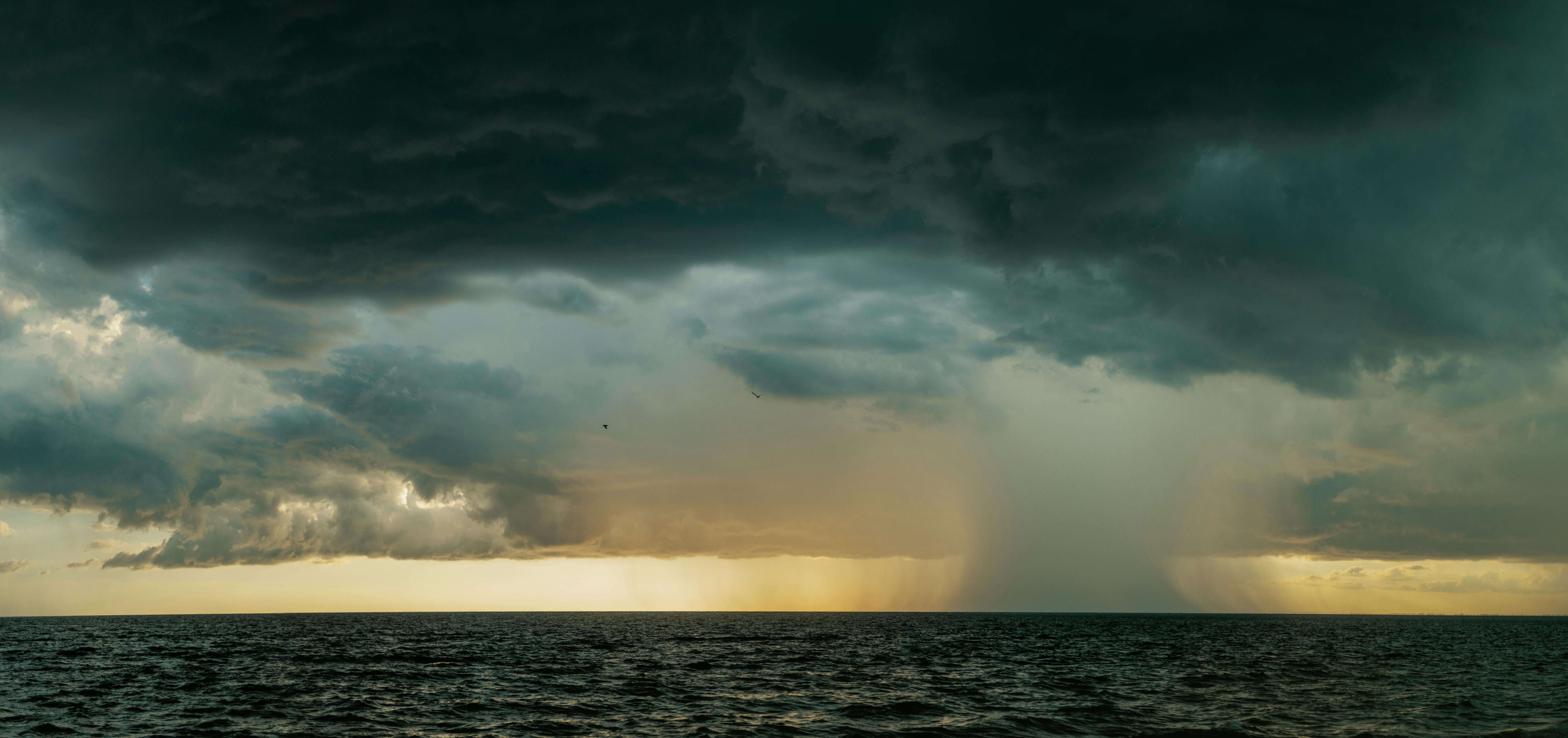
El Niño begins when sea surface temperatures in the central and eastern equatorial Pacific rise above normal and the atmosphere responds in tandem. That ocean-atmosphere coupling weakens trade winds, rearranges tropical rainfall, and sends ripple effects through the jet stream. The result is a climate domino effect that can influence monsoons in Asia, rainfall in the Americas, and seasonal temperatures almost worldwide.
On its own, El Niño is a natural phenomenon. But in a warming world, natural variability can stack on top of human-driven climate change in ways that magnify risk. WMO officials and many independent researchers have warned that the combination is especially potent because global average temperatures, ocean heat content, and sea level are already at or near record highs.
That helps explain why recent El Niño events are being discussed with more urgency. A warmer atmosphere can wring out heavier rain during storms, while hotter baseline conditions can make dry spells and heat waves harsher. The same climate pattern may still operate by familiar rules, but the damage it produces can be more severe because the starting conditions have changed.
The clearest example is heat. WMO confirmed that 2023 was the warmest year on record at the time, with the shift from La Niña to El Niño contributing to the rapid temperature jump. Officials also emphasized that El Niño typically exerts its strongest effect on global temperatures in the year after it develops, underscoring why the event quickly became a central concern for governments, insurers, farmers, and public health agencies.
The Regions Most Likely to Feel the Pressure

El Niño does not hit every region the same way, and that unevenness is part of what makes it so disruptive. In parts of western South America, El Niño can bring intense rainfall, flooding, coastal erosion, and infrastructure damage. In Australia, Indonesia, and some parts of Southeast Asia, it often increases the risk of drought, low river flows, crop stress, and dangerous wildfire conditions.
Across the Americas, the effects can vary by season and location. Some southern parts of the United States may see cooler, wetter winter conditions during El Niño, while northern areas can trend milder. But broad seasonal tendencies do not eliminate local danger. A wetter pattern can still produce destructive flooding, landslides, or severe storms, especially when soils are already saturated or urban drainage systems are weak.
Latin America offered a sobering preview during the recent episode. WMO reported that the region was hit by a double burden in 2023: El Niño impacts layered on top of long-term climate change. That combination helped intensify extremes ranging from severe heat to heavy rainfall and drought, with consequences for agriculture, energy generation, and water supplies.
Food systems are often among the earliest casualties. Fisheries can suffer when warmer Pacific waters suppress nutrient-rich upwelling, while farmers face uncertainty over planting windows, irrigation needs, and harvest quality. In vulnerable economies, even one failed rainy season can cascade into higher food prices, lost income, migration pressure, and worsening health outcomes.
Why Scientists Say the Damage Could Outlast the Peak
One of the most misunderstood features of El Niño is timing. People often assume the worst impacts happen exactly when the ocean signal is strongest, but the atmosphere and land surface do not respond on a single schedule. The WMO noted that even as the 2023-24 El Niño weakened, its impacts were expected to continue for months because heat stored in the oceans and atmosphere keeps influencing weather patterns.
That lag matters for planning. Water managers, emergency agencies, and farmers may face major consequences after headlines move on and after ocean measurements suggest the event is fading. Reservoir decisions, crop choices, disease surveillance, and wildfire preparation all depend on understanding that the tail of an El Niño can still be dangerous.
Health risks also build in delayed ways. Extreme heat raises the threat of dehydration, heart stress, and occupational illness. Flooding can spread waterborne disease and contaminate infrastructure. Drought can degrade air quality through dust and wildfire smoke, while also undermining sanitation and food security in communities with limited resilience.
Scientists increasingly describe these episodes not as isolated disasters but as compound risks. A strong El Niño can coincide with marine heat waves, glacier loss, record ocean temperatures, and rising seas, all of which the WMO has highlighted as part of the broader climate picture. When those factors overlap, the result is not simply unusual weather. It is a systemic stress test for economies, public services, and ecosystems.
What Governments and Communities Should Do Next

The most immediate priority is preparation, not panic. Seasonal forecasting has improved substantially, and agencies now have better tools to anticipate where heat, flooding, or drought risks may rise. The WMO has stressed that early warnings and climate services can save lives and livelihoods, especially when governments translate forecasts into concrete action before hazards escalate.
That means different strategies in different places. Flood-prone regions may need drainage clearing, emergency shelter planning, and stronger public communication. Drought-exposed areas may need water conservation rules, wildfire staffing, crop insurance support, and contingency planning for hydropower shortfalls. Health systems may also need heat-response protocols and backup capacity for climate-linked disease outbreaks.
The larger lesson, however, goes beyond this one El Niño. Natural variability will continue, but every new event now unfolds against the backdrop of long-term planetary warming. That is why scientists treat El Niño less as a surprise than as a revealing stress multiplier, exposing where infrastructure is outdated, where social protections are thin, and where climate adaptation remains dangerously slow.
In that sense, the official arrival of El Niño is not just a weather story. It is a warning about the collision between a familiar climate cycle and an altered Earth system. If this episode feels worse than expected, it may be because the world it has returned to is already operating at the edge of what many communities can manage.