

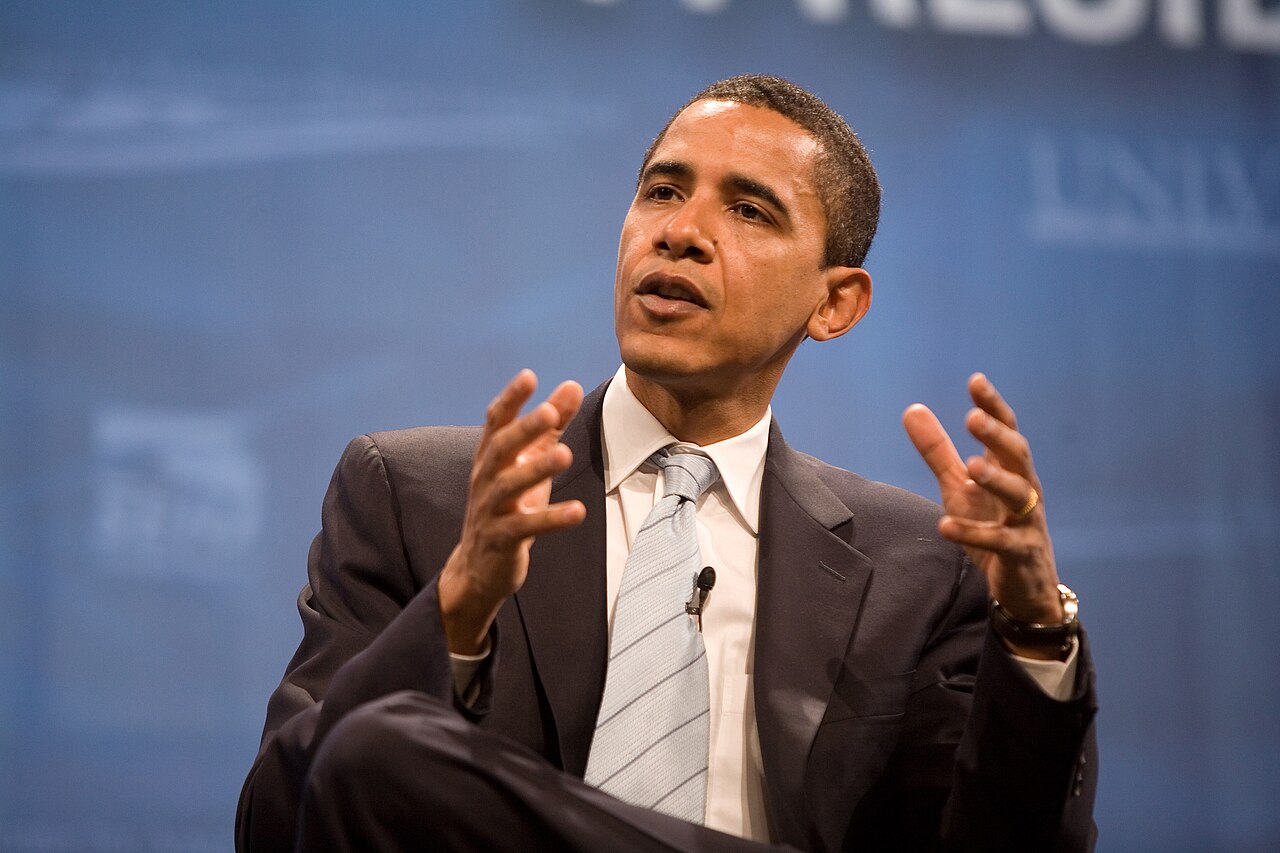
The warning is blunt, and it lands on familiar ground. Barack Obama’s message is that even a successful military campaign against Iran could leave the United States paying a far higher price than many supporters of war anticipate.
Why Obama’s Warning Carries Weight

Obama’s caution about a potential war with Iran is rooted in both history and direct presidential experience. During his time in office, he oversaw wars inherited from earlier administrations, managed the campaign against ISIS, and dealt repeatedly with the consequences of instability across the Middle East. That background gives his comments unusual credibility, especially when he argues that battlefield success does not always translate into long-term security.
His broader point is not simply that war is costly, but that it often produces second- and third-order effects that policymakers underestimate. The Iraq War remains the clearest example. The United States removed Saddam Hussein quickly, yet the aftermath brought insurgency, sectarian conflict, regional disruption, and a long financial burden measured in trillions of dollars.
Obama and many foreign policy analysts have long argued that Iran presents an even more complicated challenge than Iraq did in 2003. Iran has a larger population, deeper state capacity, extensive missile capabilities, and a network of regional allies and proxy groups stretching from Lebanon to Iraq and Yemen. Any war would likely expand beyond a single front and could expose U.S. troops, diplomats, and partners to retaliation.
That is the core of Obama’s warning: America may win initial military exchanges and still emerge strategically weaker. A conflict that appears decisive in its early phase could trigger years of reprisal, instability, and political backlash at home and abroad.
The Strategic Costs of an Iran Conflict

A war with Iran would not be confined to dramatic airstrikes or a short naval confrontation in the Persian Gulf. Military planners have long recognized that Tehran has multiple ways to respond, including missile attacks on bases, cyber operations, disruption of shipping lanes, and pressure through aligned militias. Even limited U.S. action could therefore evolve into a broader regional crisis.
One immediate concern would be the Strait of Hormuz, one of the world’s most important energy chokepoints. Roughly a fifth of global oil consumption passes through the area, and even a temporary disruption could send energy prices sharply higher. That would ripple through inflation, transportation costs, consumer prices, and global markets, making the economic fallout visible far beyond the battlefield.
There is also the matter of deterrence and credibility. Supporters of military action often argue that force restores American strength, but failed or prolonged campaigns can produce the opposite result. If Iran absorbed attacks and still retained the ability to retaliate, Washington could find itself pulled into repeated escalations without achieving clear strategic goals.
Obama’s concern fits this pattern. He has consistently suggested that a war sold as a show of strength could instead reveal the limits of U.S. military power, especially when confronting a determined regional actor with asymmetric tools and high tolerance for pain.
Lessons From Iraq, Afghanistan, and the Nuclear Deal

Much of the debate over Iran is shaped by the legacy of post-9/11 wars. Iraq and Afghanistan demonstrated that the United States can topple governments or degrade enemy capabilities quickly, yet still struggle to build a stable political outcome. Those conflicts reshaped public opinion, making many Americans deeply skeptical of promises that military action will be short, cheap, or transformative.
Obama’s approach to Iran reflected those lessons. His administration pursued the 2015 nuclear agreement, formally known as the Joint Comprehensive Plan of Action, on the theory that diplomacy could constrain Iran’s nuclear activities more effectively than war. Supporters pointed to international inspections, uranium enrichment limits, and a framework that bought time while avoiding direct conflict.
Critics argued the agreement was too narrow and failed to address missiles, proxy warfare, and Tehran’s regional ambitions. Yet Obama’s camp maintained that rejecting diplomacy did not eliminate the problem; it merely increased the odds of a future military confrontation. In that view, the real choice was not between a perfect deal and maximum pressure, but between imperfect restraint and dangerous escalation.
That argument remains central today. If war destroys diplomatic channels and hardens Iran’s leadership, the United States could face a more hostile adversary with stronger incentives to pursue nuclear deterrence rather than weaker ones.
Domestic Fallout and Political Consequences
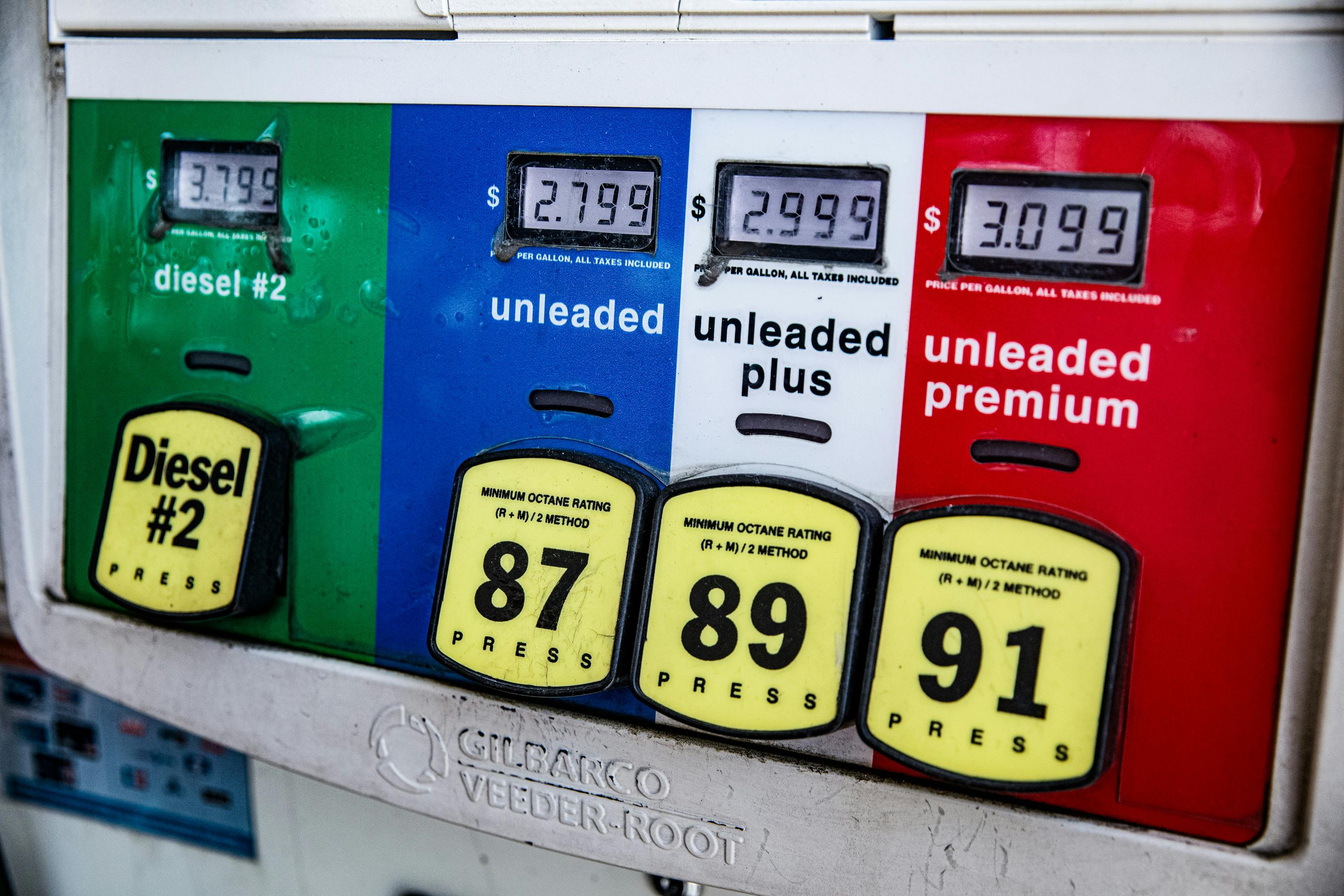
Obama’s warning also speaks to what war would do inside the United States. Large overseas conflicts do not remain foreign policy questions for long; they become domestic economic, political, and social realities. Rising fuel costs, market volatility, defense spending increases, and the possibility of a drawn-out military commitment would quickly affect households already sensitive to inflation and uncertainty.
There is also the burden on military families and veterans. Even a conflict marketed as limited can expand through troop deployments, force protection missions, and retaliatory cycles. The human costs, including injury, trauma, and long-term care obligations, often outlast the political arguments that launched the war in the first place.
Politically, a war with Iran could deepen polarization in Washington. Congress would likely clash over authorization, strategy, and oversight, while public opinion could shift rapidly if U.S. casualties mounted or objectives became unclear. Recent history shows that wars begun under claims of urgency can later become symbols of elite misjudgment.
Obama’s larger warning is therefore about national resilience. A country already divided over institutions, spending priorities, and America’s role in the world may find that another major Middle East conflict drains attention and trust at a time when both are already in short supply.
What Obama’s Warning Means Now
The significance of Obama’s comments lies less in partisanship than in strategic caution. He is urging policymakers and the public to ask a basic but often neglected question: what does success actually look like after the first strike? If there is no credible answer for the day after, the argument for war becomes much weaker.
That question matters because Iran is not an isolated target. It is embedded in a region shaped by Israeli security concerns, Gulf state rivalries, fragile governments in Iraq and Lebanon, Houthi attacks linked to Yemen, and the interests of major powers including Russia and China. A war could scramble all of those relationships at once.
Many defense experts argue that the best policy is a mix of deterrence, intelligence pressure, allied coordination, and selective diplomacy. That approach does not promise a clean resolution, but it may reduce the chance of stumbling into a conflict whose costs far exceed its gains. Obama’s warning fits squarely within that school of thought.
In practical terms, his message is simple: the United States should not confuse the ability to strike Iran with the ability to control what follows. History suggests those are very different things, and ignoring that distinction could leave America worse off than before the war began.