

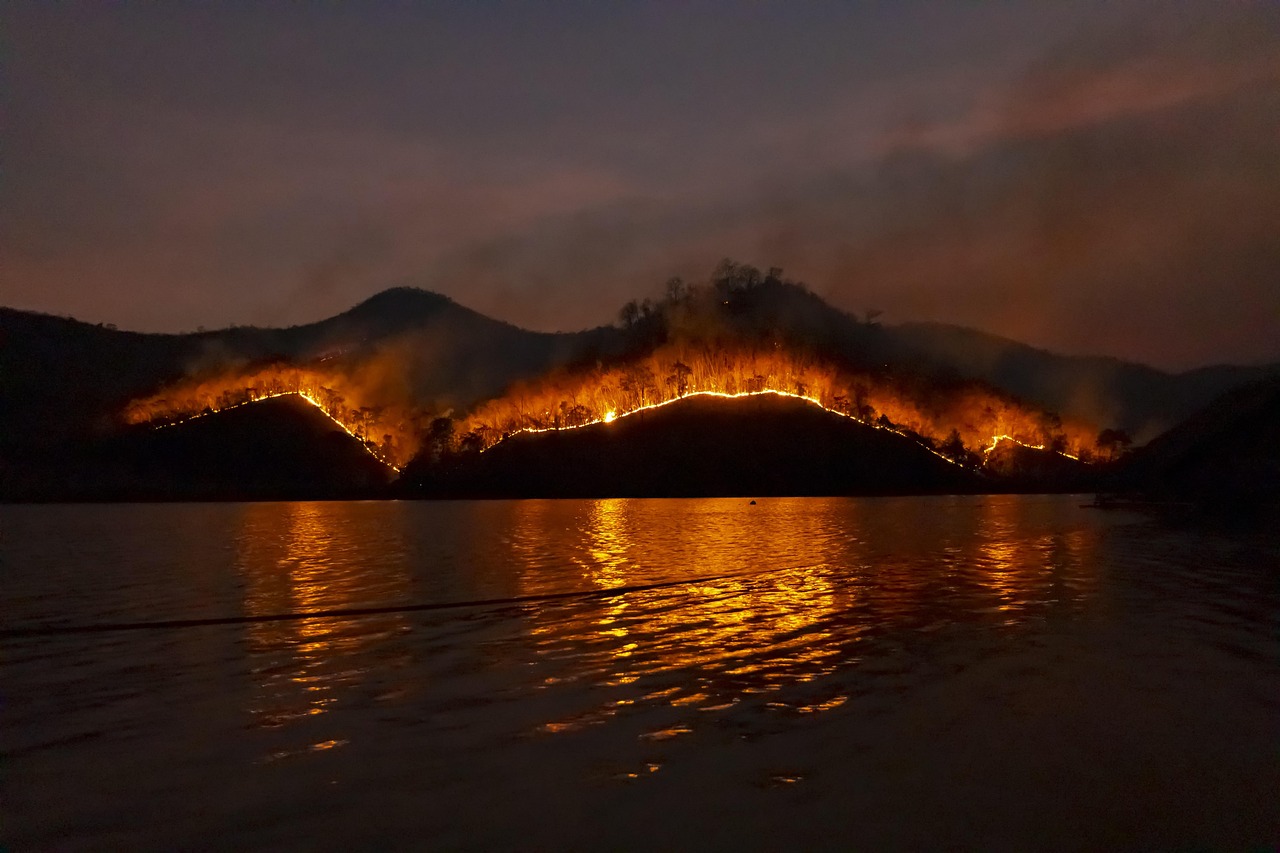
Wildfire season is already making its presence felt in California. For people living near active burn areas, the danger now extends beyond flames to the air they breathe.
Where the biggest concerns are right now

The most urgent concern in California this week has centered on the Sandy Fire near Simi Valley in Ventura County, a fast-moving wildfire that drew evacuation orders and warnings as smoke spread across surrounding communities. According to CAL FIRE incident updates published this week, the fire broke out on May 18, 2026, off Sandy Avenue in Simi Valley and quickly became a major response operation. Associated Press reporting said more than 17,000 people were under evacuation orders as firefighters worked to slow the blaze, while neighborhoods in and around Simi Valley saw heavy smoke and visible aircraft suppression activity.
That matters well beyond one city. Simi Valley sits northwest of Los Angeles, and smoke from a wind-driven fire in that location can push into nearby population centers depending on terrain and changing wind patterns. The Los Angeles Times reported evacuation warnings extending into county-line areas near Agoura Hills, Calabasas, Hidden Hills, Chatsworth, West Hills, and Lake Manor, underscoring how quickly a Ventura County fire can become a regional public safety issue.
Another major fire concern has been the blaze on Santa Rosa Island, part of Channel Islands National Park. AP reported that the fire there had burned tens of thousands of acres and forced the evacuation of National Park Service employees. While that island fire does not threaten dense residential neighborhoods in the same way as the Sandy Fire, it still contributes to the larger smoke picture and strains firefighting resources during a period of elevated risk.
The broader takeaway is that Californians do not need to live directly adjacent to a wildfire to feel its effects. Smoke can travel, evacuation zones can shift, and conditions can worsen quickly if winds pick up again. CAL FIRE has warned on its statewide incidents page that lower-elevation fuels are curing during April and May, especially in Southern California, where warmer and drier than normal conditions are supporting increased fire activity.
Why air quality can become dangerous even miles away

For many residents, smoke is the most immediate health hazard. Federal guidance from AirNow and the Environmental Protection Agency emphasizes that wildfire smoke contains fine particulate matter, especially PM2.5, which can penetrate deep into the lungs and aggravate heart and respiratory conditions. California’s Smoke Ready program warns that wildfire smoke can increase the risk of asthma flare-ups, breathing distress, heart problems, and other serious health effects, particularly for children, older adults, pregnant people, outdoor workers, and anyone with preexisting lung or cardiovascular disease.
That is why air quality alerts are often issued even when flames are not visible from a neighborhood. On May 20, 2026, the Ventura County Air Pollution Control District issued an Air Quality Watch because of the potential for unhealthy conditions tied to both the Sandy Fire and the Santa Rosa Island fire. The agency specifically noted the risk of degraded air in Ventura County and highlighted its wildfire smoke alert system for farmworkers, a reminder that outdoor laborers often face the highest exposure during these events.
The South Coast Air Quality Management District has also issued smoke advisories tied to active Southern California fires this month. Even when monitors do not show severe pollution in every location, smoke behavior can change fast with wind shifts, overnight inversions, and local topography. A community may wake up to relatively clear skies and still face sharply worse conditions by afternoon if plume direction changes.
That unpredictability is why experts urge people to monitor conditions in real time instead of relying only on what they can smell or see. AirNow says the Fire and Smoke Map is designed to help the public understand how smoke may be affecting nearby air quality, while the EPA notes that smoke impacts can vary greatly over short distances. In practical terms, two neighborhoods only a few miles apart can experience very different exposure levels on the same day.
What officials are telling residents to do now

When fire agencies and air districts issue warnings, they are not offering abstract advice. They are responding to a combination of active flames, weather conditions, and health risk models that can deteriorate quickly. In the case of the Sandy Fire, CAL FIRE and local authorities focused first on life safety through evacuation orders and warnings. That remains the top priority for anyone inside or near a designated evacuation zone: leave early if ordered, and do not wait for visible fire at the edge of your street.
For people outside the evacuation perimeter, the guidance shifts toward smoke protection and readiness. AirNow recommends reducing outdoor exertion when smoke is present, especially if the Air Quality Index rises into unhealthy ranges. EPA wildfire smoke guidance also stresses closing windows and doors, using filtered air if possible, and creating a cleaner indoor air space. California’s Smoke Ready program advises the use of a NIOSH-certified N95 respirator for people who must spend extended time outdoors in heavy smoke or where ash is being disturbed.
Ventura County officials have echoed those recommendations while adding a local emphasis on staying informed. Their smoke communications point residents toward alerts, forecasts, and daily updates because smoke conditions can change hour by hour. This is especially important for families with children, seniors, and people managing asthma, COPD, or heart disease. Schools, athletic programs, and employers may also need to adjust outdoor schedules when the AQI rises.
Preparedness also means understanding that wildfire emergencies come in layers. A household may not be asked to evacuate but may still need to cancel outdoor plans, change HVAC settings, keep vehicles fueled, gather medications, and prepare for sudden movement if the fire spreads. In California, especially during wind-driven events, the line between “monitoring” and “acting now” can narrow in a matter of hours.
Why Southern California is especially vulnerable this time of year

Many Americans associate California wildfire danger with late summer and fall, but the current pattern shows why spring can also become dangerous. CAL FIRE’s statewide outlook notes that while snowmelt and spring green-up can moderate fire spread in some regions, curing grasses and brush at lower elevations during April and May are already supporting increased activity. In Southern California, the agency says warmer and drier than normal conditions, combined with a shallower than normal marine layer, are limiting inland moisture recovery.
That setup matters because it creates a landscape that can ignite and spread fire quickly even before the traditional peak of the season. Add gusty winds, steep terrain, and dense development at the wildland-urban interface, and the result is a region where fires can threaten homes almost immediately after ignition. That was part of the story in Simi Valley, where the Sandy Fire moved through dry brush above suburban neighborhoods and prompted a major evacuation response within hours.
Smoke risk follows the same geography. Southern California’s basin-and-valley layout can trap pollution, and local wind shifts can push smoke into communities far from the ignition point. NBC Los Angeles reported that brush fires this week led to a regional air quality advisory, with smoke affecting broad parts of Southern California. In these episodes, the public health problem is not confined to the burn scar. It can extend into school zones, commuter corridors, work sites, and residential neighborhoods that are nowhere near visible flames.
This is also why early-season fires deserve close attention. A major May wildfire can signal that fuels are already receptive and that the coming months may bring repeated smoke episodes. For residents, that means wildfire readiness is no longer something to delay until August. It has already become a present-tense issue in several California regions.
What residents should watch in the days ahead

The next phase of any wildfire emergency depends on three moving parts: containment progress, weather, and smoke transport. Firefighters can make gains when winds ease, humidity improves, and aircraft can operate effectively. But even after a fire line stabilizes, smoke can remain a regional issue as hot spots continue to burn and winds redistribute pollution. That means residents should not interpret improving containment numbers as an automatic sign that air quality concerns are over.
People near Simi Valley, Ventura County, western Los Angeles County, and other affected areas should closely track official incident updates, evacuation notices, and air district advisories over the coming days. CAL FIRE remains the key source for incident status, while AirNow and local air agencies provide the most practical picture of smoke exposure. The most useful routine is simple: check fire status in the morning, check AQI before outdoor activity, and recheck later in the day if smoke is nearby.
Residents should also pay attention to symptoms, not just maps. Coughing, throat irritation, chest tightness, unusual fatigue, headaches, or shortness of breath can all be signs that smoke is affecting health, even if conditions do not look severe outside. People with asthma or heart and lung disease should keep medications accessible and follow care plans early rather than waiting for symptoms to worsen.
The larger message from this week’s California fire activity is clear. Americans near active wildfire zones are being warned for good reason, and poor air quality is not a secondary problem. It is one of the main hazards of modern wildfire events. In a state where flames can move fast and smoke can travel even faster, caution is not overreaction. It is the right response to a threat that can expand far beyond the fire line.