

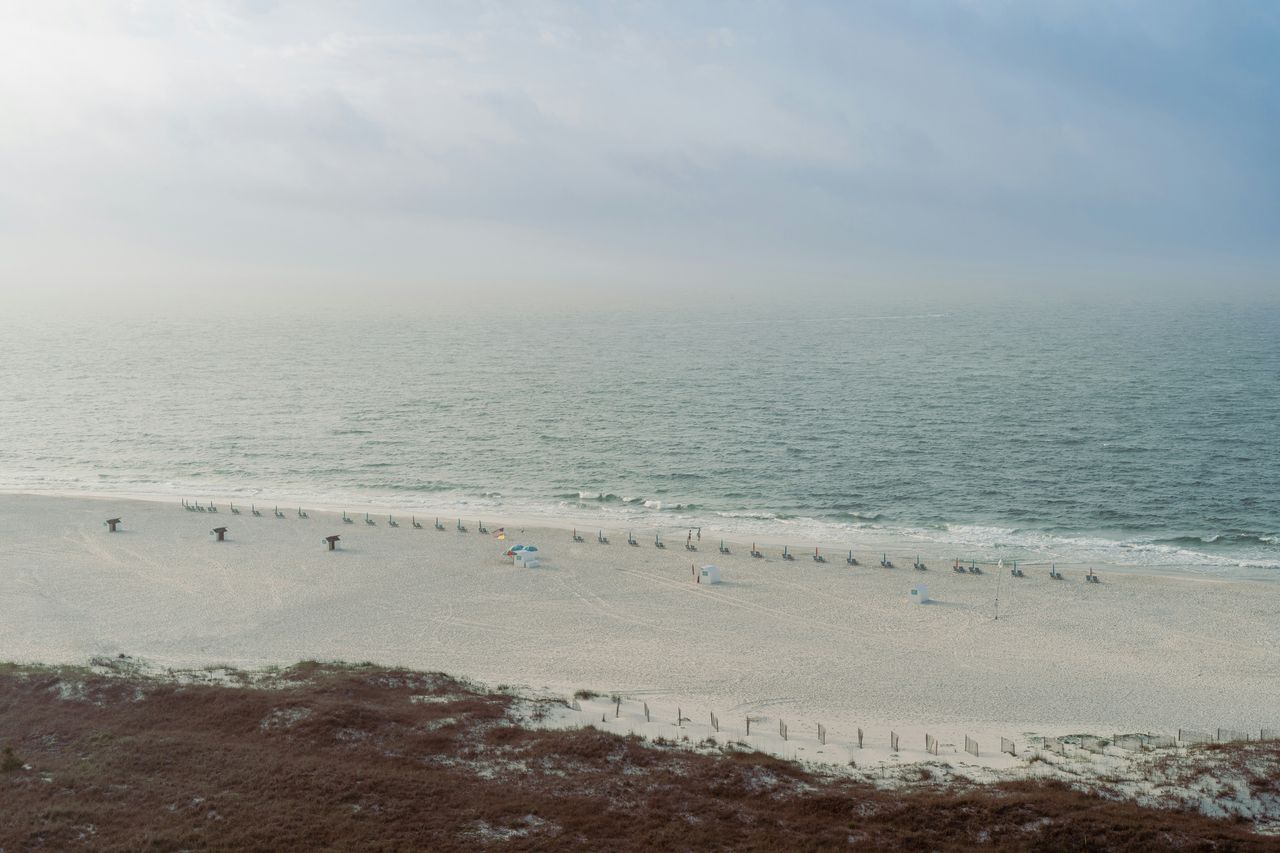
Memorial Day weekend is supposed to feel carefree. This year, along much of the Atlantic Coast, it comes with a serious warning.
Why this Memorial Day warning matters so much

Beach forecasts heading into Memorial Day weekend show an elevated rip current threat stretching across a broad swath of the Atlantic seaboard. Good Morning America, citing the National Hurricane Center, reported on May 22, 2026, that high rip current risk was posted off parts of Florida as well as Maryland, Delaware, and New Jersey, while moderate risk extended across Georgia, the Carolinas, and Long Island. That geographic spread matters because Memorial Day is one of the busiest beach weekends of the year, when many casual swimmers enter the surf for the first time in months.
The National Hurricane Center’s rip current guidance uses plain language for a reason. A high risk means life-threatening rip currents are likely and swimming conditions are unsafe for all levels of swimmers. A moderate risk does not mean safe conditions; it means dangerous rips are possible and can develop suddenly, especially near piers, jetties, breaks in sandbars, and other structures that alter wave flow.
Florida-based forecasters also warned that the threat is not confined to one or two local trouble spots. WUSF reported on May 22 that rip current statements were already in effect along the East Coast and Florida Panhandle, with waves building through the holiday weekend. Its forecast discussion said nearshore waves of 3-4 feet were possible along parts of Florida’s East Coast on Saturday and Sunday, with 4-5 foot waves possible on Memorial Day, May 25, 2026.
That combination of holiday crowds and rougher surf is what turns a weather advisory into a public safety issue. Rip currents are not exotic, rare events; they are one of the most persistent beach hazards in the United States. NOAA says they are powerful channels of water moving away from shore from the area where swimmers enter the ocean, and they can form when breaking waves pile water against the beach and force it seaward through narrow gaps.
What makes the timing especially concerning is that many people judge danger by what they can see at a glance. If the sky is bright, the water temperature is inviting, and the beach is crowded, the ocean can look manageable. But NOAA and National Weather Service offices repeatedly warn that some of the worst rip current days occur during otherwise pleasant weather, including when distant storms send long-period swells toward the coast.
What rip currents are and why even strong swimmers get trapped

A rip current is not an undertow and it does not drag people straight underwater. Instead, it acts like a fast-moving river in the surf zone, carrying water from near the beach back toward deeper water. NOAA describes rip currents as powerful streams flowing from the nearshore out into the open ocean, often forming in darker gaps between breaking waves or near jetties and piers where wave patterns become uneven.
That distinction matters because many swimmers react the wrong way. When people feel themselves being pulled away from shore, instinct tells them to fight directly back toward the beach. But swimming straight against a rip current quickly drains energy, and exhaustion is often what makes the situation deadly. NOAA’s safety guidance is consistent: swim parallel to shore to escape the narrow current, then angle back to land once free of the flow. If that is not possible, float or tread water, conserve energy, and signal for help.
The hazard is not limited to weak swimmers or tourists unfamiliar with the ocean. WUSF emphasized that rip currents formed from any wave height are dangerous and that swimmers of any skill level can be swept into one. That warning reflects a hard truth recognized by beach safety officials: strength in a pool does not necessarily translate to survival in surf. Ocean conditions are dynamic, visibility is poor, footing disappears quickly, and panic can overpower experience within seconds.
Rip currents also exploit false confidence. A person may enter the water at a beach that appears calm because the waves are smaller in one section than in another. Ironically, that smoother-looking patch can be the rip channel itself, a corridor where water is moving seaward instead of piling up into visibly breaking surf. NOAA imagery and educational materials often show rips as darker, choppier, or foam-streaked lanes between sandbars, but these signs are not always easy for the public to detect in real time.
The broader drowning context is sobering. The CDC says an average of 4,083 unintentional drowning deaths occurred each year in the United States from 2012 through 2021. Drowning remains a major injury risk across age groups, and surf environments add layers of complexity that many inland visitors underestimate. At the beach, a moment of misreading the water can turn into a rescue within moments and a fatality shortly after that if help is not close.
Why the Atlantic Coast is especially vulnerable during holiday weekends

The Atlantic Coast enters Memorial Day at a seasonal crossroads. Water temperatures are gradually becoming more inviting, schools are letting out, and tourist traffic surges from Florida through the Carolinas and into the Mid-Atlantic. At the same time, late-spring and early-summer weather patterns can produce energetic surf, shifting winds, and long swells that create a broad rip current setup before many beachgoers have mentally switched into “ocean safety” mode.
Forecast offices along the coast have long warned that large waves generated by storms do not need to coincide with bad weather overhead. The National Weather Service office serving the Carolina coast notes that nearby storms can create rough surf and rip currents, while NOAA education materials go further, stressing that even distant tropical systems can send dangerous swells to otherwise sunny beaches. That mismatch between local weather and ocean danger is one of the most important public misconceptions to correct.
The National Weather Service office in Newport and Morehead City, North Carolina, highlights just how deadly distant swell events can become. Its rip current awareness material says that between 2000 and 2021 there were about 143 surf fatalities in the continental United States caused by Atlantic tropical cyclones, with 100 of those due to rip currents. It also notes that over half of those deaths occurred when the storm had no direct impacts at the fatality location beyond rough surf and hazardous marine conditions.
Holiday weekends amplify every part of that risk equation. Beaches are more crowded, parking lots fill earlier, and many people enter the water at unguarded access points rather than near staffed lifeguard stands. Visitors are often unfamiliar with local flag systems, tidal cycles, and shoreline features. Children, teens, and adults alike may also stay in the water longer than usual because the outing is tied to a celebration, not a routine swim.
In some locations, local officials have been especially vocal ahead of this year’s holiday. On Georgia’s Tybee Island, local reporting this week highlighted lifeguard concern about drownings and water rescues as crowds build for Memorial Day. The message is similar all along the coast: the danger is greatest when beaches are full of people who assume that a busy shoreline means a safe one.
There is also a behavioral factor that emergency managers know well. On major holiday weekends, social pressure changes decision-making. People drive hours to reach the beach, rent houses, carry coolers and chairs across hot sand, and feel reluctant to “waste the trip” by staying out of the surf. That mind-set can lead swimmers to ignore red flags, enter the water outside guarded zones, or let children wade deeper than conditions justify.
The warning signs beachgoers should watch before entering the water

The first and most important warning sign is the official beach forecast itself. NOAA and the National Weather Service publish daily rip current risk information for many Atlantic beaches, and those outlooks should be treated the same way people treat thunderstorm or hurricane forecasts. A high risk means officials are not merely suggesting caution; they are telling the public that life-threatening currents are likely and that swimming is unsafe for everyone.
Once at the beach, flag systems are critical, though they vary somewhat by jurisdiction. Associated Press reporting last year summarized the standard color framework used widely on U.S. beaches: red indicates high hazard, yellow signals a moderate threat, green indicates lower danger, purple warns of dangerous marine life, and double red means the water is closed. In Florida’s statewide beach warning program, National Weather Service outreach materials similarly note that yellow flags still mean rip current activity is expected and red flags indicate dangerous conditions.
Visual cues on the water can help, but they should never override official warnings. Rip currents may appear as a darker, narrower gap between lines of breaking waves, an area where foam or sediment is moving steadily seaward, or a stretch where the surface looks choppy or strangely calm compared with adjacent breakers. NOAA and National Weather Service educators stress that these signs are subtle and that many people cannot reliably identify them, which is why swimming near lifeguards remains such a central recommendation.
Beach structures deserve special attention. Rip currents frequently develop near piers, jetties, groins, and breaks in sandbars, where water funnels seaward after waves push it shoreward. Even on days classified as low risk, NOAA says life-threatening rip currents can still occur near these features. In practical terms, that means families should not assume a “quiet spot” beside a pier is a safer place for children to splash.
Weather conditions beyond surf also matter this weekend. WUSF warned that thunderstorms were also possible across parts of Florida through the holiday period, with heavy rain, lightning, and gusty winds in some storms. That matters because deteriorating weather can reduce visibility, thin out beach staffing, and create confusion during rescues. A safe beach day requires looking at the entire hazard picture, not just whether the water appears inviting at noon.
The simplest pre-swim checklist is also the most effective: check the forecast, read the flags, locate the lifeguards, and decide whether entering the water is worth the risk. If a beach is unguarded, the rip risk is moderate or high, and waves are already pushing people off balance in the shallows, that is not the day to test personal limits.
How to stay safe and what to do if a rip current catches you

The safest strategy is avoidance. Swim only at beaches with lifeguards, stay close to shore when conditions are rough, and skip the water altogether when red flags or high rip current risk are posted. NOAA’s rip current safety guidance is blunt about this point: if the risk is high, consider staying out of the ocean. That advice may sound conservative, but it reflects decades of rescue experience and the reality that even a successful rescue can leave victims with serious medical complications.
If you are caught in a rip current, the priority is to control panic. NOAA and National Weather Service safety materials repeat the same sequence because it saves lives: do not swim directly against the current, move parallel to the shoreline until the current weakens, then return to shore at an angle. If you cannot break free, float or tread water to conserve energy and wave for help. Rip currents pull people away from shore, not under the surface, so staying calm is often the difference between survival and exhaustion.
If someone else is caught in a rip, do not rush into the surf unless you are trained for ocean rescue. The National Weather Service advises calling for a lifeguard and throwing something that floats, such as a life jacket, cooler, or buoyant beach gear. Many secondary drownings happen when bystanders overestimate their ability to help. A panicked victim can overpower even a capable swimmer, especially in breaking surf.
Families should also think preventively before anyone touches the water. Designate a meeting point, keep weak swimmers in very shallow areas, avoid alcohol before swimming, and make sure children understand that “just knee-deep” can become dangerous fast on a sloping beach. Ask a lifeguard where the safest entry area is that day. Local knowledge matters because sandbars, channels, and current patterns can change quickly even on familiar beaches.
Memorial Day weekend marks the informal start of summer, but the ocean does not care about holiday traditions. The warning up and down the Atlantic Coast is not background noise; it is an urgent reminder that beach danger often looks ordinary until the moment it doesn’t. The smartest beachgoers this weekend will not be the ones who brave the roughest surf, but the ones who read the conditions, respect the flags, and go home without needing to be rescued.