

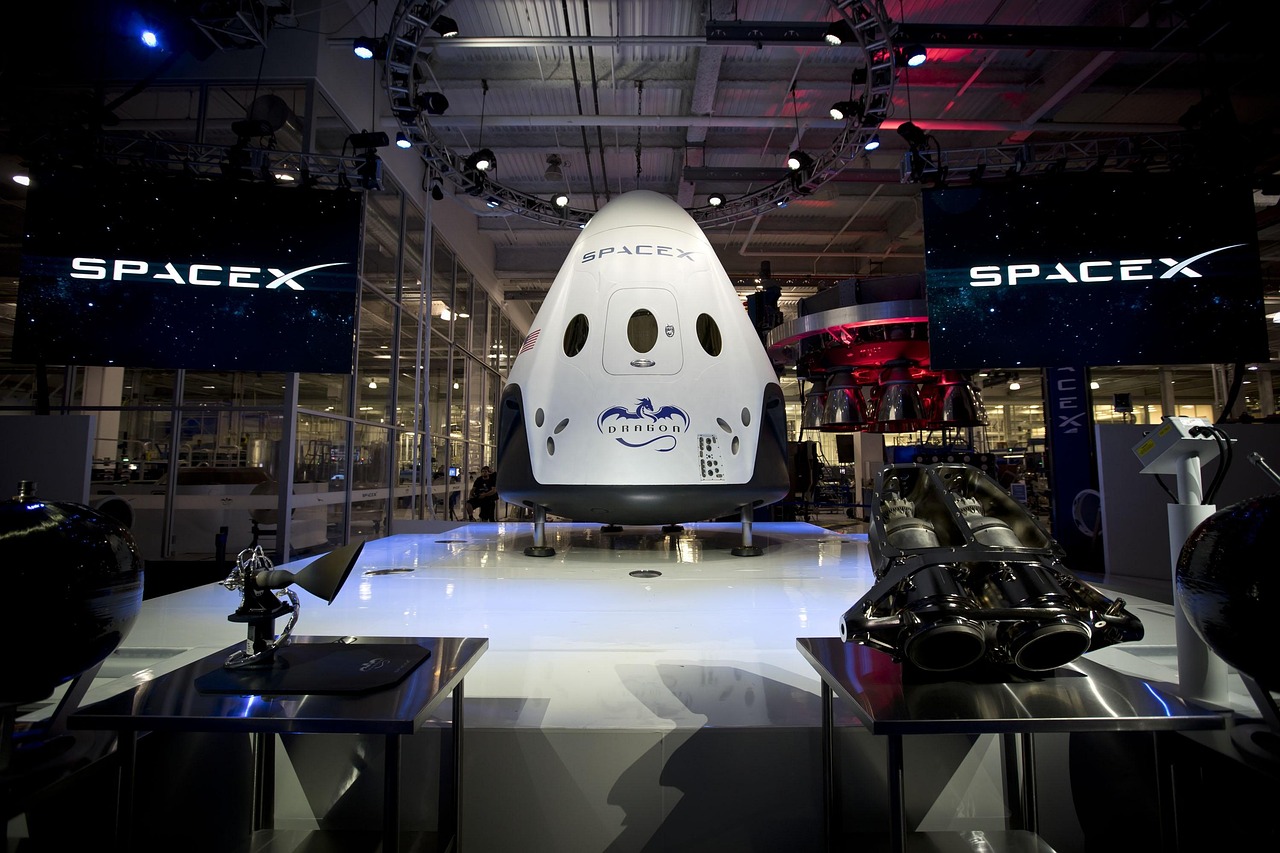
SpaceX’s newest Starship launch was more than a spectacle over South Texas. It was a high-stakes test of a vehicle that now sits at the center of both Elon Musk’s Mars ambitions and NASA’s return-to-the-Moon strategy.
Why this Starship launch mattered far beyond SpaceX

When SpaceX launched the latest version of Starship on Friday, May 22, 2026, it was not simply running another experimental flight. According to the Associated Press, this was the biggest and most powerful Starship the company has flown yet, a redesigned third-generation vehicle that lifted off from Starbase, Texas, carrying 20 mock Starlink satellites on a roughly hourlong mission stretching halfway around the world. The spacecraft ultimately reached the Indian Ocean despite engine trouble, then burst into flames on impact, a result SpaceX did not treat as a surprise. Elon Musk called the mission “epic,” but the larger significance lies in who is watching most closely: NASA.
That attention is easy to understand. Starship is not just a private-sector moonshot anymore. NASA is depending on a Starship-derived Human Landing System as a crucial part of its Artemis architecture, the program meant to return astronauts to the lunar surface and build a longer-term presence there. In practical terms, every Starship test now serves two audiences at once. One is the public, which sees fire, scale, and engineering drama. The other is NASA, which sees schedule risk, systems validation, docking complexity, and the hard question of whether a giant reusable vehicle can mature fast enough to support national exploration goals.
This is what makes the latest launch unusually consequential. A successful ascent can boost confidence, but partial technical issues still matter because the vehicle must one day do far more than survive a test arc. It must refuel in orbit, operate reliably in deep-space mission chains, and support human-rated lunar operations under NASA oversight. That means even a flight SpaceX regards as a strong step forward can still reinforce NASA’s cautious tone. The agency has embraced commercial partnerships, but it cannot afford to confuse progress with readiness.
The timing adds another layer. Reuters recently reported that SpaceX is exploring additional “spaceports” in anticipation of a future where Starship could fly at airline-like cadence, potentially thousands of times a year. That vision depends on rapid reusability and operational routine. NASA, by contrast, needs something less flashy and more exact: a dependable system that works inside tightly choreographed lunar missions. The contrast between those two goals helps explain why this launch produced excitement at SpaceX and scrutiny at NASA at the same time.
What NASA is actually saying about Starship and Artemis

NASA’s current public messaging makes clear that it is planning around commercial lunar landers while still preserving flexibility in mission design. In its May 13, 2026 outline of preliminary Artemis III plans, the agency said the mission is intended to demonstrate critical systems needed for future lunar landings. NASA also described a low Earth orbit profile that would create more launch opportunities for the mission’s major elements, including Orion, SpaceX’s Starship Human Landing System pathfinder, and Blue Origin’s Blue Moon Mark 2 pathfinder. That language is important because it shows NASA is actively shaping Artemis around the capabilities and limitations of the vehicles industry can realistically deliver.
The agency’s wording is measured, but it says a great deal. NASA noted that its concept of operations is being informed by both Blue Origin and SpaceX capabilities, and that some decisions remain unresolved. It also said astronauts could potentially enter at least one lander test article during Artemis III. That is not the language of an agency blindly locked into one hardware path. It is the language of a program manager trying to preserve options while pushing multiple providers forward. Starship remains central, but NASA is telegraphing that mission design must stay adaptable until the vehicles prove more of what they promise.
NASA reinforced that broader posture again on May 20, 2026, when it announced a May 26 news conference to discuss moon-base plans, mission progress, and new industry partners. The fact that agency leadership is now framing lunar exploration around sustained presence, not just one symbolic landing, raises the stakes for every Starship milestone. A rocket that must someday support repeated cargo and human operations on and around the Moon cannot be evaluated by launch theatrics alone. NASA’s interest extends to reliability, integration, cadence, redundancy, and whether commercial providers can support a durable exploration ecosystem rather than a one-off demonstration.
So when people say NASA has “a lot to say” about the launch, the point is not that officials are offering dramatic public criticism. It is that the agency’s entire lunar planning process now reflects the reality that Starship’s progress influences schedules, mission design, and strategic confidence. NASA is speaking through architecture decisions, technical planning, and the way it distributes risk among partners. In effect, every new Starship flight becomes part engineering test, part procurement signal, and part referendum on how fast commercial heavy-lift systems can mature for government exploration needs.
The launch itself showed progress, but also the gap to operational readiness

Measured against Starship’s own turbulent history, the May 22 flight offered meaningful progress. The vehicle launched, flew a substantial mission profile, deployed mock payloads, and reached the Indian Ocean. For a system that has often generated headlines through explosions, breakups, and aborted ambitions, that matters. It suggests SpaceX is learning from each iteration and that the third-generation design may be giving engineers a stronger platform to build from. For SpaceX supporters, this is the argument in a nutshell: the company advances by testing in public, accepting failure, and rapidly redesigning hardware.
Yet NASA’s threshold is necessarily different. Reaching a destination with engine trouble and ending in a fiery impact may be acceptable in a development culture oriented around fast iteration. It is not remotely the same thing as proving operational maturity for crewed lunar missions. Human exploration imposes a different standard, especially when a lander must perform complex tasks in sequence rather than simply complete one dramatic ascent. NASA will care about propulsion consistency, structural margins, environmental controls, docking precision, abort logic, and the repeatability of outcomes over multiple flights. The latest mission adds confidence in some respects, but it does not erase the long certification path ahead.
There is also the question of architecture burden. Starship is not being asked to do one job for Artemis. It must ultimately fit into a deeply interdependent mission chain involving Orion, SLS, rendezvous operations, lander interfaces, and broader campaign planning. NASA’s own Artemis III description emphasizes that the mission will test life support, docking performance, and operational concepts that inform later surface missions. That means Starship’s role has to be judged inside a larger ecosystem. A rocket can be individually impressive and still create mission-level risk if it does not align smoothly with every other moving part.
This is why NASA sounds careful even when SpaceX sounds triumphant. The two organizations are not actually disagreeing as much as they are using different scorecards. SpaceX wants to know whether the latest hardware did more than the previous version. NASA wants to know whether the system is converging toward dependable human exploration capability on a schedule compatible with Artemis. Those are related questions, but they are not identical. The launch advanced the first one. It did not fully answer the second.
Why Starship has become indispensable to America’s lunar strategy

The reason NASA keeps such a close eye on Starship is simple: there is no modern lunar program at this scale without commercial heavy-lift landers. Artemis was conceived as more than a flags-and-footprints repeat of Apollo. It is meant to support repeat missions, surface science, new infrastructure, and eventually something closer to a sustained human foothold. That ambition requires moving large amounts of cargo and equipment efficiently, and Starship is designed around precisely that kind of mass and reusability logic. Reuters noted that SpaceX envisions Starship carrying more than 100 metric tons of cargo, a figure that helps explain why the vehicle remains so strategically attractive despite its developmental volatility.
NASA’s latest mission planning reflects this shift. The Artemis III concept released in May 2026 is focused on demonstrating critical systems rather than executing a simplistic direct-to-surface replay of the past. The agency is building a campaign, not just a stunt. Starship fits that model because, if it works as intended, it could eventually become a logistics backbone for lunar missions, cargo delivery, and later Mars-oriented operations. That “if” remains enormous, but the upside is equally large. NASA is effectively betting that commercial innovation can unlock capabilities the agency would struggle to build as quickly or as cheaply on its own.
That dependence also creates vulnerability. When one commercial vehicle becomes central to national exploration planning, its delays and mishaps ripple outward. If Starship advances more slowly than NASA hopes, Artemis timelines and mission structures may have to adapt. The agency’s emphasis on multiple providers, including Blue Origin’s Blue Moon Mark 2 pathfinder, is therefore more than healthy competition. It is risk management. NASA has learned over decades that no single ambitious system should be treated as inevitable until it has proven itself repeatedly in the real world.
For the general public, this can make NASA’s comments sound less enthusiastic than expected. In reality, caution is the rational response when billions of dollars, astronaut safety, and national prestige are involved. NASA clearly sees Starship as potentially transformative. It is also signaling, in every carefully worded update, that transformation must be earned through demonstrated performance. That is not a lack of confidence. It is the price of taking a giant experimental rocket and turning it into part of America’s formal path back to the Moon.
What happens next for SpaceX, NASA, and the future of Starship

The next chapter will be shaped less by headlines and more by sequence. SpaceX needs to show that the gains from this latest launch are repeatable, that engine issues can be reduced, and that the new generation of Starship can support increasingly demanding test objectives. The company also needs to move from isolated technical victories toward a credible rhythm of launches, recoveries, and iterative improvements. Its long-term vision, as described by Reuters, is a world where Starship flies with extraordinary frequency from a network of future spaceports. That aspiration only becomes believable if each successive test turns dramatic experimentation into routine operation.
NASA, meanwhile, is entering a period when its lunar strategy must become more concrete. The agency has already scheduled a May 26, 2026 briefing to discuss moon-base plans, mission progress, and new partners, signaling that Artemis is evolving from broad aspiration into more detailed execution planning. As those plans sharpen, NASA’s assessments of Starship will matter even more. The agency does not need Starship to be perfect overnight, but it does need evidence that the system is moving steadily toward integration with human exploration requirements, not merely generating isolated proof-of-concept moments.
There is also a political and institutional dimension. Starship now occupies a rare position in American aerospace: it is a commercial project with enormous private ambition, but it is also deeply embedded in public-sector exploration goals. That means every launch carries layered consequences. A strong flight can energize investors, excite the public, and reassure policymakers that commercial partnerships are working. A poor one can revive concerns about schedule realism and strategic overreliance on immature systems. NASA’s voice matters here because it acts as the sober counterweight to spectacle, translating rocket theater into mission reality.
For now, the fairest reading is this: SpaceX just delivered a meaningful Starship test, but not a conclusive one. NASA sees the progress, because it would be impossible not to. It also sees the unfinished work, because that is the agency’s job. The launch was a reminder that Starship remains one of the most important machines in spaceflight today, not because it has already fulfilled its promise, but because so much of the next decade’s lunar agenda depends on whether it eventually does.