

The message was brief, but the fallout has been enormous. What began as a rejected internship inquiry has turned into a fresh test of how universities handle bias, discipline, and public outrage.
A private exchange became a national controversy

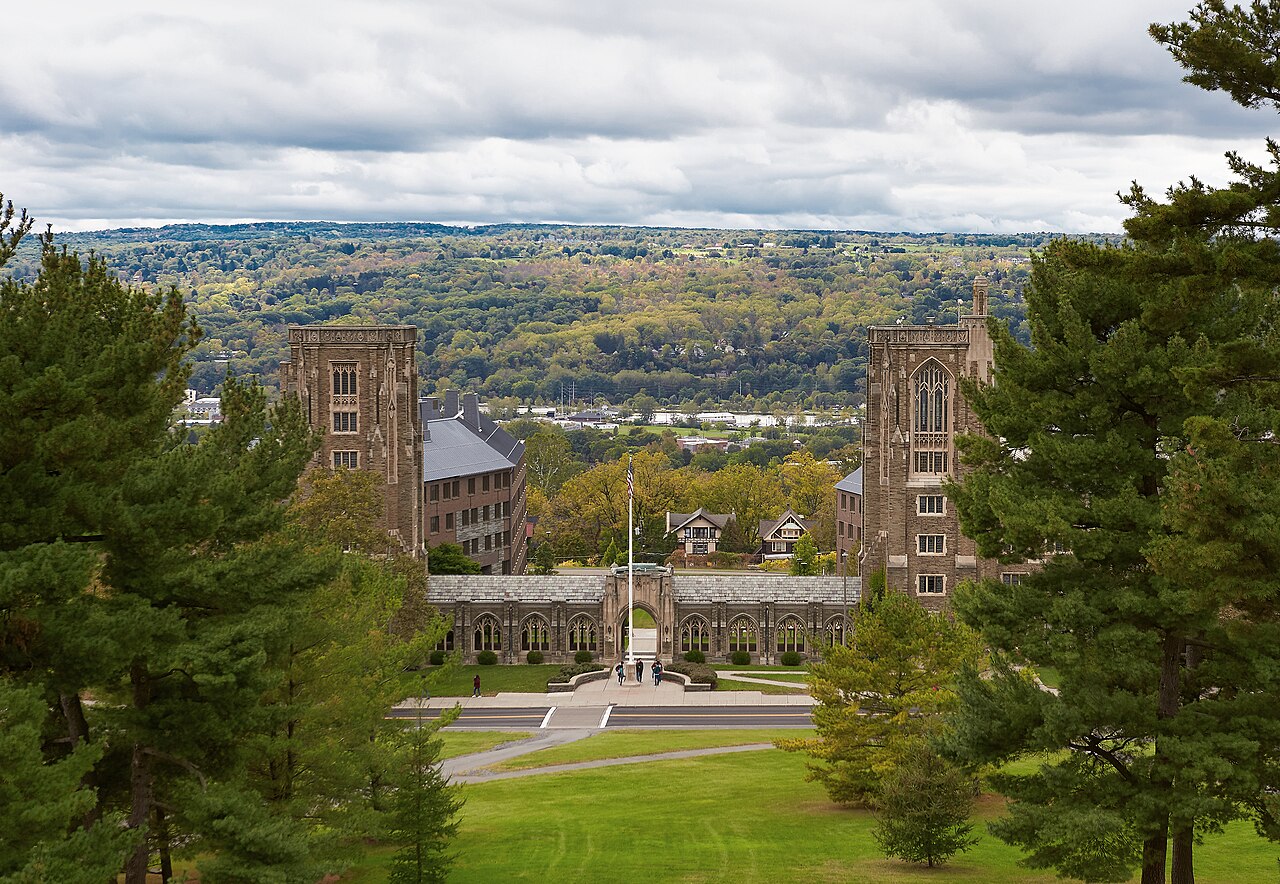
The case centers on Cornell University, where a student is under investigation after allegedly telling a startup founder he was “not interested in working for a Jew.” According to reporting by The Cornell Daily Sun and statements cited by other outlets, the message was sent through Handshake, the recruiting platform widely used by college students and employers. The startup involved, VryfID, is led by brothers Gabe and Aiden Einhorn, who said the student had first applied for a summer role before later refusing to proceed.
Cornell said the incident was referred to the Office of Civil Rights as a bias matter. The university also said the student’s conduct appeared to violate both Handshake’s terms and Cornell Career Services rules for job seekers. Handshake separately indicated that it takes reports of hate speech seriously and had contacted both the student and the university, according to The Cornell Daily Sun.
That combination of a campus investigation, a platform review, and viral social media attention quickly transformed what might once have remained an ugly private exchange into a public morality play. In the current campus climate, incidents involving Jews, Israel, and discrimination rarely stay local for long.
Why this case resonates far beyond Cornell

The Cornell episode has landed in a higher education environment already strained by years of conflict over antisemitism, political protest, and the line between protected speech and punishable conduct. Since the Hamas attack on Israel on October 7, 2023, and the war that followed in Gaza, universities across the United States have faced escalating scrutiny over whether Jewish students and faculty are being adequately protected.
That scrutiny is not theoretical. The Anti-Defamation League gave Cornell a “C” in its 2026 Campus Antisemitism Report Card, a sign that concerns about campus climate had already been circulating before this incident became public. More broadly, federal and court actions involving elite universities have kept antisemitism on the front page, reinforcing the sense that administrators are being judged not only on policies but on whether they act decisively when a headline-making episode erupts.
At the University of Pennsylvania, for example, the Equal Employment Opportunity Commission has pursued information as part of an antisemitism investigation, with court fights over privacy, scope, and the rights of Jewish faculty and students. Associated Press and Inside Higher Ed have both described those proceedings as part of a wider national clash over how institutions document, define, and respond to anti-Jewish hostility.
The debate over punishment is as fierce as the original act

For many observers, the rejection message is straightforward evidence of religious discrimination. In that reading, there is little ambiguity: the student did not merely criticize a government, a war, or a political movement, but singled out a prospective employer based on Jewish identity. Universities, employers, and recruiting platforms typically treat that kind of exclusionary language as a serious bias issue, especially when it appears in a professional setting.
But the backlash has also produced a second controversy: what should happen next. The student’s identity spread online after users reportedly uncovered information from the circulated screenshot, and The Cornell Daily Sun reported claims of doxxing, threats, and harassment directed at him and his family. That has complicated the moral picture for some students, who argue that even reprehensible speech should not trigger mob-style punishment.
This split helps explain why campuses are so divided. One side sees too little accountability for antisemitism. The other sees a dangerous pattern in which disciplinary systems, social media exposure, and reputational ruin collapse into one another before facts are fully processed. Both concerns are real, and universities are struggling to address them simultaneously.
Professional spaces are becoming the new front line

One striking feature of this case is that it did not begin in a classroom, a protest encampment, or a student government debate. It began in a hiring pipeline. That matters because career platforms such as Handshake blur the line between campus life and the professional world, making student conduct immediately legible to employers, alumni, and the public.
In practical terms, that means bias incidents now carry consequences beyond student discipline. A message sent in a recruiting portal can affect internships, references, future hiring, and an institution’s reputation with companies that recruit on campus. Employers may tolerate ideological disagreement, but explicit identity-based refusal is another matter entirely. In most sectors, rejecting a workplace simply because the founders are Jewish would be seen not as activism but as discrimination.
The episode also reveals how quickly startups and students can become symbols in larger cultural battles. The founders did not just receive a rude rejection; they became participants in a national argument about whether anti-Jewish prejudice is being normalized in educated spaces that claim to value pluralism and inclusion.
What does this say about the campus climate in 2026

The most unsettling lesson is not that one student sent a bigoted message. It is that so many people instantly recognized the case as part of a familiar script. Universities have spent nearly three years under sustained pressure over antisemitism complaints, donor revolts, congressional hearings, lawsuits, federal inquiries, and internal disputes over discipline and protest rules. Against that backdrop, every new incident acquires symbolic force.
This is why seemingly isolated cases now travel so far so fast. Supporters of stronger enforcement see each episode as proof that universities still have not confronted anti-Jewish bias with enough seriousness. Critics of aggressive intervention worry that administrators, under political pressure, will overcorrect in ways that chill speech and flatten complex distinctions between prejudice, political anger, and bad judgment.
Cornell’s response will therefore be watched as a precedent, even if the facts are narrower than the national argument around them. The institution is not just evaluating one student’s conduct. It is performing its credibility in front of students, faculty, alumni, employers, and a public primed to see failure either way.
The real challenge is rebuilding trust, not just issuing discipline

However, Cornell ultimately resolves the matter, the larger question will remain: can campuses create conditions in which Jewish students feel protected without turning every conflict into a spectacle of ideological combat? Investigations can determine whether policy was violated, but they cannot by themselves rebuild trust. That requires consistent standards, transparent procedures, and a willingness to confront bigotry without selectively minimizing it.
It also requires universities to distinguish between political disagreement and identity-based exclusion with far more clarity than they often have. A student refusing to work for someone because that person is Jewish crosses a line that most institutions, and most employers, should be able to name plainly. At the same time, universities must avoid allowing online pile-ons to become a substitute for due process.
That balance is difficult, but it is essential. The Cornell case is dividing campuses because it touches every exposed nerve in American higher education at once: antisemitism, punishment, speech, employability, and the fear that institutions no longer know how to hold a community together when hatred enters the room.