

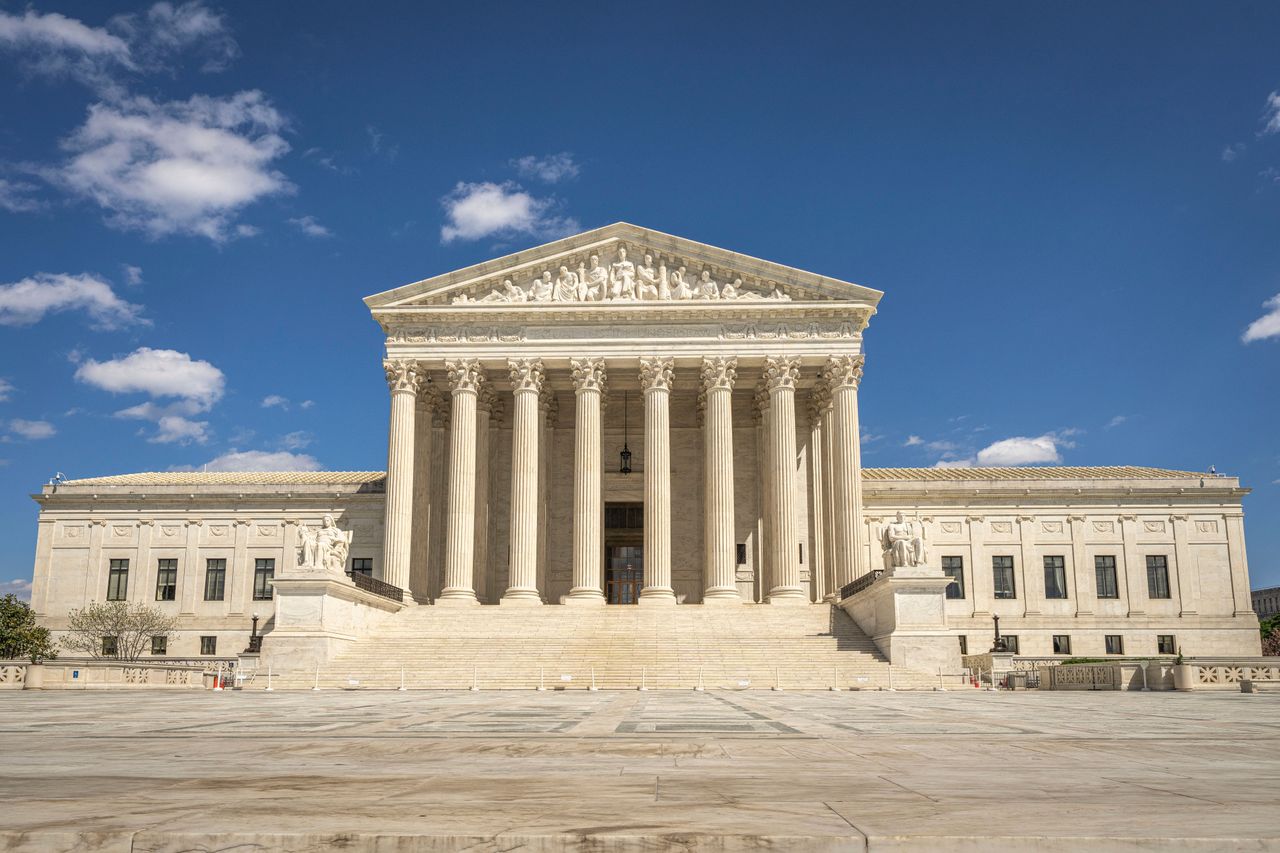
A nearly century-old Supreme Court decision is suddenly at the center of one of the most important power struggles in Washington. The outcome could redefine how much direct control a president has over large parts of the federal government.
The old precedent is now under fresh pressure

The legal rule at issue comes from Humphrey’s Executor v. United States, a unanimous 1935 decision that limited a president’s ability to remove Federal Trade Commission commissioners without good cause. The ruling helped establish the modern idea of “independent” agencies, bodies designed to operate with some insulation from day-to-day White House pressure.
For decades, that framework allowed Congress to create commissions whose members could not simply be fired for policy disagreement. The FTC became the classic example, but the broader model shaped agencies across Washington, including bodies involved in labor law, markets, communications, and financial oversight.
Now that the settlement looks fragile. According to Reuters and other court coverage, the justices have been considering whether those removal protections unconstitutionally restrict presidential authority under Article II, which vests executive power in the president. What once looked like a technical administrative-law question has become a constitutional showdown over the modern presidency.
How the current fight reached the justices

The dispute accelerated after President Donald Trump fired the FTC’s two Democratic commissioners, Rebecca Kelly Slaughter and Alvaro Bedoya, in March 2025, according to Reuters. Their removal immediately triggered a legal clash because federal law has long been understood to allow FTC commissioners to be dismissed only for cause, such as neglect of duty or malfeasance.
Slaughter challenged her firing, arguing that the action violated both the FTC statute and binding Supreme Court precedent. Reuters reported that lower-court proceedings initially favored the argument that Humphrey’s Executor still controlled, reinforcing the idea that the president could not simply remove an FTC commissioner for political disagreement.
But the Supreme Court signaled a strong interest in the issue. By 2025, the justices were already using emergency orders in related disputes involving independent regulators, and the Court later agreed to take up the FTC fight directly. That move transformed an employment dispute into a major constitutional test of whether independent agencies can remain meaningfully independent at all.
Why conservative justices see a bigger constitutional problem

The push to revisit Humphrey’s Executor did not begin with the Trump-era firings. For years, conservative legal thinkers have argued that the Constitution does not permit executive officials to wield significant power while being shielded from presidential removal. In their view, such insulation weakens democratic accountability by fragmenting executive authority.
The Supreme Court has already moved in that direction. In Seila Law in 2020, the Court struck down removal protections for the single director of the Consumer Financial Protection Bureau, while stopping short of overturning Humphrey’s Executor. The majority treated the FTC precedent as a narrow exception rather than a broad constitutional endorsement of agency independence.
That narrowing mattered. By describing Humphrey’s Executor as limited to a specific historical model, the Court opened the door to future challenges. Reuters has reported that the current conservative majority appears receptive to giving the president greater control over officials at independent agencies, potentially turning a once-stable precedent into the next major casualty of the Court’s increasingly muscular view of executive power.
What a reversal could mean for the federal government?

If the Court overturns or sharply cuts back Humphrey’s Executor, the practical effects would extend far beyond the FTC. Many agencies are structured around bipartisan commissions or boards whose members serve fixed terms and cannot easily be removed. Those protections were meant to reduce political swings and reassure the public that rulemaking and enforcement would not change overnight with every election.
A ruling for broader presidential removal power could make those agencies far more responsive to the White House. Supporters would call that a constitutional correction, arguing that voters elect a president to run the executive branch and should be able to hold one person accountable for how it performs.
Critics see a different risk. They warn that agencies policing antitrust, securities, labor relations, or energy markets could become more openly partisan and less stable. A president with easier firing power could reshape commissions rapidly, pressure dissenting members, and weaken the bipartisan structure Congress built to slow the abrupt political capture of technically complex institutions.
The case for more presidential control
Advocates of stronger presidential power say the current model often obscures responsibility. When inflation, market failures, labor conflicts, or consumer-protection disputes arise, the public may struggle to know whether to blame Congress, an agency chair, a multi-member commission, or the president. A more unitary executive, they argue, would make government more transparent and electorally accountable.
They also contend that many so-called independent agencies do not merely advise or adjudicate. They investigate, enforce, and penalize. Those are quintessential executive functions, and critics of Humphrey’s Executor argue that officials exercising them should answer directly to the president rather than operate under partial congressional protection.
This argument has gained traction as the Court has become more skeptical of the administrative state generally. In recent years, the justices have shown a willingness to police agency power more aggressively, whether through separation-of-powers rulings or by cutting back judicial deference to regulators. Reconsidering Humphrey’s Executor fits that larger constitutional project.
Why this moment could become a turning point
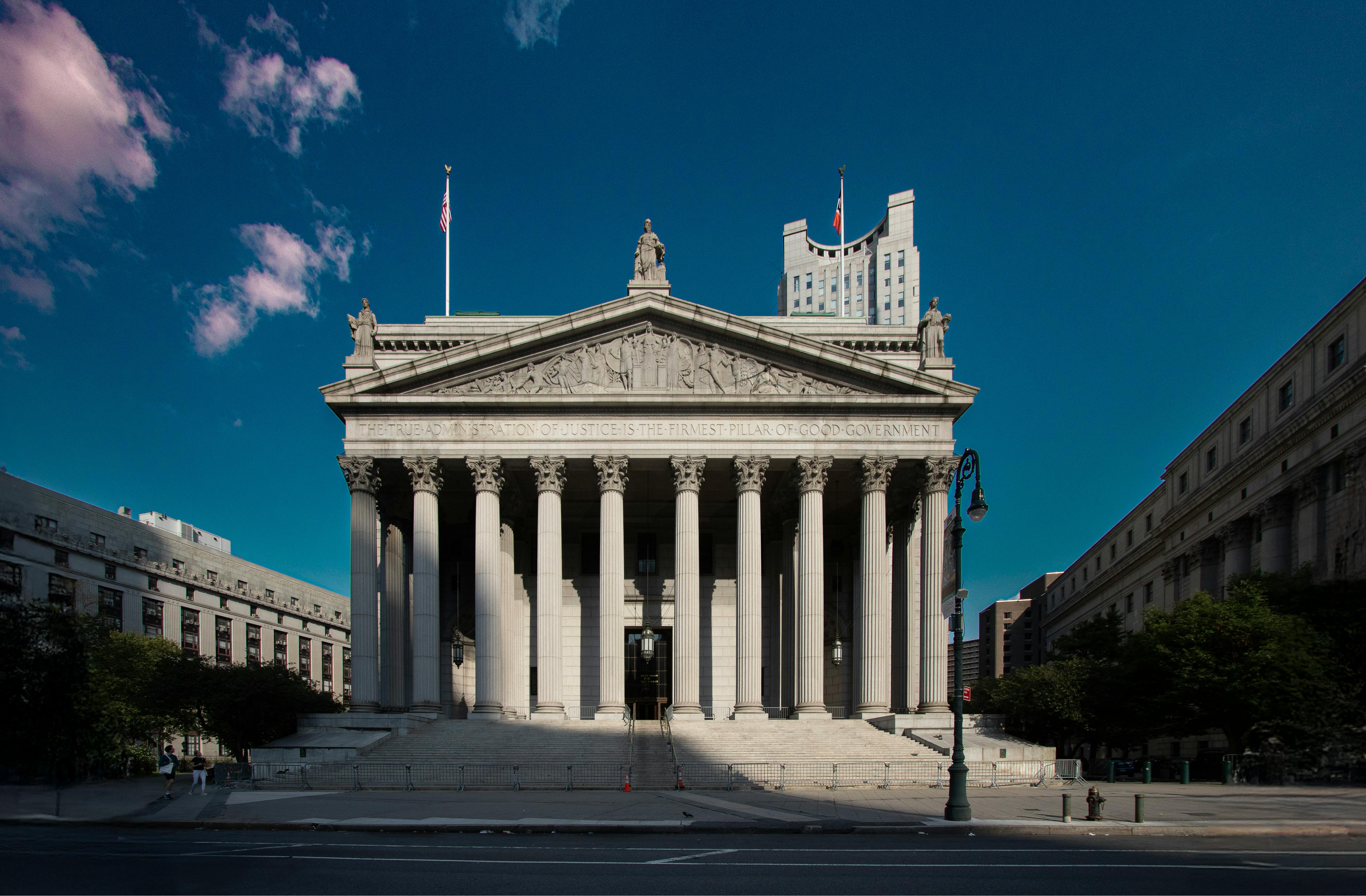
What makes this fight especially important is that it is not just about one commissioner or one agency. It is about whether the constitutional architecture of the New Deal and post-New Deal state still stands. Humphrey’s Executor has survived for 91 years because it offered a workable compromise between presidential control and Congress’s desire for durable, expert administration.
That compromise now faces a Court much less invested in preserving it. The justices do not need to erase every independent agency overnight to change Washington. Even a narrower ruling, one that says agencies exercising “substantial executive power” cannot shield members from at-will removal, would invite years of new litigation and uncertainty.
In that sense, the stakes are larger than the FTC. A decision weakening Humphrey’s Executor would strengthen the presidency immediately, but it would also test whether the American government can still maintain institutions designed to resist direct political command. The Court may soon decide that the old boundary on executive power has reached its end.